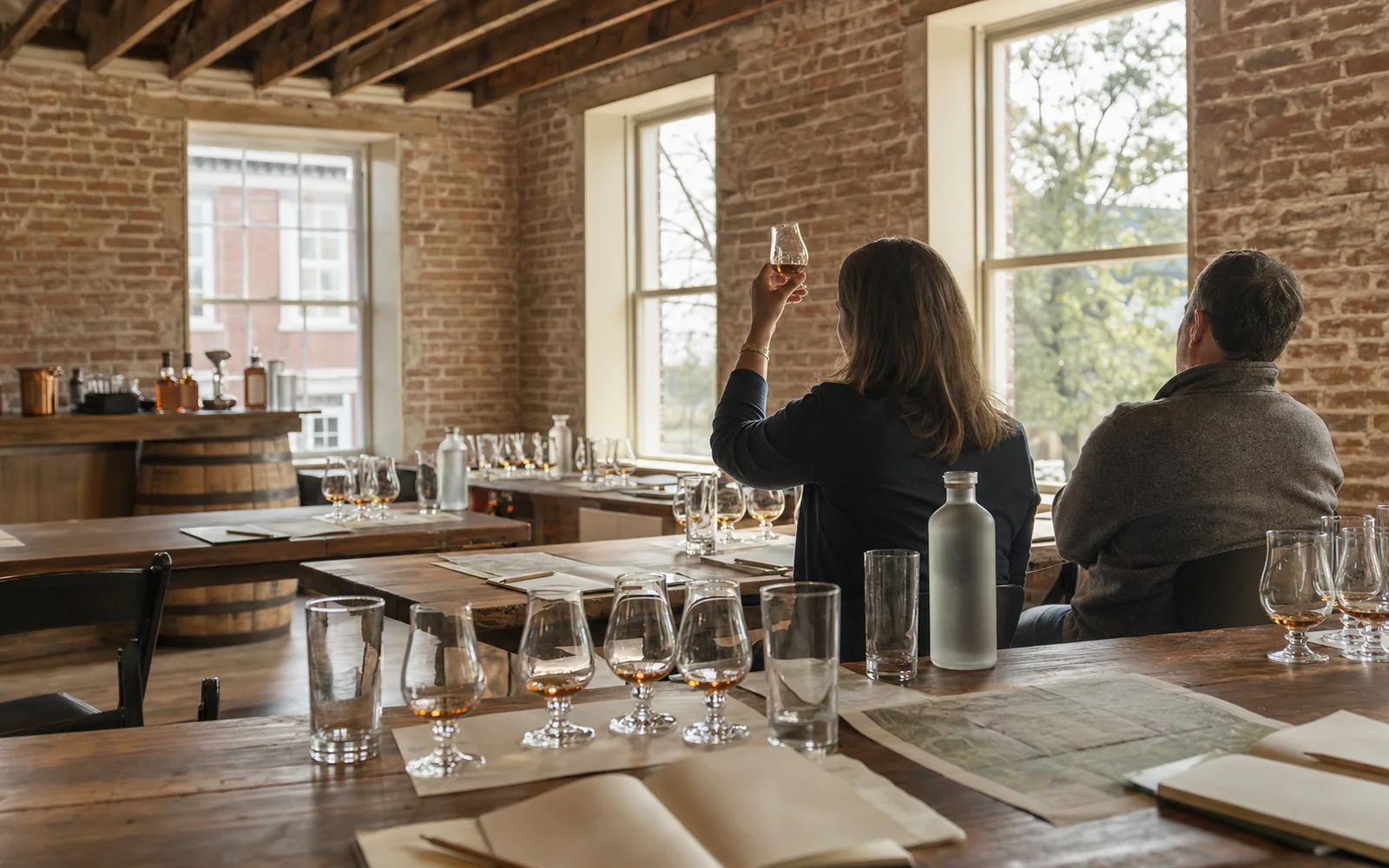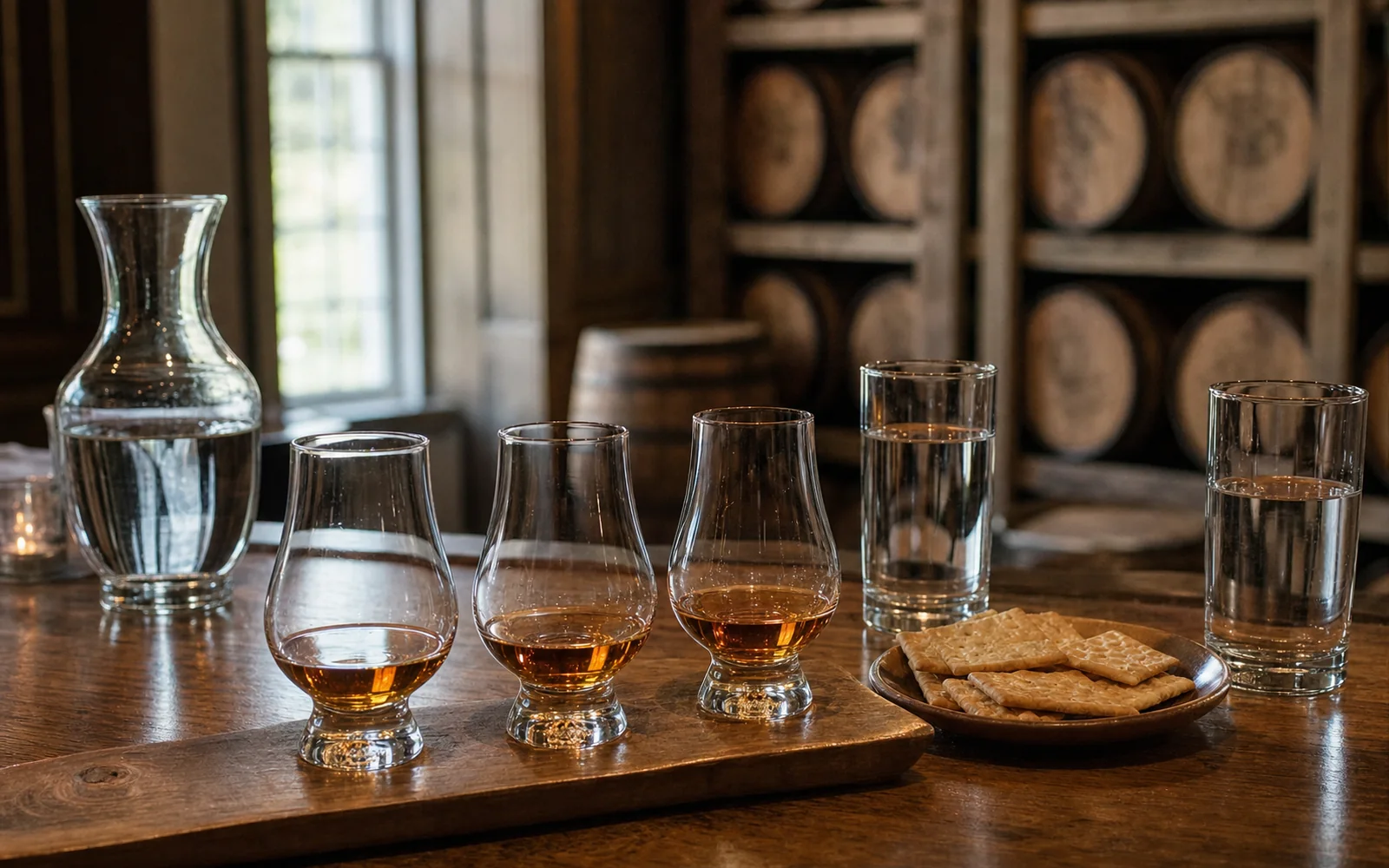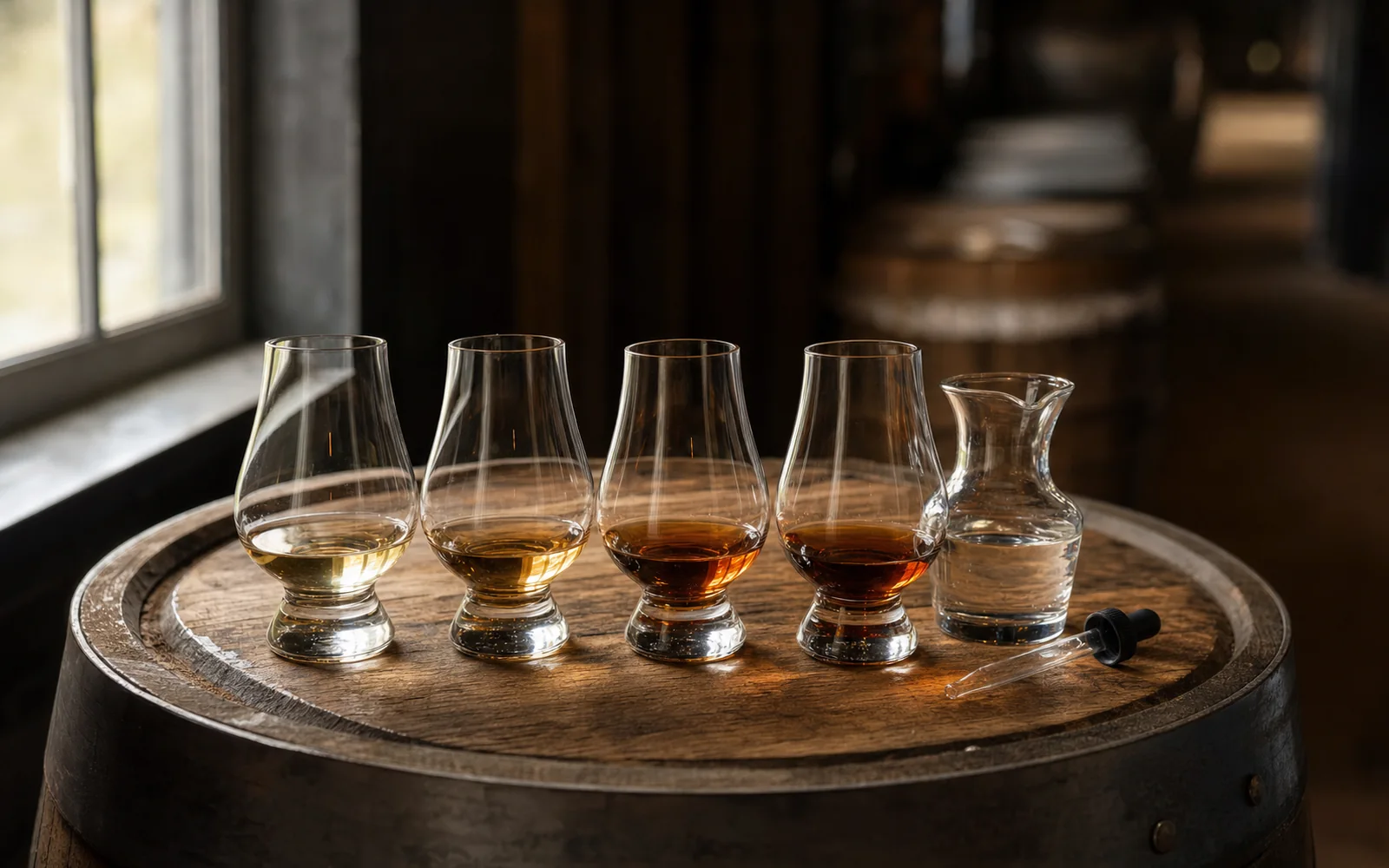
To taste bourbon like you know what you’re doing, slow down: look at the color, nose it gently with your mouth slightly open, take a small sip and let it sit on your tongue before you swallow, then notice how long the flavor lasts. Try it again with a few drops of water. On a Bardstown distillery tour, you’ll usually get three to five pours, lightest to strongest, so pace yourself, eat first and don’t feel obliged to finish anything.
What a distillery tasting looks like
Most Bardstown tours end, or occasionally travel, with a guided tasting. A guide pours a flight of small samples, explains each one and tells you what to look for. Formats vary more than you’d expect:
| Where | Format |
|---|---|
| Bardstown Bourbon Co. Core Four ($24) | Tour, a barrel tasting in the rickhouse, then 4 whiskeys (3 bourbons, 1 rye) |
| Bardstown Bourbon Co. Barrel Thieving ($30) | 3 whiskeys drawn straight from barrels, no tour |
| Willett | Progressive tasting along a 75-minute walk, choosing one of two whiskeys at each stop |
| Lux Row production tour | Guided tasting of four whiskeys after the tour |
| Preservation Distillery ($24 and up) | Farm walk, then 3 to 4 spirits |
| Circa 1856 (downtown) | Guided flight through the Chicken Cock lineup; Old Fashioned flight too |
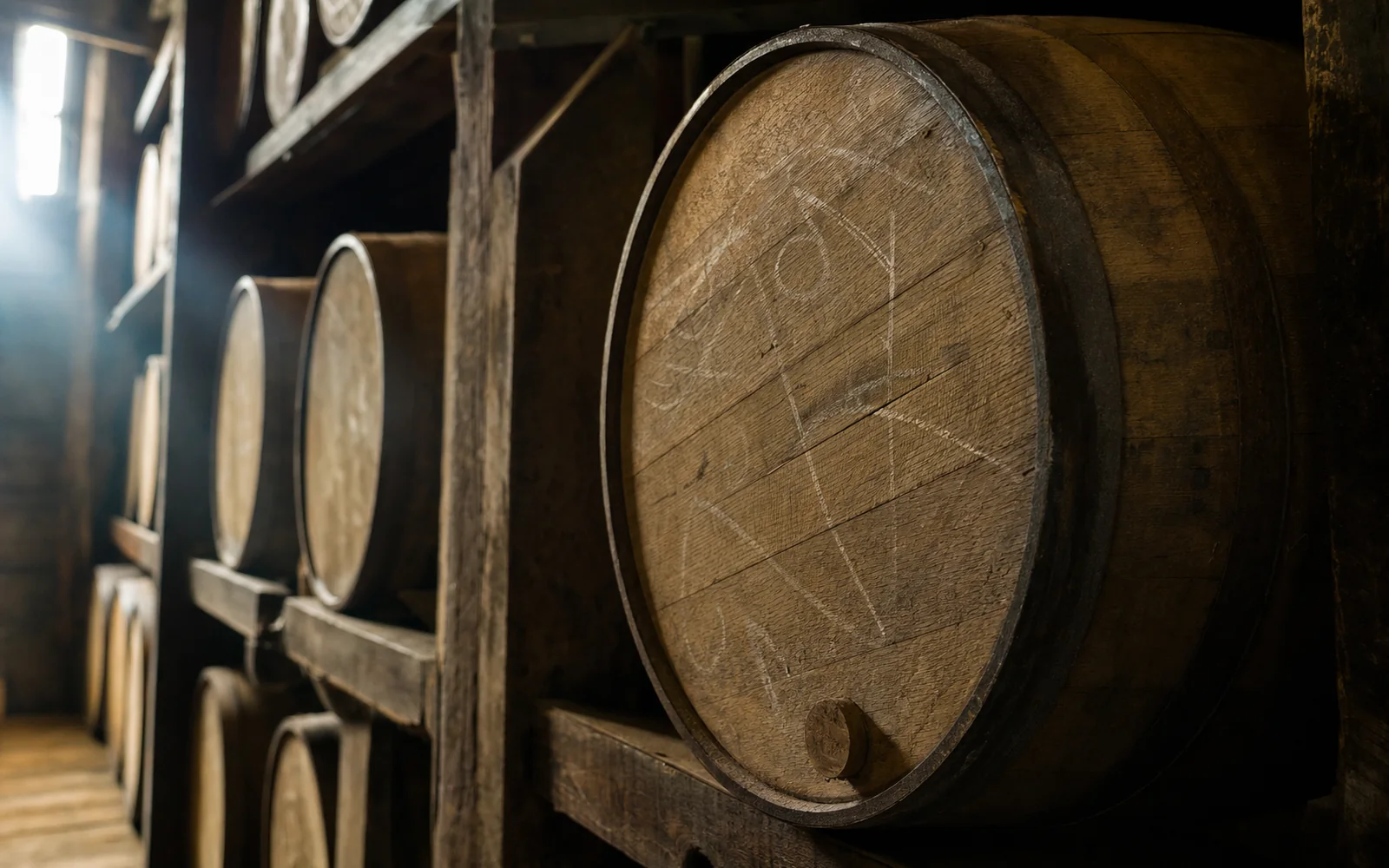
Willett’s walking format is a favorite with beginners because each pour comes with a story and a view. Bardstown Bourbon Company’s rickhouse barrel tasting lets you taste whiskey before it’s been bottled, which is a good lesson in what the barrel does.
Everyone at the tasting table needs a valid government photo ID showing they’re 21 or older. Kentucky allows one tour experience per person per distillery per day, so choose the tour you want rather than stacking two.
How to taste, step by step
1. Look
Tilt the glass against a light background. Color comes entirely from the barrel, since bourbon can’t have coloring added, so a deeper amber usually means more time or a hotter spot in the rickhouse. Swirl gently and watch the “legs” run down the glass; thicker, slower legs hint at more body or higher proof.
2. Nose
This is where most of the flavor lives. Bring the glass toward your nose slowly and keep your mouth slightly open, which lets the alcohol vapor escape instead of stinging. Don’t jam your nose into the glass. Take a few short sniffs rather than one deep one. Common notes: caramel, vanilla and toasted oak from the charred barrel; baking spice or pepper from rye; bread or honey from wheat; cherry, apple or dried fruit from fermentation.
3. Sip
Take a small sip and let it roll across your tongue for a few seconds before swallowing. Many Kentuckians call this the “Kentucky chew,” working the whiskey around your mouth. The first sip of the day always tastes hot; it’s warming up your palate. The second sip tells you much more.
4. Finish
After you swallow, breathe out gently through your nose and notice what lingers and for how long. A long finish of oak and spice is often a sign of an older or higher-proof bourbon.
5. Add water
Put a few drops of water into the glass and taste again. Water can open up aromas and soften heat, especially at barrel proof. Most tasting rooms have water on the table; if they don’t, ask. Asking marks you as someone who knows what they’re doing.
Label words worth knowing
You’ll hear these on every tour. The legal ones come from the federal rules in 27 CFR 5.143 and the Bottled-in-Bond Act.
| Term | What it means |
|---|---|
| Mash bill | The grain recipe, at least 51% corn for bourbon |
| High-rye | More rye in the mash, usually spicier |
| Wheated | Wheat instead of rye; Maker’s Mark is 70% corn, 16% wheat, 14% malted barley |
| Straight bourbon | At least 2 years in new charred oak; no additives |
| Bottled in bond | One distillery, one season, 4+ years in a bonded warehouse, exactly 100 proof |
| Single barrel | From one barrel; each bottling varies |
| Small batch | A blend of a limited number of barrels; no legal size |
| Barrel proof | Bottled without adding water, so higher proof |
| Proof | Twice the alcohol percentage; bourbon is at least 80 proof |
For the full process behind these words, read how bourbon is made.
The order of a flight
Guides usually pour from lowest to highest proof, so strong pours don’t numb your palate for the gentle ones. Some reviewers of a well-known distillery tasting nearby grumble when the order is off, so notice the proofs and taste in ascending order if you’re given a choice. If a flight includes a rye or a finished whiskey, taste it last or ask the guide where it fits.
Pacing a tasting day
A day of three distillery tastings can add up to a lot of whiskey. A few habits keep it fun:
- Eat a real breakfast, and plan lunch in the middle of the day. The Bar at Willett, Five Brothers at Heaven Hill and the Kitchen & Bar at Bardstown Bourbon Co. all serve food.
- Drink a glass of water between every stop.
- Sip; don’t finish every pour. Share a flight with your partner if the distillery allows.
- Limit yourself to two or three tours in a day.
- Settle the driving before the first sip. Our tours and transportation guide and drinking responsibly cover the options.
Keep notes
Your memory of the third pour at the second distillery will be hazy by dinner. Jot down three things for each bourbon you like: the name and proof, one or two aromas, and if you’d buy it again. A phone note works; the Bourbon Capital Academy’s class hands you a proper tasting notebook. By the end of the trip you’ll see a pattern (maybe you keep choosing wheated bourbons, or high proofs), and that makes the gift shop, and every bar menu back home, far easier to read.
Tasting-room etiquette
- Arrive 15 minutes early with ID. Late arrivals may lose their spot.
- Listen before you sip; guides often point out what to look for first.
- It’s fine not to like something. Say what you notice; there are no wrong answers.
- Wear something scent-light. Perfume and cologne crowd out the aromas for everyone at the table.
- Tip your guide if the tour was great, and buy a bottle if you loved a pour.
Take a class first
If you want a head start, the Bourbon Capital Academy runs a two-hour, $85 introductory course in Spalding Hall on Saturdays twice a month. Its “old school versus new school” comparative tasting is exactly the kind of side-by-side lesson that trains your palate, and you leave with a tasting notebook for the rest of your trip.
Where to practice after the tours
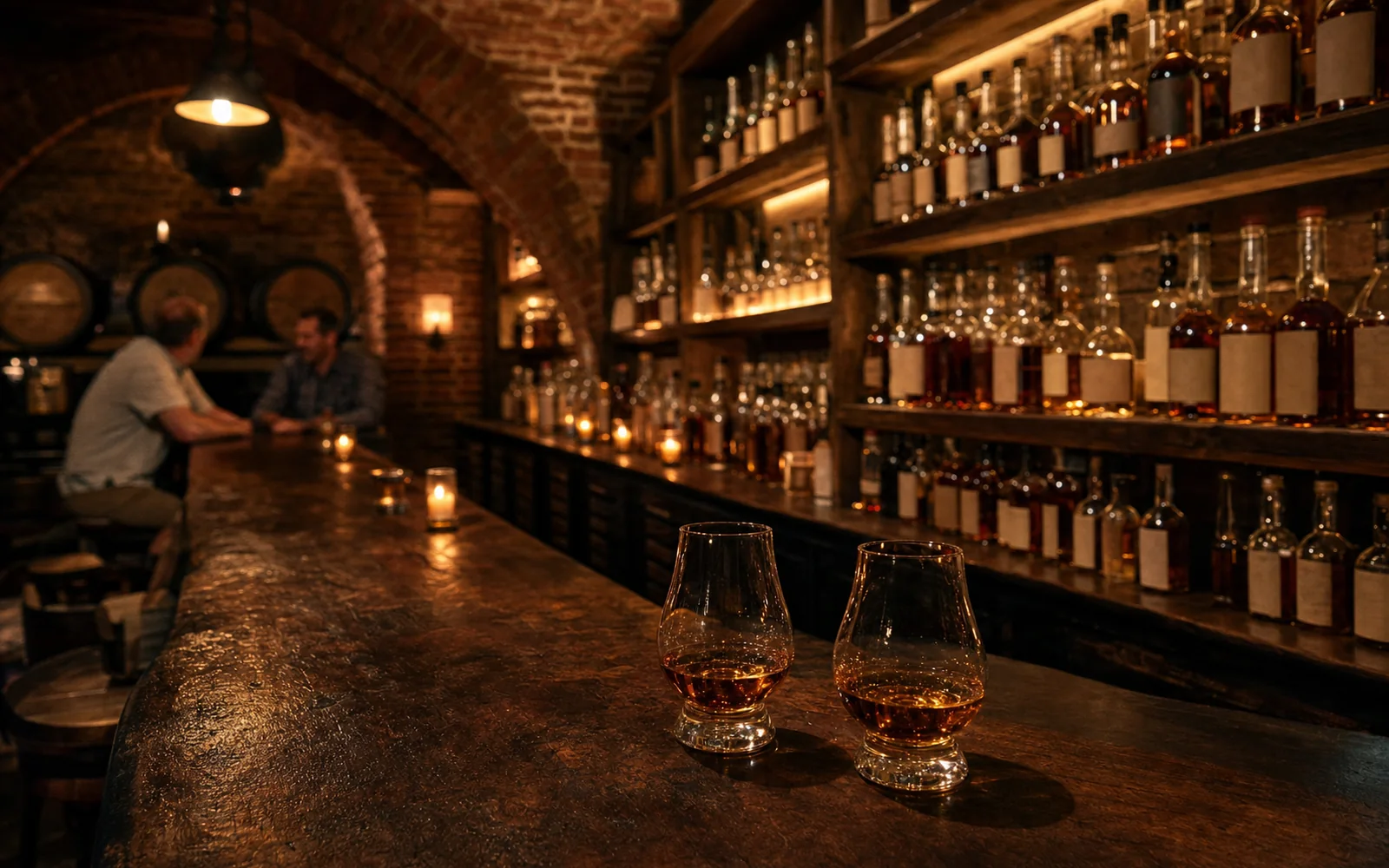
Downtown, Circa 1856 pours guided flights and an Old Fashioned flight until 9 p.m. Wednesday through Saturday. The Old Talbott Tavern carries more than 200 bourbons, and the Rickhouse about 150. Order two related pours side by side, say two proofs of the same brand, and compare them the way you learned on tour. Our guide to bourbon bars and tasting rooms has the full list, and the distillery tours guide helps you pick the tastings to book.