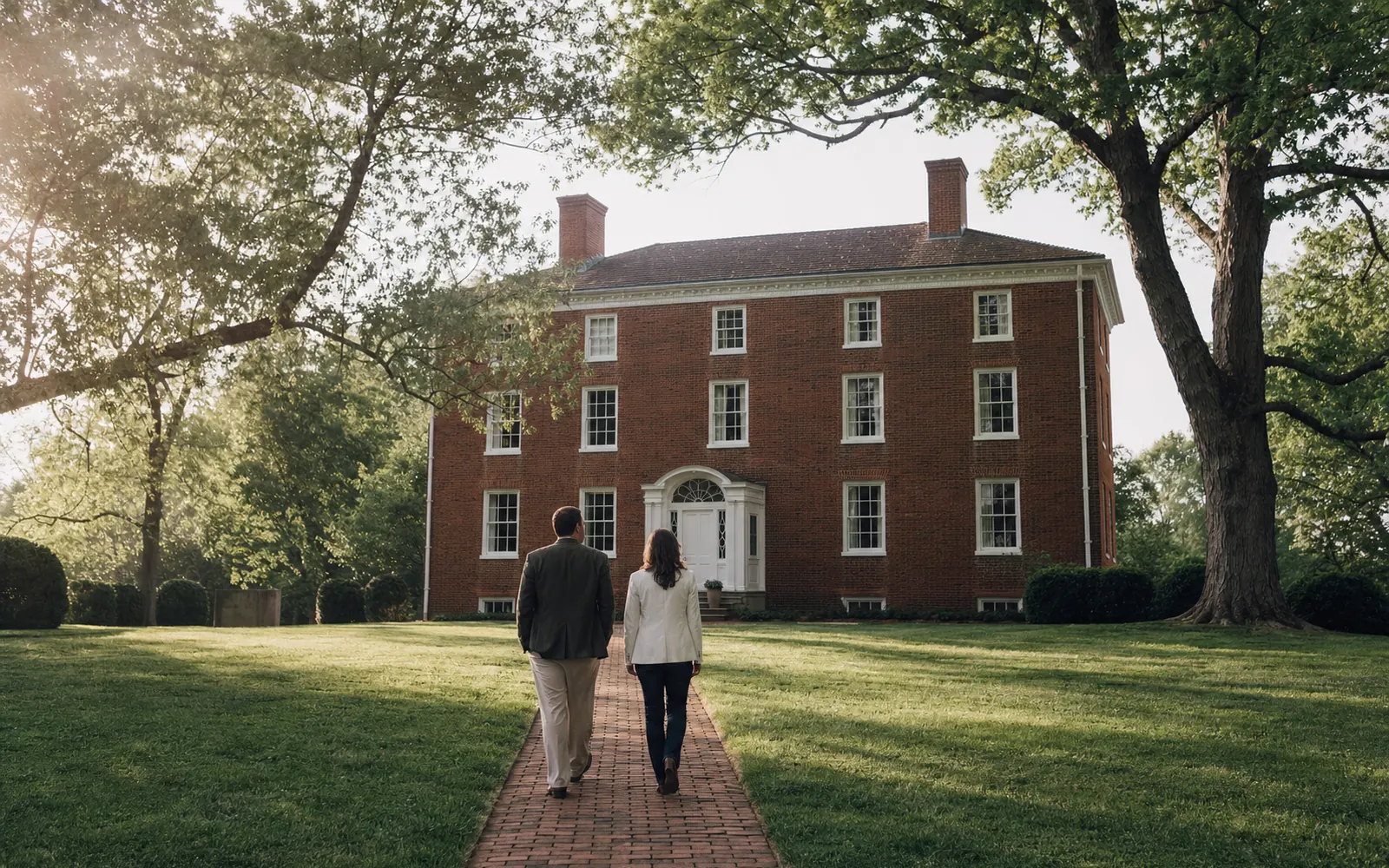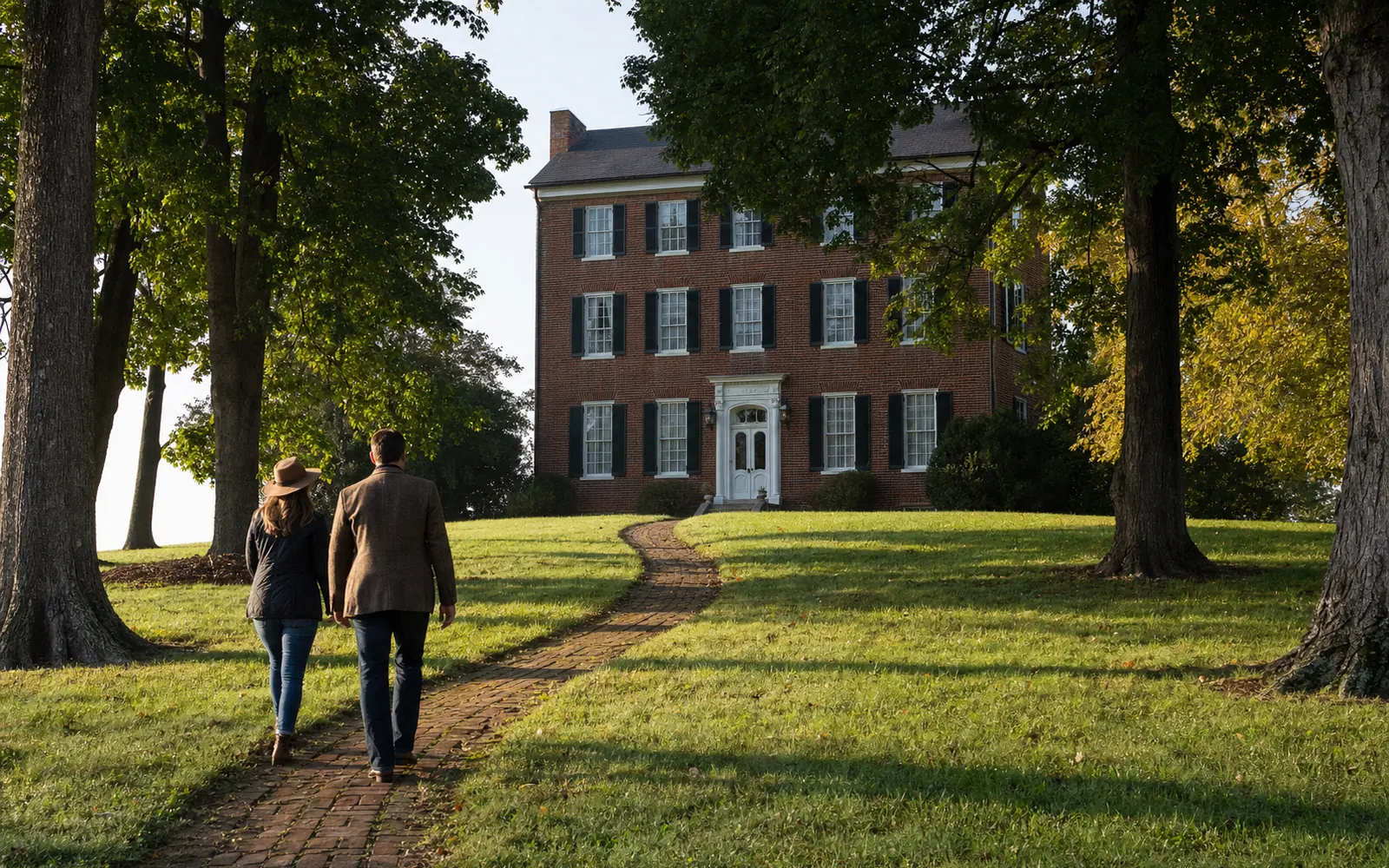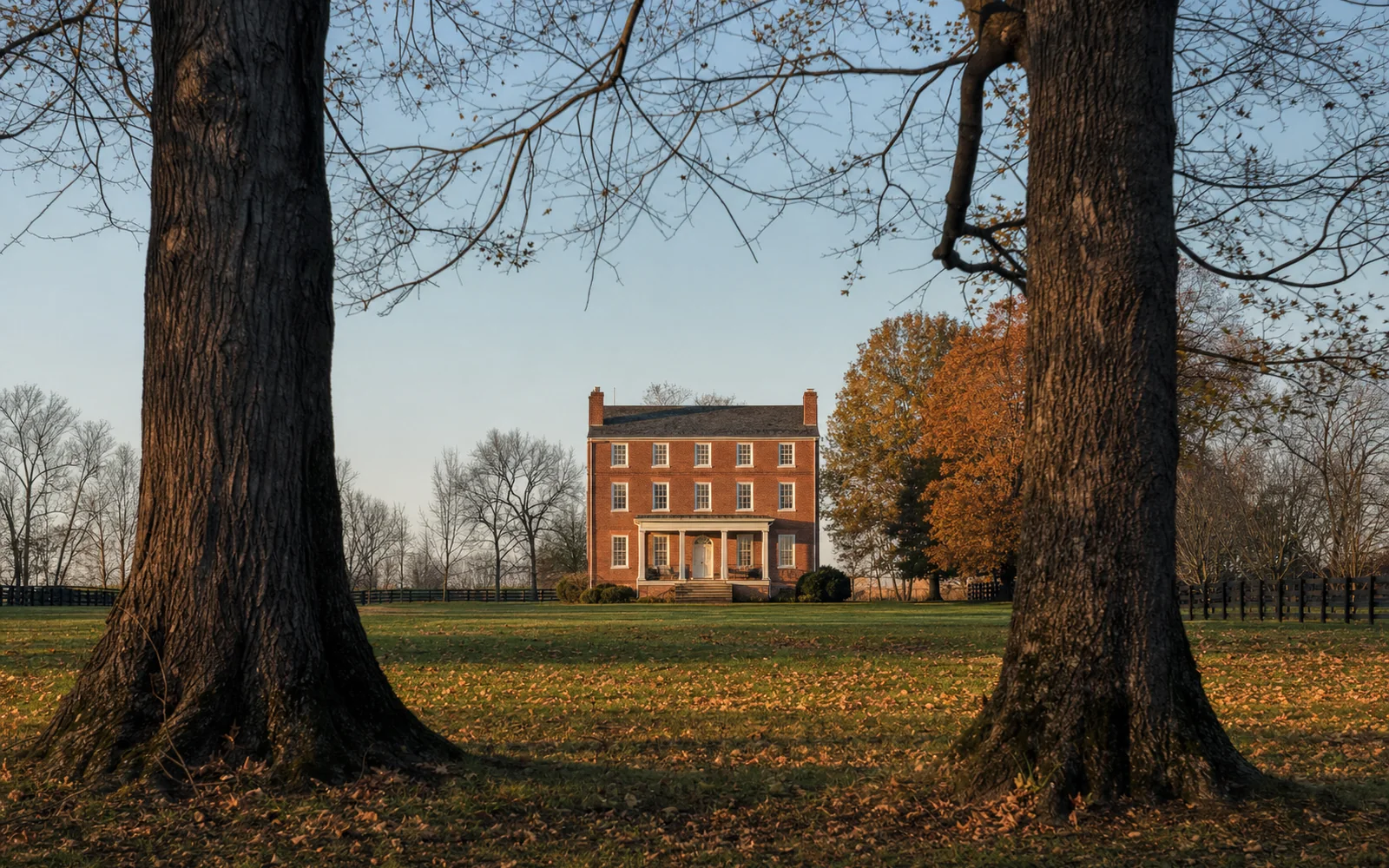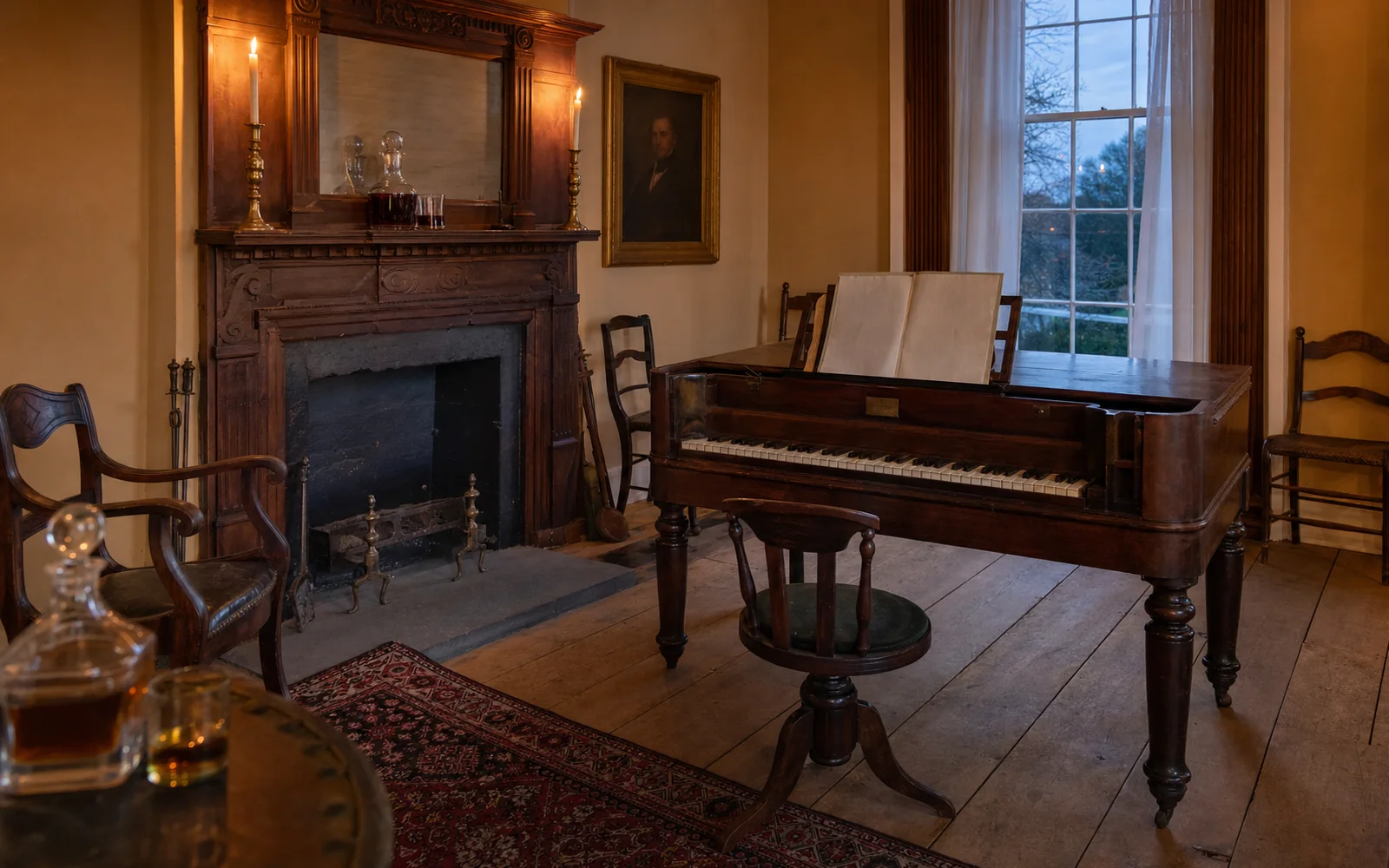
“My Old Kentucky Home” was written by Pittsburgh-area songwriter Stephen Foster around 1852 and published in January 1853, and it started life as a song about slavery, drafted under a title borrowed from Uncle Tom’s Cabin. Bardstown’s claim is that Foster, a cousin of the Rowan family, visited Federal Hill and wrote it there. It is a lovely story with thin evidence. What is certain is that the song made the house famous, became Kentucky’s state song in 1928, and still gets sung on every tour of the mansion.
Who was Stephen Foster?
Stephen Collins Foster was born on July 4, 1826, in Lawrenceville, Pennsylvania, now part of Pittsburgh. He was America’s first great professional songwriter, with more than 200 songs to his name, among them “Camptown Races” and “Old Folks at Home.” He died at Bellevue Hospital in New York at 37, as his Wikipedia biography records. He was a Northerner who wrote about the South, much of it for minstrel shows, and his work carries all the contradictions that implies.
The song’s real origin: Uncle Tom’s Cabin
Harriet Beecher Stowe’s Uncle Tom’s Cabin came out in book form in 1852 and was a sensation. Foster’s sketchbook shows him working on a song called “Poor Uncle Tom, Good-Night!” which suggests he drew directly on Stowe’s novel. Firth, Pond & Co. of New York published the finished song in January 1853 under a new title that swapped Uncle Tom for a Kentucky home, per the song’s Wikipedia article.
Contemporaries heard it as antislavery. Frederick Douglass wrote in My Bondage and My Freedom (1855) that songs like it awaken “sympathies for the slave, in which antislavery principles take root, grow, and flourish.” That context usually surprises visitors who know the song only from Derby Day, and the Federal Hill guides increasingly include it.
The legend: Foster at Federal Hill
Here is the Bardstown version. Stephen came to visit his Rowan cousins, sat in the house or on the lawn, heard the birds and the enslaved workers in the fields, and wrote the song on the spot.
The evidence is thinner. Foster really was related to the Rowans. His brother Morrison said Stephen visited Federal Hill occasionally, and his sister Charlotte did visit, even turning down a marriage proposal from cousin Atkinson Hill Rowan while she was there. But as John Rowan’s biography puts it, later historians “have been unable to conclude whether or not Foster ever visited the mansion at all.” The Talbott Tavern downtown also lists Foster among its guests, with no more proof.
So the honest version: the song is about a Kentucky home, Foster had family in a very fine Kentucky home, and Kentuckians connected the two. The state made it official in 1923 by dedicating Federal Hill as “My Old Kentucky Home.” Read the full house story on our Federal Hill and the Rowans page.
How it became Kentucky’s song
The General Assembly adopted “My Old Kentucky Home” as the state song on March 19, 1928. Around 1930, Churchill Downs president Col. Matt Winn brought it to the Kentucky Derby, and the University of Louisville Marching Band has played it as the horses step onto the track since 1936. Few state songs are sung by 150,000 people at once, usually with a mint julep in hand and a lump in the throat.
The house did its part for the song’s fame, too: Federal Hill appeared on a 29-cent stamp in 1992 and on the Kentucky state quarter in 2001.
The 1986 lyric change
The original first verse included a racial slur used for enslaved people. For decades it was sung as written. On March 11, 1986, students from Japan’s Sendai Christian Educational Institute sang the original lyrics to the Kentucky General Assembly, and the moment forced the question. Representative Carl Hines introduced a resolution substituting “people,” and Senator Georgia Davis Powers, the first Black woman in the Kentucky Senate, introduced a similar one. Both chambers adopted their versions, and “people” is what you will hear today, on the Derby broadcast and at Federal Hill alike.
Foster’s name around town
Once you notice it, Foster is everywhere in Bardstown. The main east-west street through downtown is Stephen Foster Avenue, running from the Proto-Cathedral past Court Square to the park gates. The Old Talbott Tavern counts him among its famous guests, with the same thin paper trail as the Federal Hill visit. Visit Bardstown has long listed a Bardstown Historical Museum in Spalding Hall with Stephen Foster memorabilia among its exhibits; call (502) 348-2999 to ask whether that collection is on view before you go looking for it.
How to think about the song today
Foster wrote a good deal of his catalog for blackface minstrel shows, and “My Old Kentucky Home” came out of that world as well as out of Stowe’s novel. Both things are true at once: it was heard in its day as a sympathetic song about a family torn apart by slavery, and it was sung for decades with a slur and in a sentimental mood that softened what slavery was. Kentucky kept the song and changed the word. Plenty of visitors feel moved and uneasy in the same moment on the Federal Hill tour, and that is a reasonable way to feel.
Where to hear the song in Bardstown
On the mansion tour
Every guided tour of Federal Hill includes a guide singing “My Old Kentucky Home,” per the park’s admission page. Tours run on the hour from 9 a.m. to 4 p.m.; adults pay $18. Hearing it sung in the house, a cappella, tends to quiet the room.
At The Stephen Foster Story
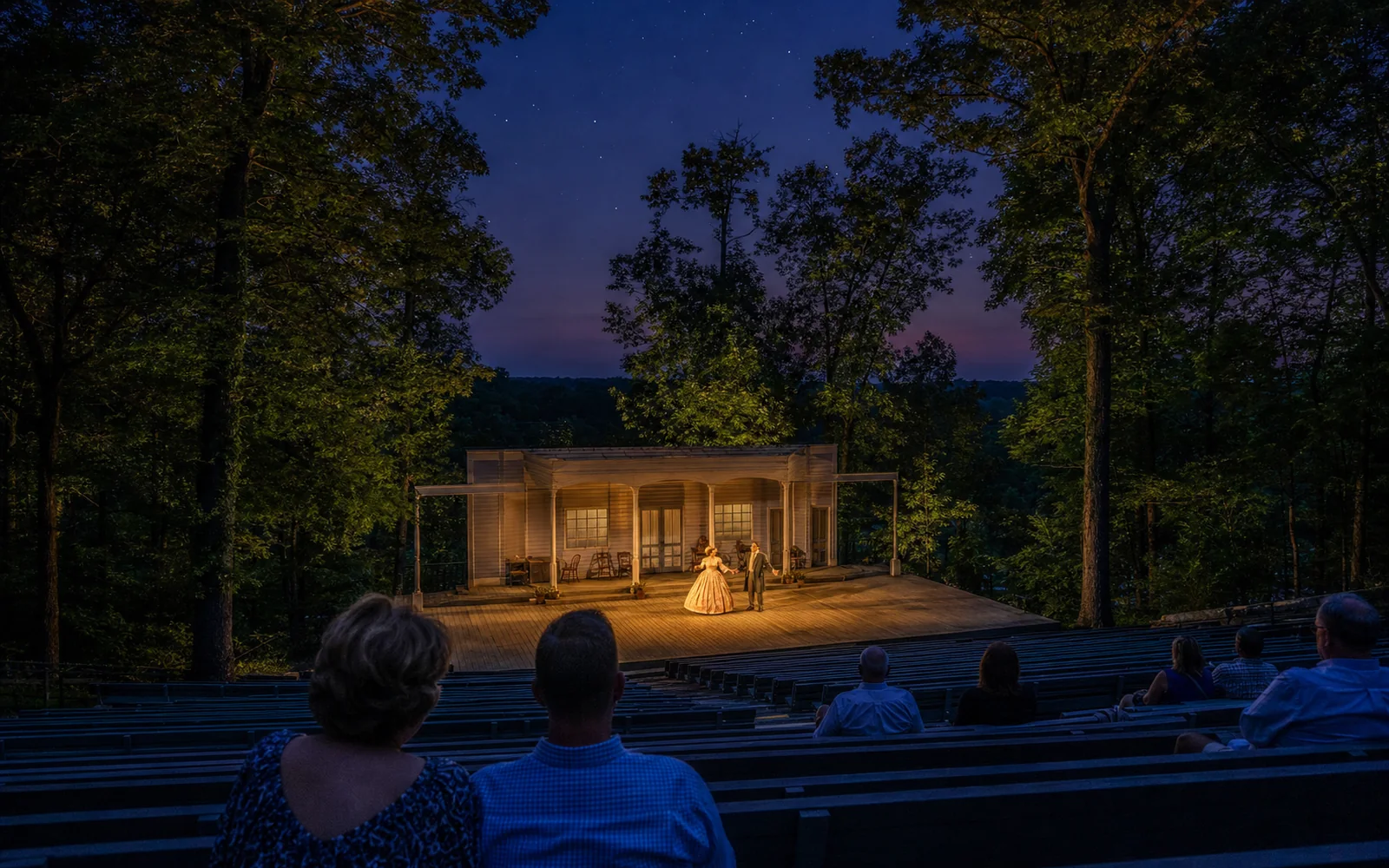
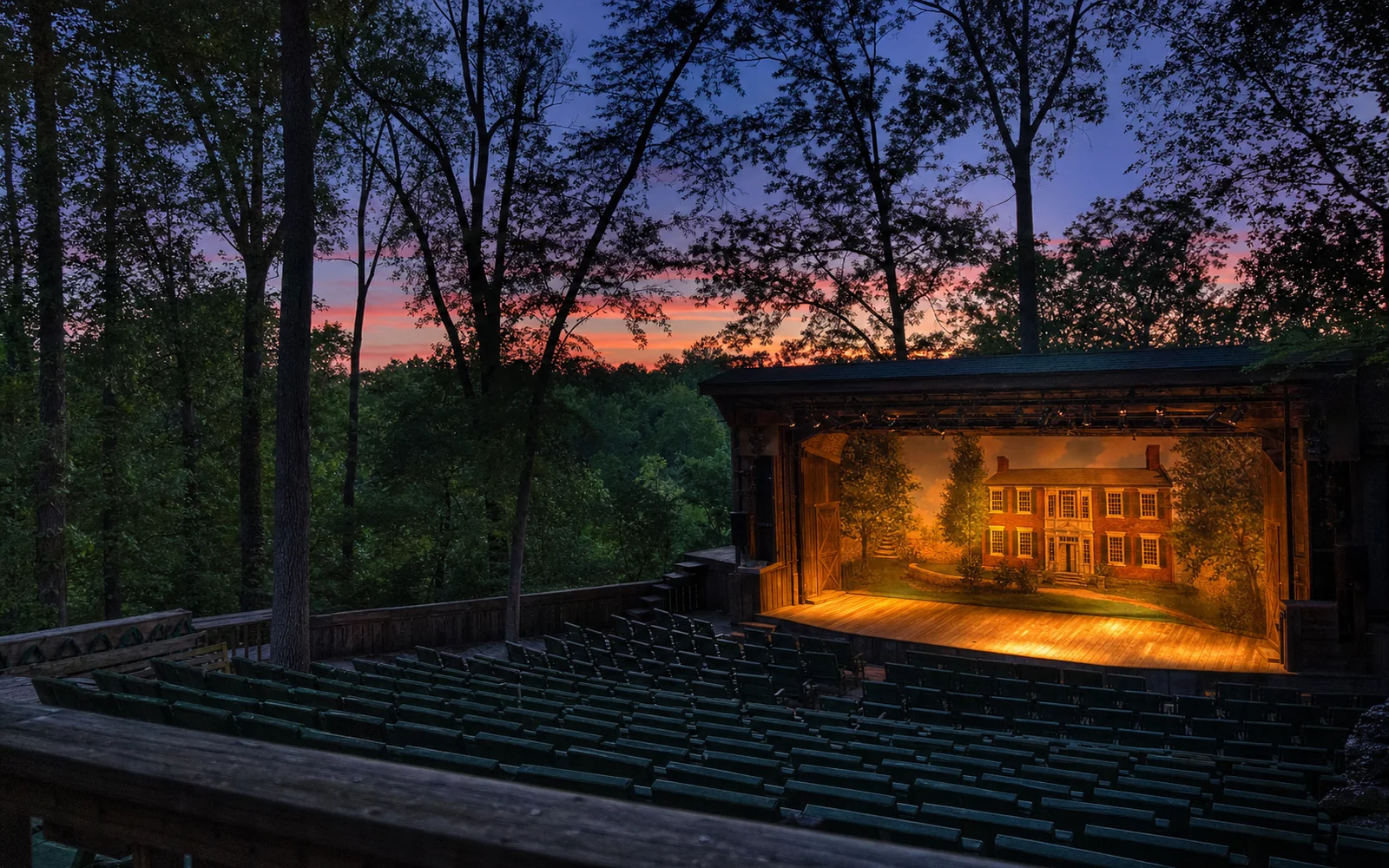
Paul Green’s outdoor musical has played every summer since 1959 in the J. Dan Talbott Amphitheatre inside the park, and the General Assembly named it Kentucky’s official outdoor musical in 2002. It follows Foster’s life through his songs. In 2026 it shared the season with Annie. Tickets for the Foster show and the Broadway series are $28 for adults, $25 seniors, $15 ages 6 to 12 and $9 ages 2 to 5, plus a $4 fee, per the show’s ticket page. When matinees are offered, they are staged in an air-conditioned indoor theater. See our Stephen Foster Story guide for the season.
How to plan a Foster evening
Tour the mansion in the late afternoon, eat an early dinner downtown, then return for the 8 p.m. show. Bring a cushion and bug spray for the amphitheater, and a light jacket: Kentucky summer nights can cool off fast after a storm. The park is at 501 E. Stephen Foster Ave., a mile east of Court Square. For the rest of the season, see summer in Bardstown.
A good companion read
It is easy to treat “My Old Kentucky Home” as just a sentimental anthem. In Bardstown you can hold its whole history in one afternoon: the enslaved families documented at Federal Hill, a Northern songwriter reading Stowe, a legislature that took until 1986 to fix a verse. Our Black history in Bardstown page is a good companion read before the tour.