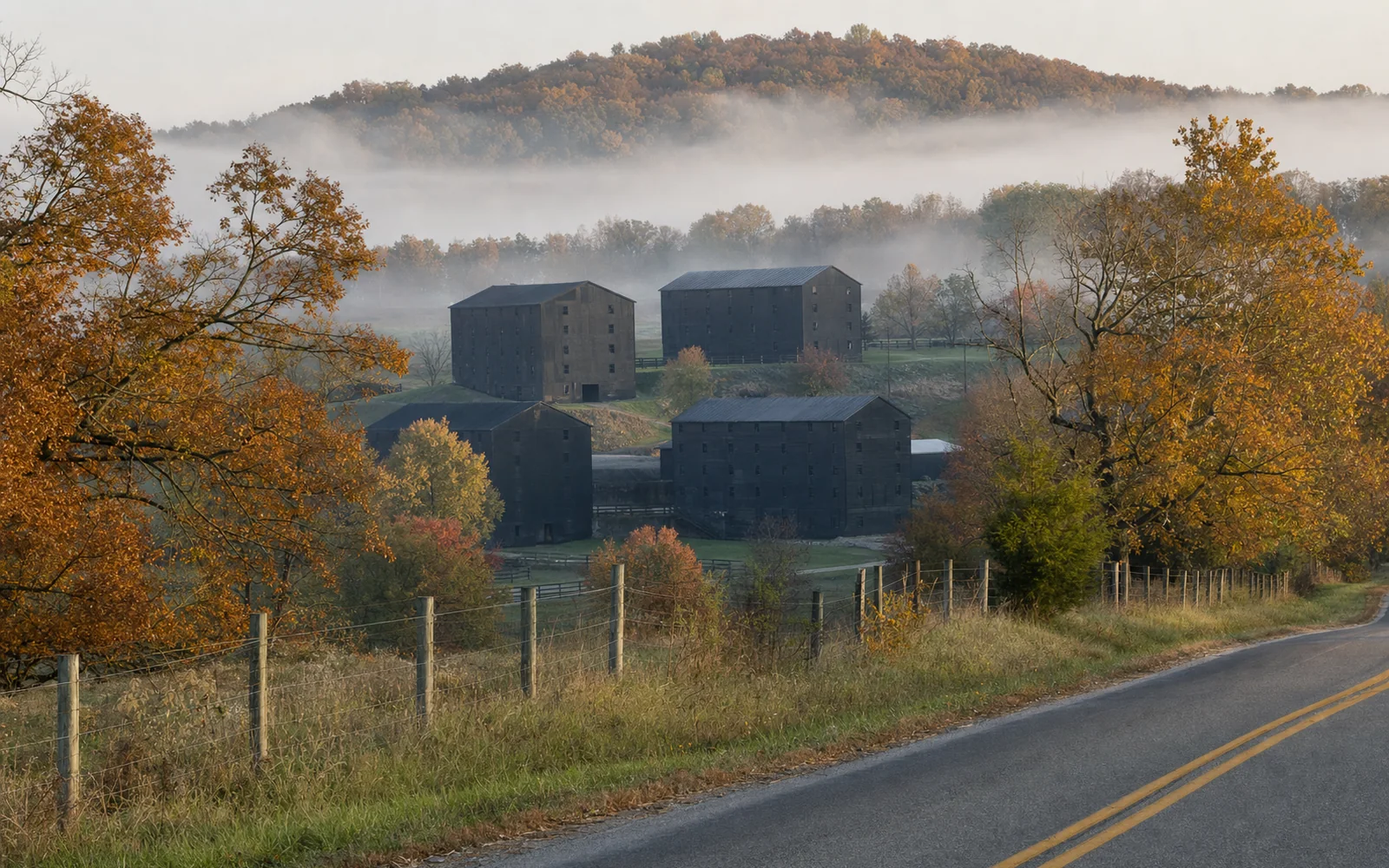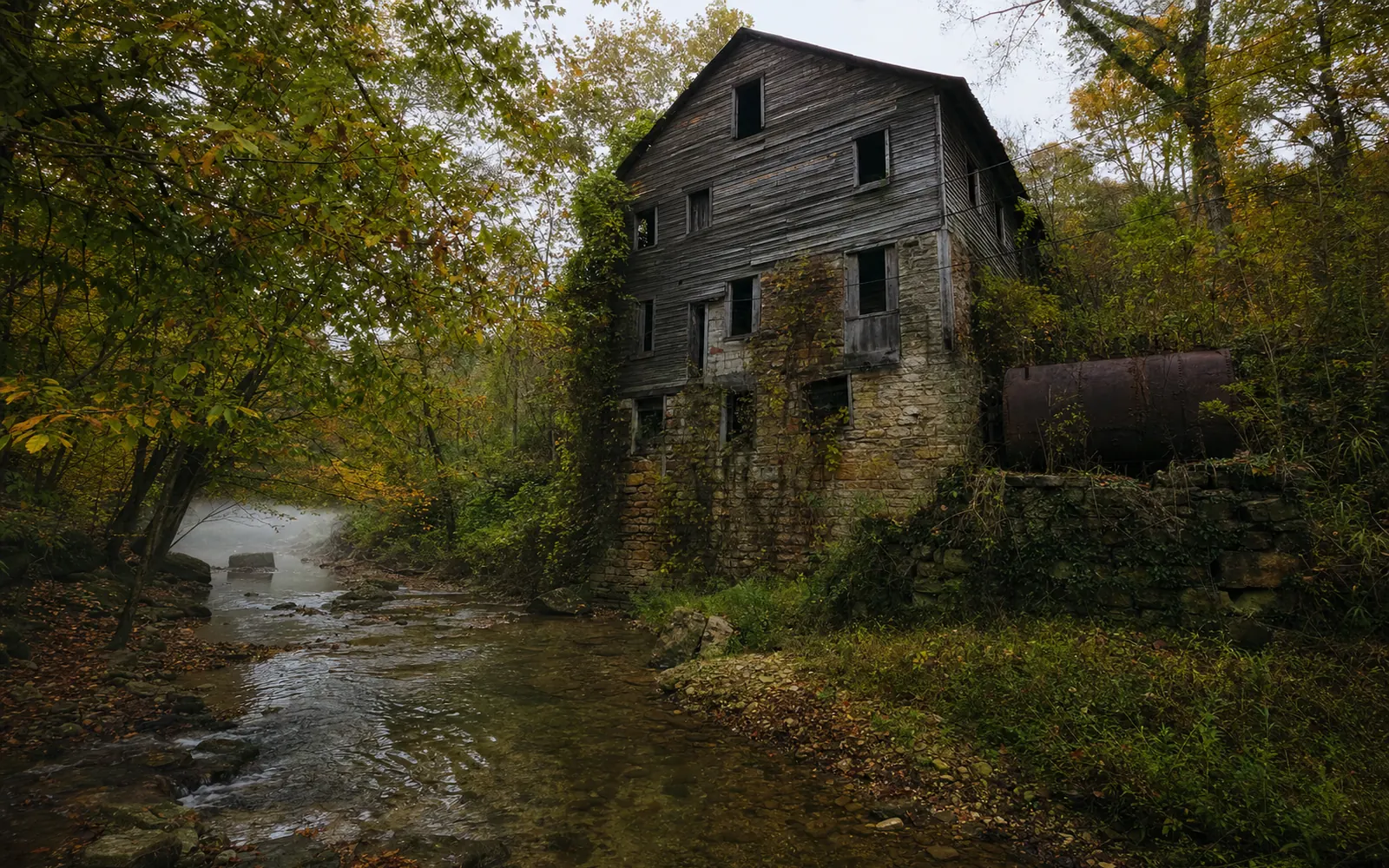
Bourbon in Nelson County began the way it did across frontier Kentucky: farmer-distillers turning surplus corn into whiskey in the 1780s and 1790s. What made this county different was what came next. The railroad drew the Beam family here in 1854, the Samuels family built a distillery at Deatsville in 1844, and Barton (1879), Heaven Hill (1935) and Willett (1936) put down roots around Bardstown. Those families survived Prohibition, a devastating 1996 fire and the lean decades, and their descendants and successors are why the county is full of barrels today.
The frontier: corn, creeks and the first stills
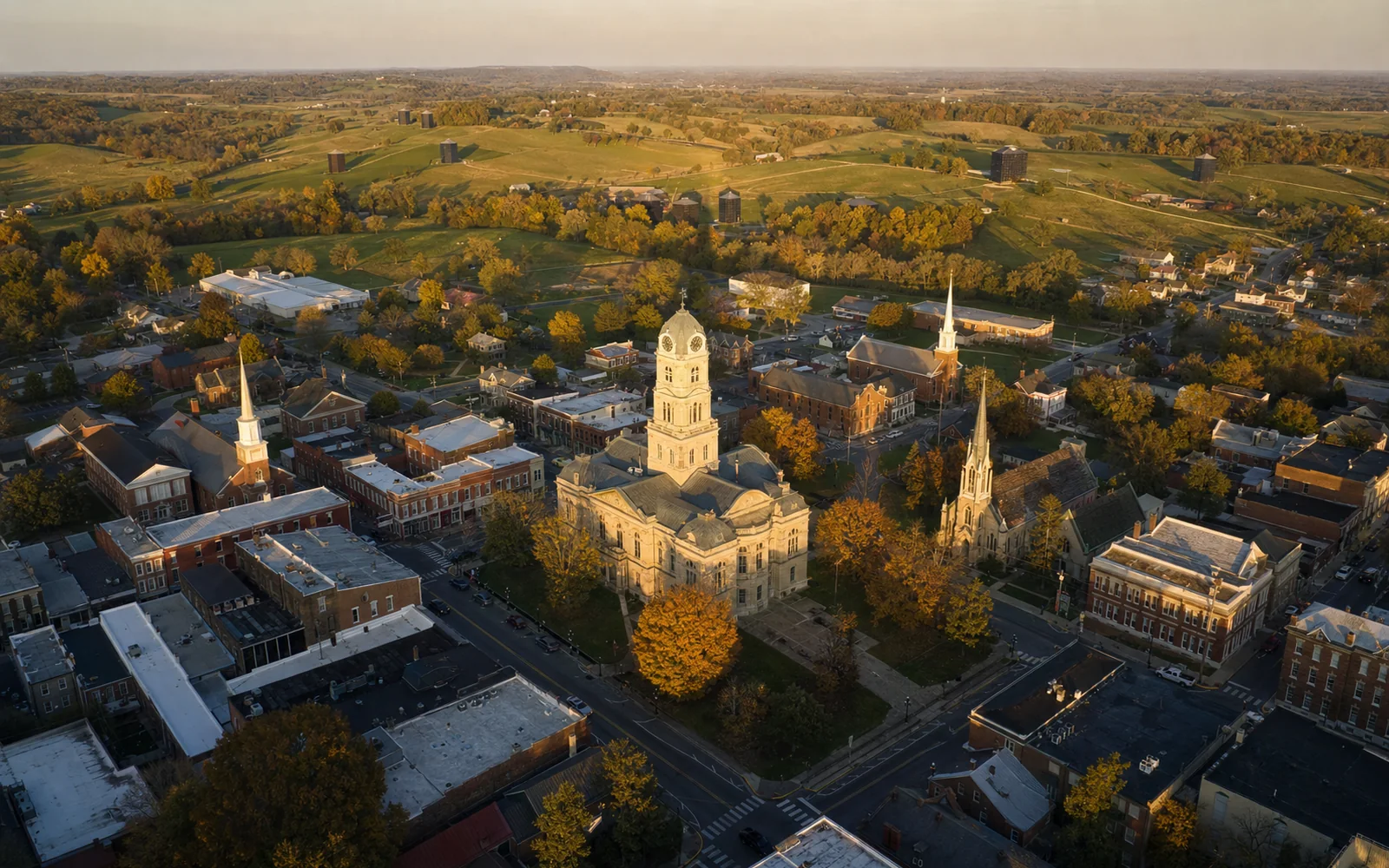
Nelson County was carved from Jefferson County on November 29, 1784, the fourth county in what is now Kentucky, and Bardstown became its seat. Settlers found what whiskey makers still prize here: good corn ground and limestone-filtered spring water. By 1785, according to Wikipedia’s account of the period, dozens of farmer-distillers west of the Alleghenies were already making corn whiskey. For a frontier farmer, whiskey was a way to turn a bulky crop into something that kept and traveled.
Preservation Distillery tells one local version of that beginning. Its farm sits on what was the Ritchie Land Trust, where, the distillery says, a distiller named Wattie Boone worked around 1776, “one of the first documented bourbon makers in what is now Bardstown.”
The Elijah Craig legend
You’ll see Elijah Craig’s name on a Heaven Hill bottle and hear that he “invented bourbon.” It is a legend. Craig, a Baptist preacher, did found a distillery around 1789, but in what became Scott County, north of Lexington, not here. The story that he invented bourbon or charred-barrel aging first appeared in print in 1874 without documentation; historian Henry Crowgey called it “a charming legend.” The honest version is better anyway: nobody invented bourbon. Hundreds of farmers worked it out.
The 1800s: families, railroads and brands
The families that shaped the county arrived through the middle of the century.
The Beams came for the railroad. Jacob Beam sold his first barrels of corn whiskey around 1795, and his grandson David M. Beam moved the family distillery to Nelson County in 1854 to use the expanding rail line, according to Wikipedia’s Jim Beam history. From 1880 the family whiskey was sold nationally as “Old Tub.”
The Samuels built at Deatsville. T.W. Samuels began building a distillery near Deatsville in 1844. By 1886 it mashed about 100 bushels a day, and a 1909 fire destroyed the distillery and six warehouses holding more than 9,000 barrels, according to a detailed history of the family. That same account repeats a local legend: that Frank and Jesse James surrendered their weapons to Sheriff T.W. Samuels on the porch of his store on July 4, 1865. Other accounts tell it differently, so enjoy it as a story. The old Samuels site is now being restored by Old SteelHouse, which opened a downtown tasting room in 2025.
Barton put down roots in town. The distillery on Bardstown’s edge that now makes 1792 bourbon was established in 1879. Before it took the Barton name it was the Tom Moore Distillery. Bourbon names turn up in the town’s taverns too: from 1916 to 1926 the Old Talbott Tavern belonged to T.D. Beam, Jim Beam’s brother, and a Moore family owned it from 1926 to 1964, per the tavern’s history.
In 1897 Congress passed the Bottled-in-Bond Act: one distiller, one distillery, one season, at least four years in a bonded warehouse and exactly 100 proof. It was a quality guarantee at a time when adulterated whiskey was common, and it still appears on labels in every gift shop in town.
Prohibition and the long pause
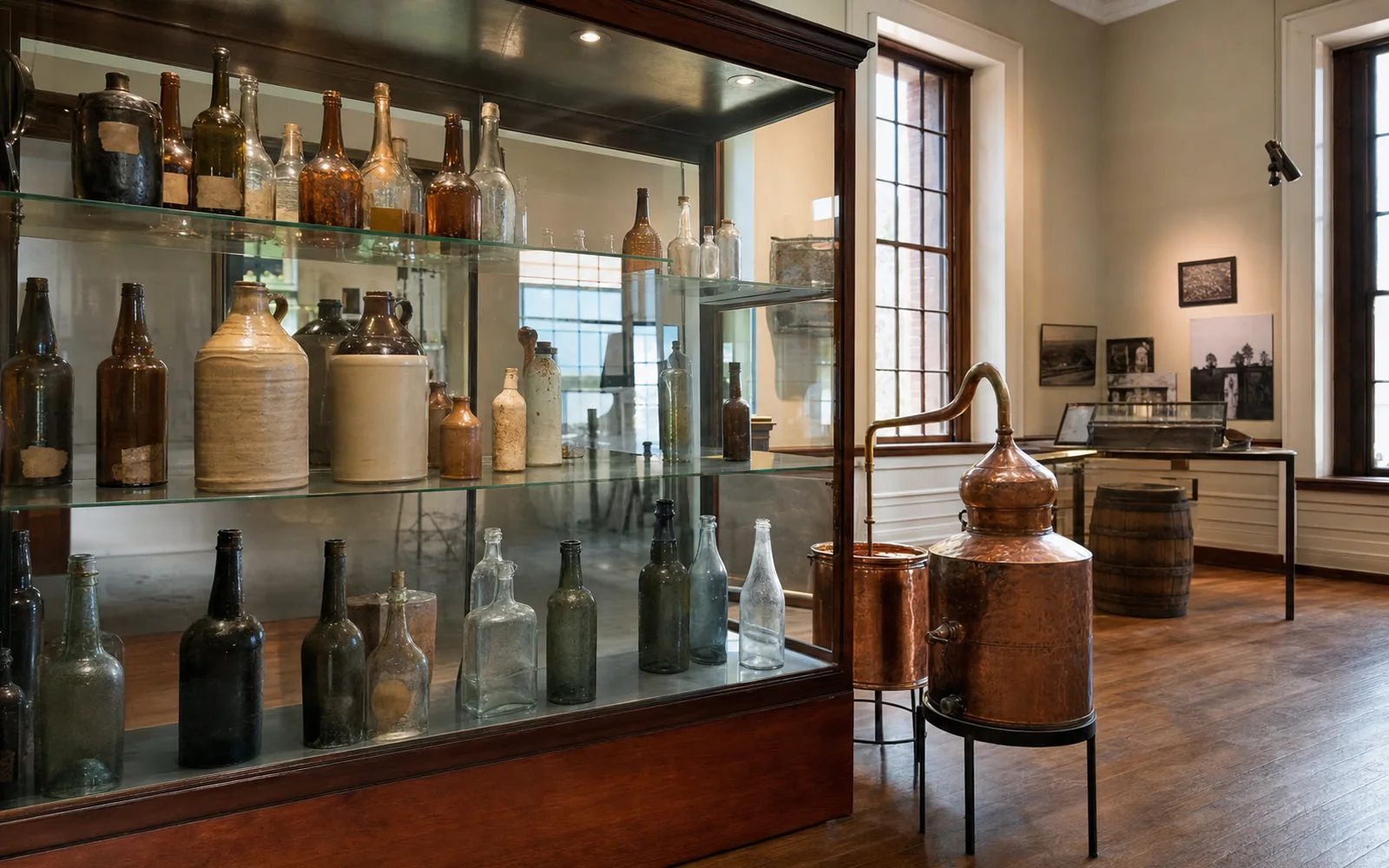
National Prohibition ran from 1920 to 1933, and it hit the county hard. The Samuels distillery closed in 1920; Leslie Samuels, then running it, bought a car dealership and served as Bardstown’s mayor. Some whiskey still moved legally as medicine, and the Oscar Getz Museum displays Prohibition-era prescriptions for “medicinal” whiskey and the bottles that went with them.
Repeal in 1933 set off a rush to rebuild:
- The Samuels distillery reopened under new owners in 1933, then closed for good in 1943 under World War II industrial-alcohol orders.
- Jim Beam rebuilt at Clermont in 1933-34, just over the line in Bullitt County. The family name went on the label in 1943.
- Heaven Hill was founded in 1935 by the five Shapira brothers with Bardstown-area investors, including distiller Joseph L. Beam. It filled its first barrel on December 13, 1935. The Shapiras later bought out the other investors, and every Heaven Hill master distiller since has been a Beam.
- Willett was built from spring 1936 by A. Lambert Willett and his sons on the family farm south of town, and its first batch ran on March 17, 1937.
- In 1944 Chicago spirits executive Oscar Getz bought the Tom Moore Distillery and renamed it Barton.
Mid-century: Maker’s Mark and a distinctive product
In 1953 Bill Samuels Sr., from the Deatsville family, bought Burks’ Distillery just over the county line in Loretto, Marion County, for $35,000. His wife Margie named the whiskey, drew the label and came up with the dipped red wax. Maker’s Mark became a National Historic Landmark in 1980, and the brand credits Margie with inventing bourbon tourism.
In 1964 Congress declared bourbon “a distinctive product of the United States,” which is why it can’t be made anywhere else.
Lean decades and a new era of collecting
The 1970s and 1980s were hard on American whiskey. In 1984 Even Kulsveen and his wife Martha (née Willett) bought the Willett property and ran it as Kentucky Bourbon Distillers, bottling whiskey bought from others rather than distilling their own. The same year, the Getz whiskey collection opened as a museum in Spalding Hall. In 1992 (some sources say 1991), a bourbon-tasting dinner in town grew into what became the Kentucky Bourbon Festival.
The fire of 1996
On November 7, 1996, during a severe storm, fire broke out in an aging warehouse at Heaven Hill. Burning bourbon spread to other buildings; Wikipedia describes flames that “leapt hundreds of feet into the air.” Heaven Hill says it lost its on-site distillery, seven rickhouses and almost 100,000 barrels; other accounts put it near 90,000 barrels, or about 7.7 million gallons. Brown-Forman and Jim Beam helped with production, and in 1999 Heaven Hill bought the Bernheim distillery in Louisville, where it distilled for the next quarter century. Its Bardstown campus became a visitor center and warehouse site.
The boom
The revival of the 21st century changed the map again:
| Year | What happened |
|---|---|
| 1999 | The Kentucky Bourbon Trail is created |
| 2000 | The General Assembly names the Kentucky Bourbon Festival the state’s official bourbon festival |
| 2012 | Willett resumes distilling on its own stills |
| 2016 | Bardstown Bourbon Company begins production |
| 2018 | Lux Row fills its first barrels; a Barton warehouse collapses in two stages |
| 2022 | Barton ends public tours; Log Still opens to visitors at Gethsemane |
| 2025 | Heaven Hill Springs Distillery opens; Old SteelHouse opens a downtown tasting room |
| 2026 | Jim Beam, Lux Row and Limestone Branch pause distilling; visitor centers stay open |
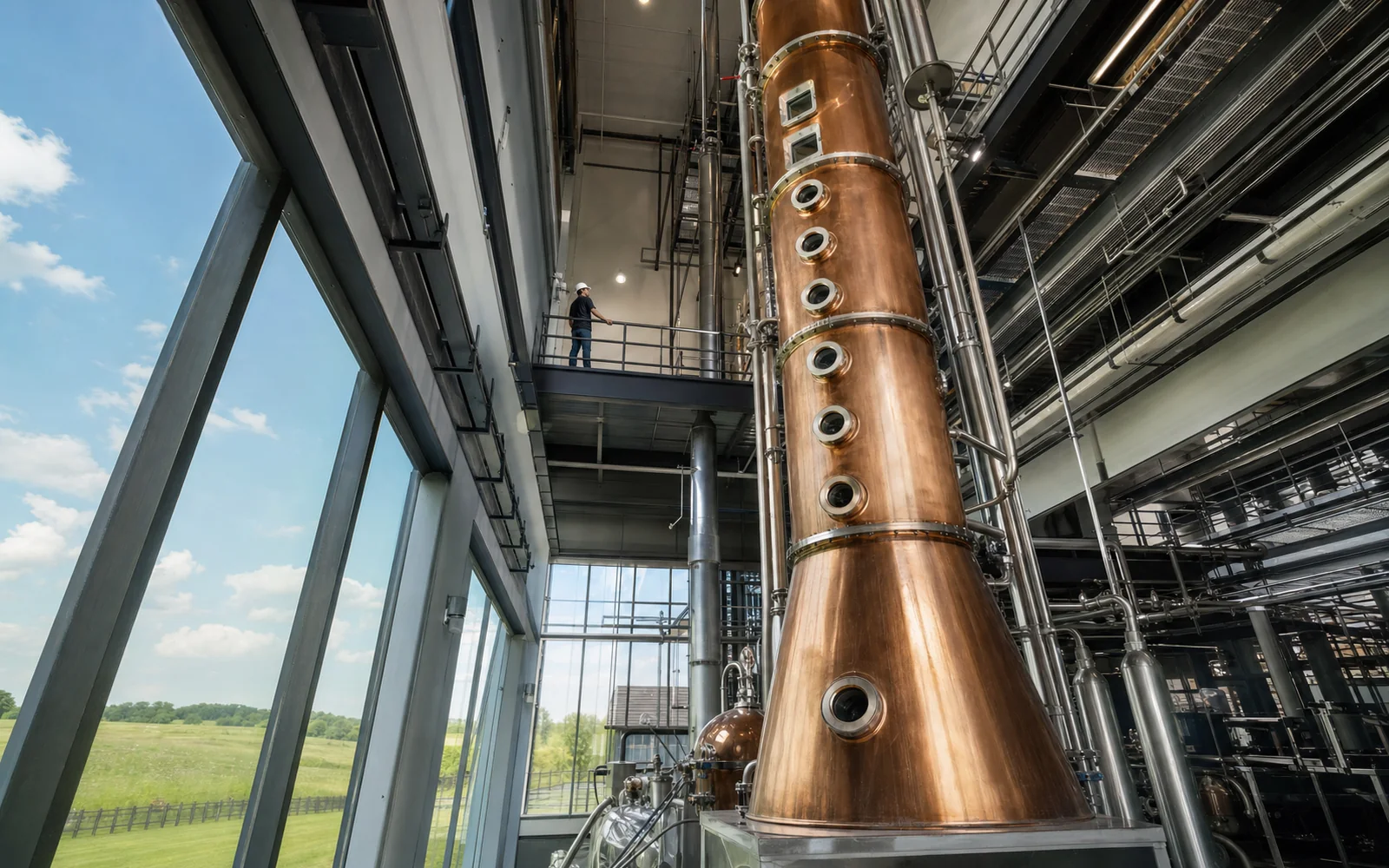
The biggest symbolic moment came on September 4, 2025, when Heaven Hill held the grand opening of the $200 million Heaven Hill Springs Distillery, named for the plant lost in 1996. For the first time in nearly 30 years, Heaven Hill was distilling in Bardstown again.
The 2026 production pauses at several distilleries reflect a market with more whiskey aging than buyers, but they don’t change a visit: tours, tastings and shops remain open.
Where to see the history
- The free Oscar Getz Museum for stills, bottles and Prohibition paperwork.
- The Heaven Hill Bourbon Experience’s family gallery and film.
- Willett’s hilltop, still run by Thompson Willett’s grandchildren.
- A pour at the Old Talbott Tavern, the building the Beam and Moore families once owned.
- Barton 1792’s warehouses, visible from the road.
For the town’s wider story, see the Bardstown history timeline, and for how all of this adds up to a title, read why Bardstown is the Bourbon Capital of the World.