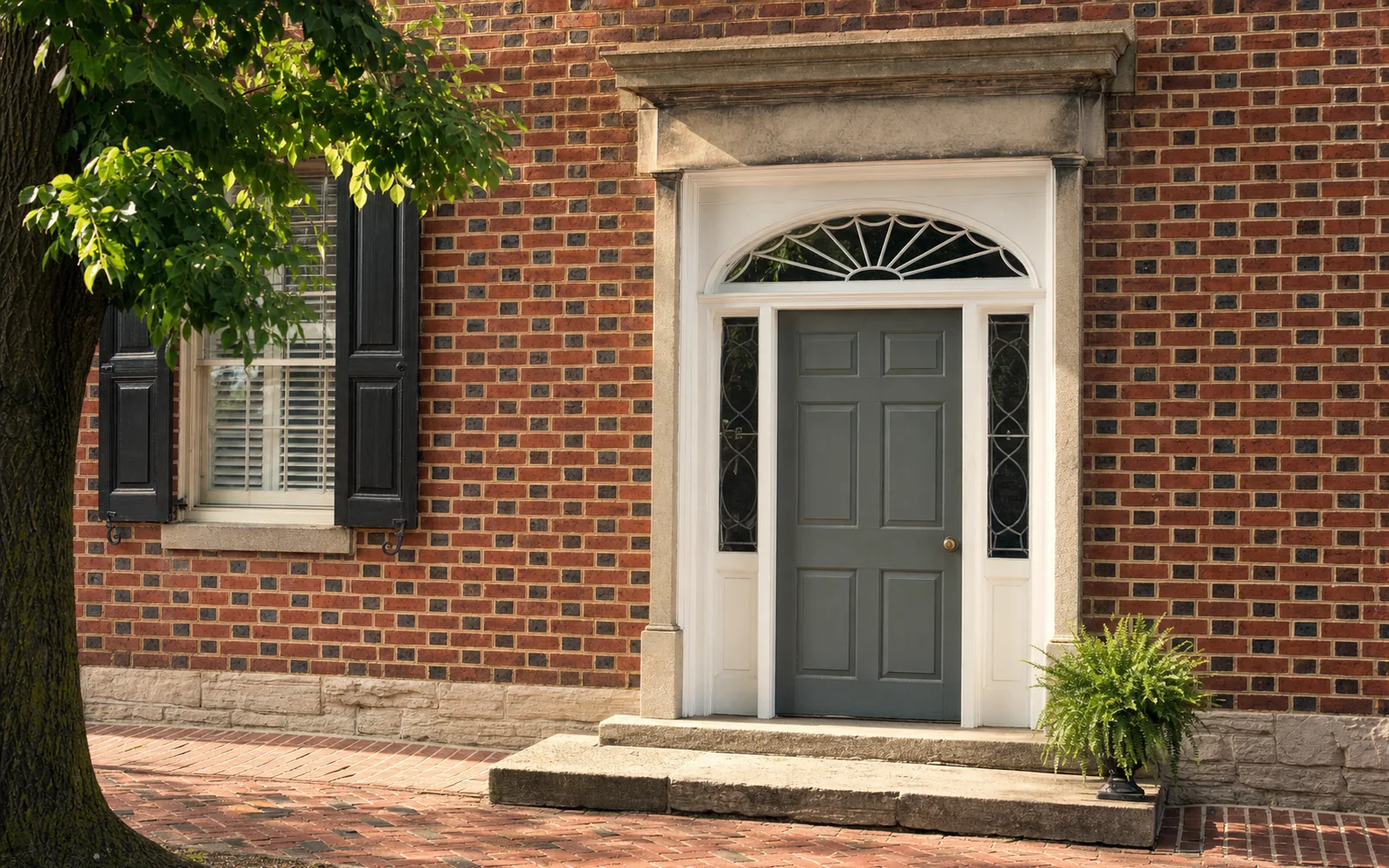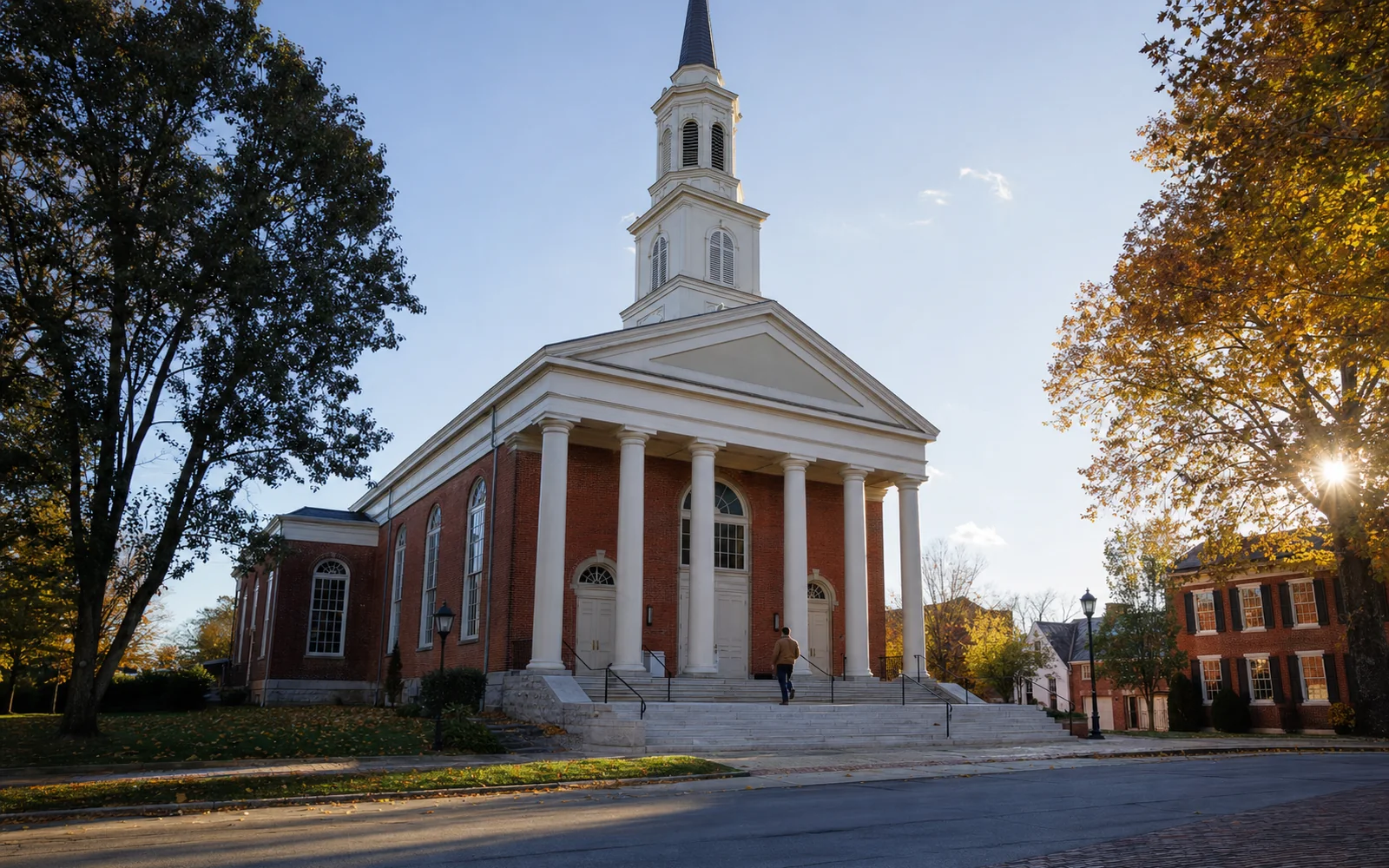
The Basilica of St. Joseph Proto-Cathedral, begun in 1816 at 310 W. Stephen Foster Ave., was the first Catholic cathedral west of the Allegheny Mountains and the seat of the first inland diocese in the United States. It is still a busy parish church, free to enter, with a set of European paintings that locals once credited to Rubens and Van Dyck and a king of France. The building is the real treasure; the painting story is a great tale that the evidence has quietly rewritten. Plan 20 to 40 minutes, and come on a weekday morning after the 8:45 Mass.
Why a cathedral in a small Kentucky town?
In 1808 the Vatican created the Diocese of Bardstown to serve every Catholic between the Appalachians and the Mississippi, a territory now split among ten states. Catholic families from Maryland had settled around Bardstown, and the town was the natural center.
The first bishop was Benedict Joseph Flaget, a French Sulpician priest born in 1763. He was consecrated on November 4, 1810, and reached Kentucky in 1811, where he found almost nothing: no cathedral, few priests and a flock scattered across the frontier. Over his long tenure, recorded in his Wikipedia biography, he founded a seminary, four colleges, eleven academies and an orphanage for girls. Before the cathedral was ready, he lived and trained priests at St. Thomas, three miles south; our St. Thomas Church and Flaget House page covers that site.
Building the cathedral, 1816 to 1823
The cornerstone was laid on July 16, 1816, to a design by John Rogers of Baltimore, the same builder who also worked on Wickland and did carpentry on the old jail. The church was usable for Mass by 1819 and the interior was finished in 1823. It is Greek Revival, which in practice means a columned front portico, a tall steeple and a clean, bright interior rather than Gothic gloom. This is a frontier cathedral, grand by the standards of a town of a few hundred houses.
The see moved to Louisville on February 13, 1841, and St. Joseph became a parish church with a long memory. It was listed on the National Register in 1974. The Vatican named Bardstown a titular see in 1995, Pope John Paul II designated the church a minor basilica on July 18, 2001, and it was reconsecrated in August 2002.
The paintings: legend and evidence
This is the part everyone asks about. Hanging in the nave are large European religious paintings, and the tradition, repeated in guidebooks for more than a century, is that they were royal gifts: from Pope Leo XII, from Francis I of the Two Sicilies and, most famously, from Louis-Philippe, the exiled French prince who later became king. Flaget had befriended Louis-Philippe and his brothers while the bishop was a missionary in Cuba, which made the story plausible. Older accounts attributed the works to Van Eyck, Van Dyck, Rubens and Murillo.
Here is the evidence. In 1981, historian Leslie Tihany published “French Legends Die Hard in Kentucky” in the Filson Club History Quarterly. Using Louis-Philippe’s own published diary, he showed the prince spent just two days in Bardstown in May 1797 and made no gifts to anyone in Kentucky. Art experts, including an Antwerp curator, rejected the famous attributions. The “Murillo” Coronation of the Blessed Virgin was judged a later Sicilian imitation. The altarpiece Crucifixion is signed “M. Van Brée.” And the “Rubens” Martyrdom of St. Bartholomew, painted around 1650, is now credited to the Italian Baroque painter Mattia Preti and described as a gift of Francis I. Tihany also names Father Charles Nerinckx, founder of the Sisters of Loretto, as one of the agents who bought paintings in Europe for the cathedral.
None of that makes them less worth seeing. They are big, dramatic, centuries-old canvases in a Kentucky parish church, and the Preti in particular is a serious painting. The parish’s own 1976 tour book quietly dropped most of the royal-gift claims, so if a well-meaning local tells you the king sent them, smile and enjoy the story.
The 1952 art heist
On November 12, 1952, thieves stole nine of the paintings, then valued at $875,000. The FBI recovered them in April 1953. The twist, per Tihany: the scheme was masterminded by a former assistant U.S. attorney, and at the thieves’ trial an expert valued the “Rubens” at about $7,500, a long way from the legend. The Clio entry on the basilica has a short account of the theft.
Who else is connected to St. Joseph
Daniel Rudd, born enslaved near Bardstown in 1854, was baptized here. He went on to found the American Catholic Tribune, the first Black-owned national Catholic newspaper, and the Colored Catholic Congress; he is buried in St. Joseph’s Cemetery. Our Black history in Bardstown page tells his story. The cemetery also holds the town’s Confederate monument, covered on our Civil War in Bardstown page.
What to look for inside
Walk in slowly and let your eyes adjust. The interior is bright and classical, in keeping with its Greek Revival outside, and the big canvases hang along the walls of the nave where you can study them up close. Find the Martyrdom of St. Bartholomew first; Preti’s dramatic lighting and muscular figures are the easiest way to see why earlier generations guessed Rubens. Then look for the signed Van Brée Crucifixion above the altar. If a docent is on hand, ask which paintings were among the nine stolen in 1952; it makes a good scavenger hunt.
Outside, step back across the street to take in the portico and steeple together; it is the classic view of the church, best in morning light.
Visiting the basilica
The parish at stjosephbasilica.org publishes Mass times: Monday to Friday at 8:45 a.m. with an added Wednesday Mass at 6 p.m.; Saturday at 4 p.m.; Sunday at 7, 9 and 11 a.m. Adoration runs Monday to Thursday from noon to 4 p.m., and confession is Saturday from 2:30 to 3:30 p.m. General visiting hours are not posted on the parish site, so call (502) 348-3126 before a special trip; weekday late mornings and early afternoons are the safest bet. There is no admission charge. Docents or parishioners are often on hand and are generous with the stories.
A few courtesies: this is a working church, so keep voices low, silence your phone, skip flash photography during services and step out if a funeral or wedding begins. Dress as you would for church.
Getting there
The basilica is a few blocks west of Court Square on Stephen Foster Avenue, a flat, easy walk past the Talbott Tavern. Parking is available nearby when there is no service; on Sunday mornings, walk from downtown instead.
Pair it with
Spalding Hall sits right next door on the same campus. Walk over to the free Getz Museum in Spalding Hall, then lunch downtown. If the Catholic story grabs you, drive the Kentucky Holy Land loop to St. Thomas, Nazareth and Loretto, ending at the Abbey of Gethsemani for Vespers. For the buildings around you, see our historic district architecture guide.