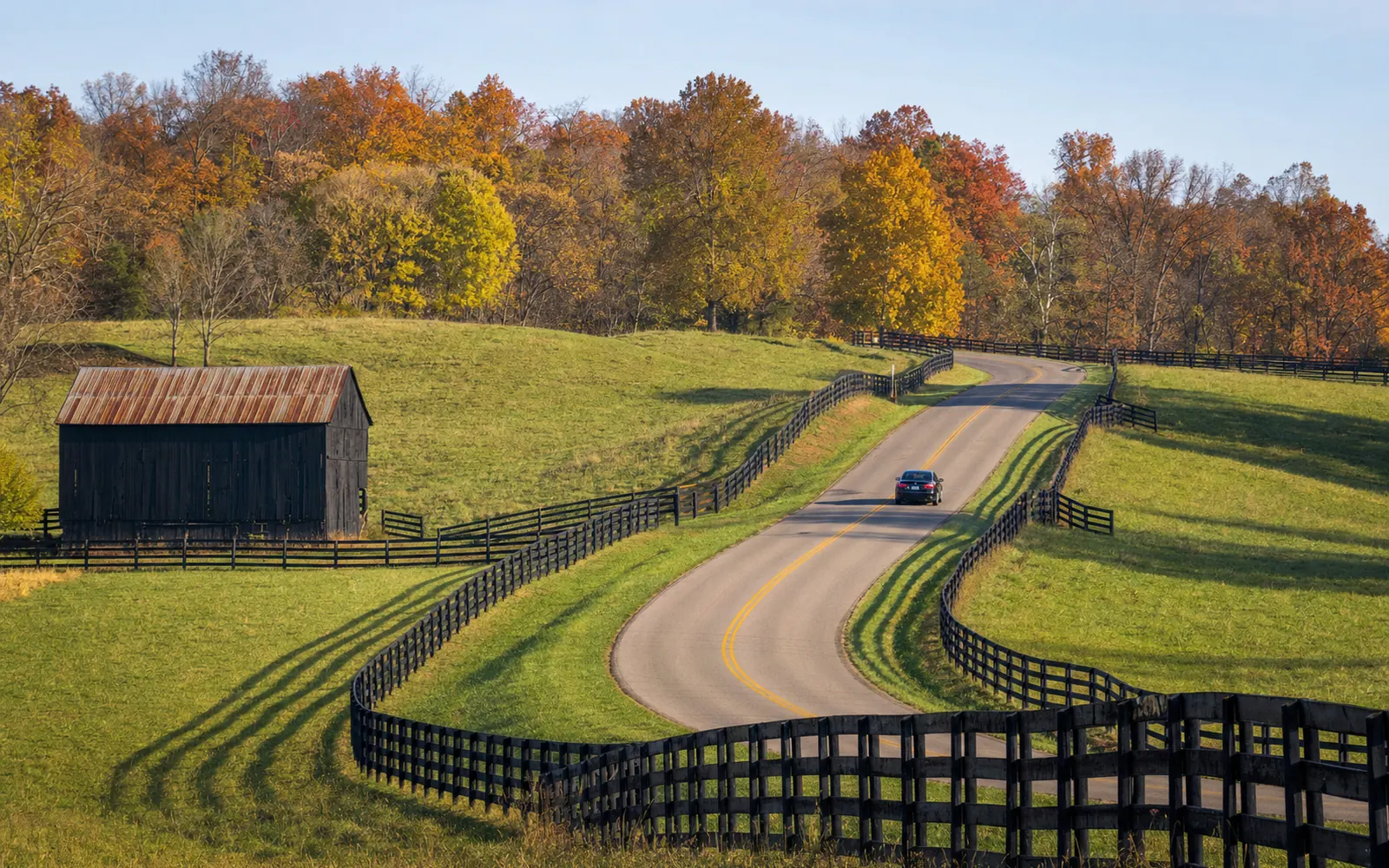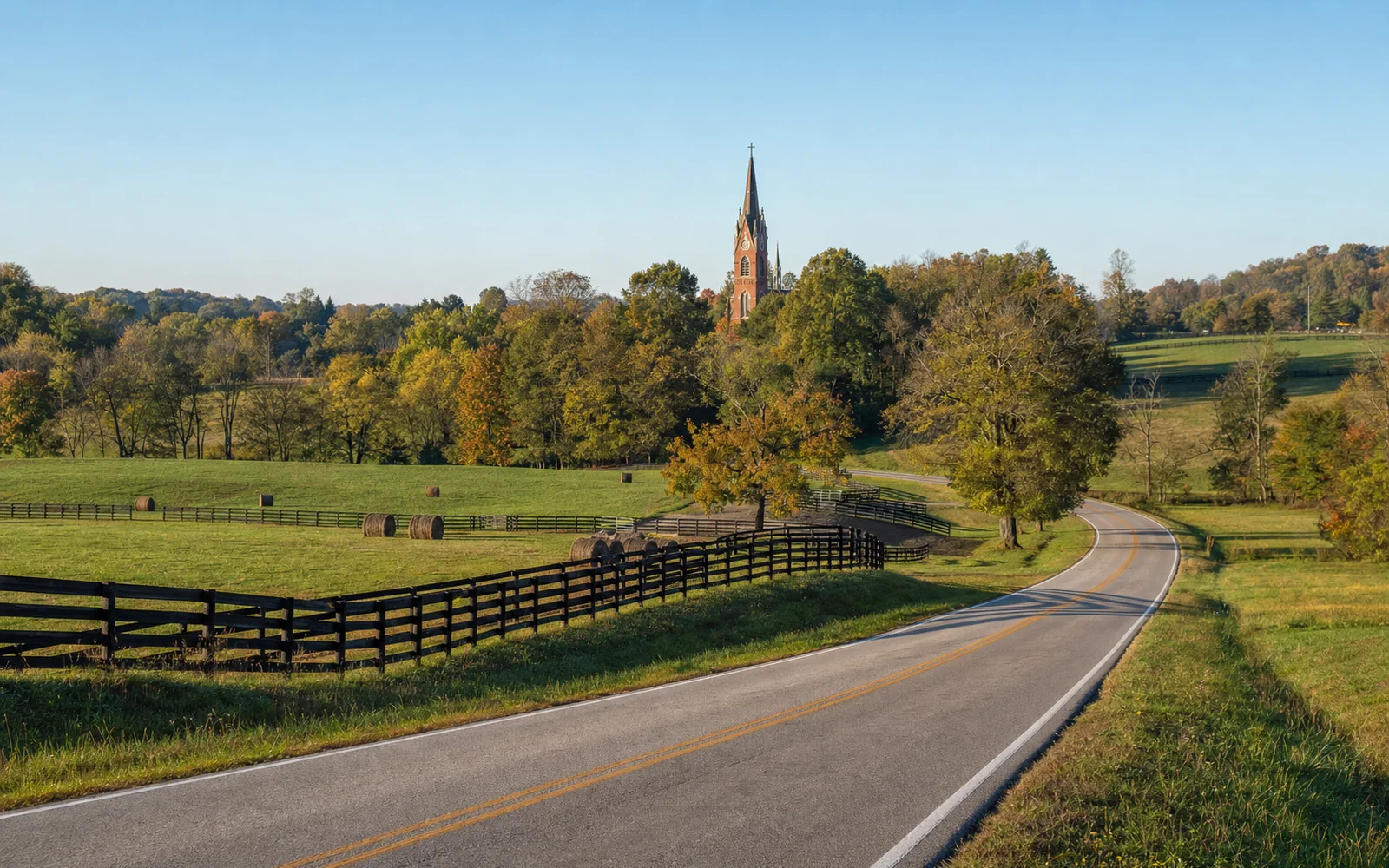
Kentucky’s Holy Land is the cluster of early Catholic landmarks around Bardstown: a basilica, a frontier seminary, two women’s religious communities founded in 1812, a Dominican priory and a Trappist abbey, all within about 30 minutes of Court Square. They exist because the Diocese of Bardstown, created in 1808, was the first inland diocese in the United States. There is no ticket and no official tour anymore, so the best way to see it is a self-drive loop, and one full day covers the highlights.
Why a Kentucky farm town became a Catholic capital
In 1787 a group of Maryland Catholics led by Edward Howard crossed the mountains and settled near Bardstown. More Catholic families followed, and the farms around Bardstown became the heart of Catholic life on the frontier.
Rome noticed. In 1808 it created the Diocese of Bardstown to serve every Catholic between the Appalachians and the Mississippi, a territory that now covers ten states. The French bishop Benedict Joseph Flaget arrived in 1811 and built fast: a seminary, a cathedral, schools, and support for the new sisterhoods that would teach and nurse across the region. The see moved to Louisville in 1841, which is why Louisville has the archbishop and Bardstown has the proto-cathedral. Bardstown became a titular see in 1995.
What survives is remarkable for its density. You can stand in the log house where the frontier’s first seminary began, then the cathedral its priests served, then the motherhouses of two orders of sisters founded the same year, all before lunch.
The sites at a glance
| Site | Founded | From Court Square | Visiting |
|---|---|---|---|
| Basilica of St. Joseph Proto-Cathedral | 1816 to 1819 | Downtown | Active parish; visit around Mass times |
| St. Thomas Church and Howard-Flaget House | 1795 cabin, 1816 church | About 3 miles, 10 minutes | Active parish; grounds and exteriors |
| Sisters of Charity of Nazareth | 1812 (moved 1822) | About 3 miles north | Tue to Sat, 9 a.m. to 4 p.m. |
| Abbey of Gethsemani | 1848 | 12 miles, about 21 minutes | Welcome Center Mon to Sat, 9 a.m. to 5 p.m. |
| St. Rose Priory, near Springfield | Present church 1852 | About 17 miles, 21 minutes | Active religious site; call ahead |
| Loretto Motherhouse, Nerinx | 1812 | About 18 miles, 30 minutes | Heritage Center Tue to Thu, 1 to 4 p.m. |
Drive times are minimums without traffic; add a few minutes on the country roads.
In Bardstown: the Basilica and St. Thomas
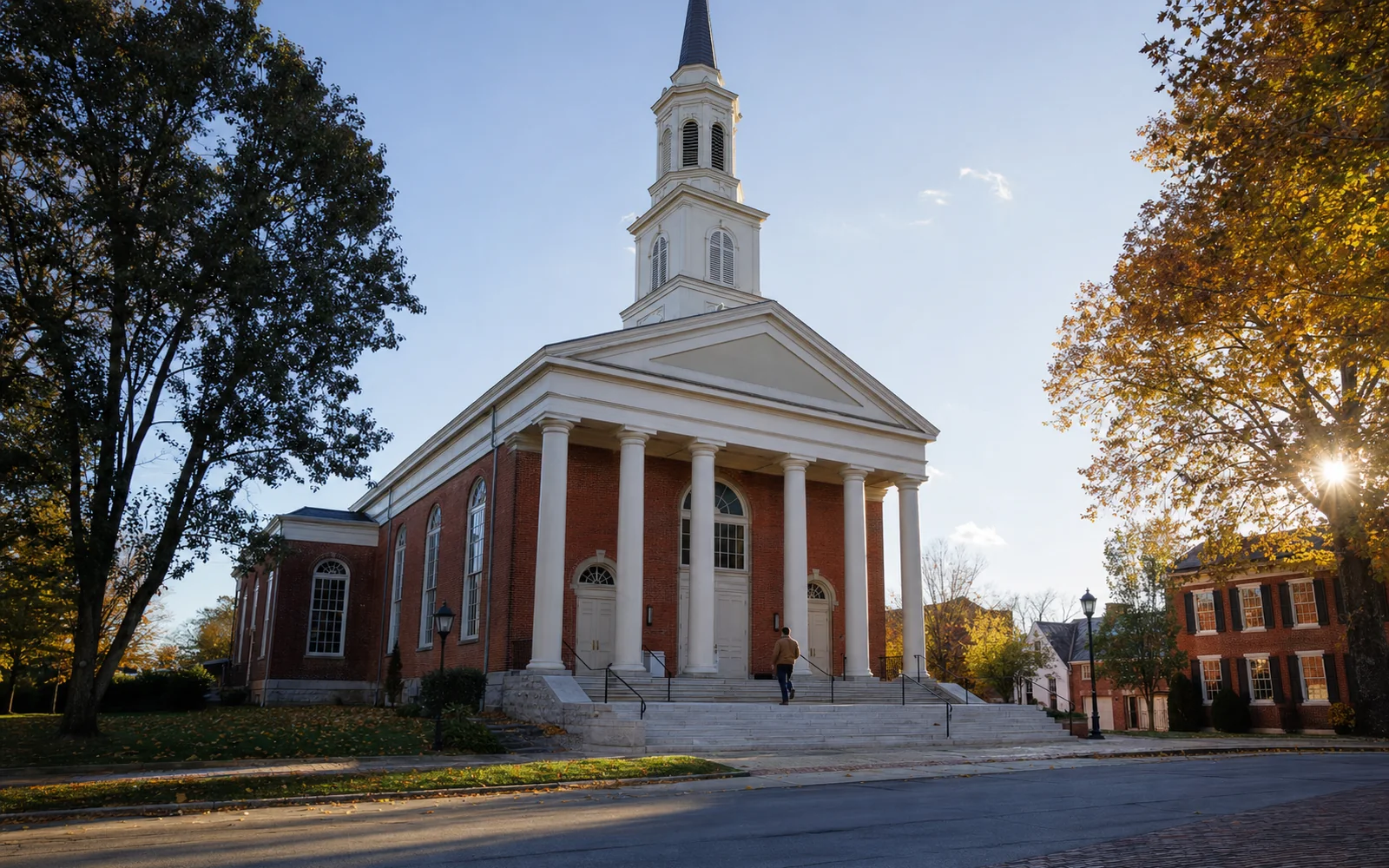
Begin downtown at the Basilica of St. Joseph Proto-Cathedral, whose cornerstone was laid in 1816. It was the first Catholic cathedral west of the Alleghenies. The famous European paintings inside come with a tangle of legends about royal gifts, and the landmark page sorts fact from story. The parish website lists Mass times; plan your visit around them.
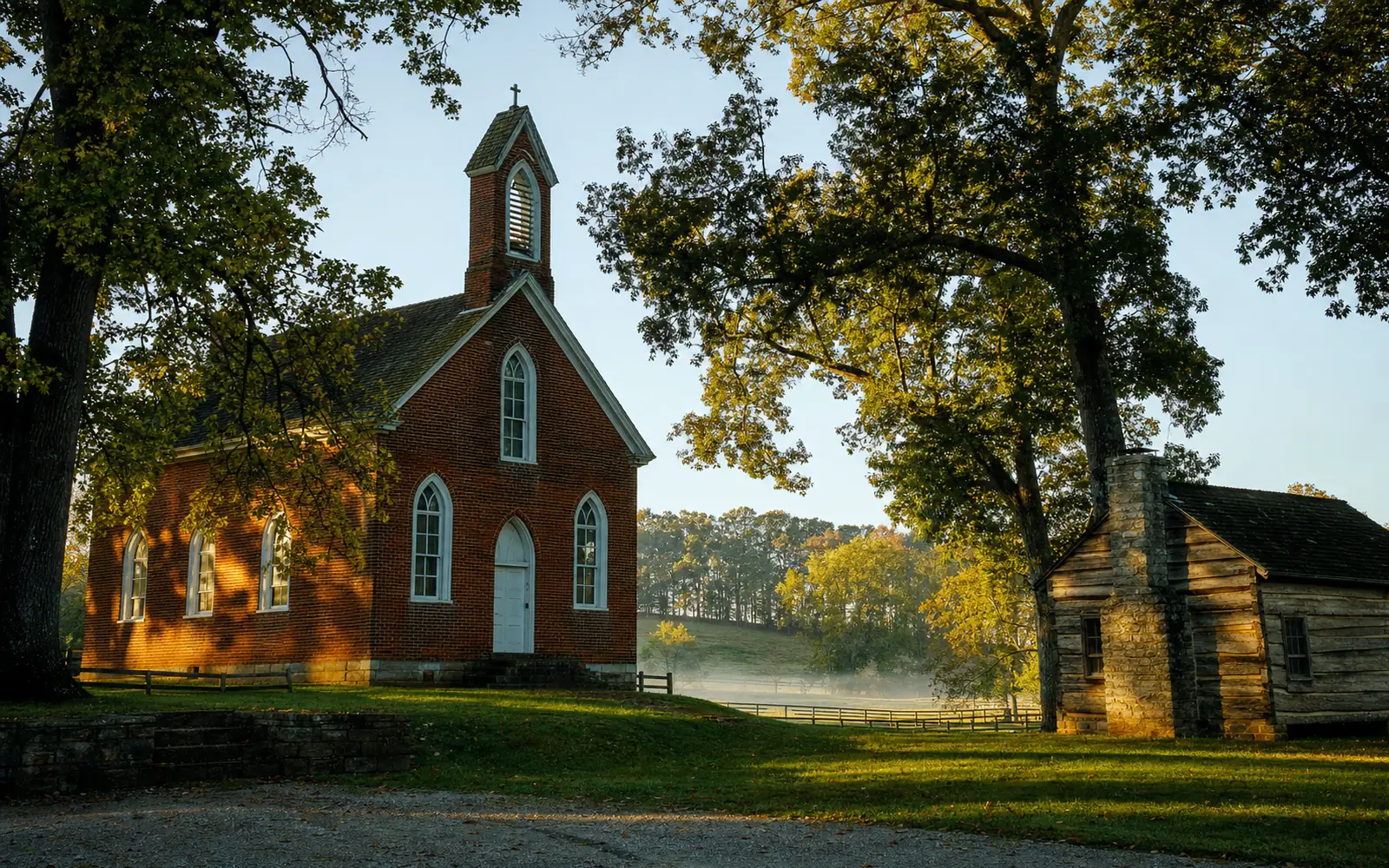
Then drive about 10 minutes south to St. Thomas Church, where the 1795 Howard log house held the first Catholic seminary on the American frontier from 1811, and where the Sisters of Charity of Nazareth were founded in 1812. Of all the stops, this is the one that makes the frontier feel real.
The sisters: Nazareth and Loretto
Two communities of women founded in 1812 did much of the teaching, nursing and orphan care that made the diocese work.
Sisters of Charity of Nazareth
Founded at St. Thomas, the sisters moved in 1822 to Nazareth, about 3 miles north of Bardstown. Catherine Spalding, elected superior at 19, led them for 45 years. They opened Nazareth Academy in 1814 and later founded the school that became Spalding University in Louisville. They nursed in Civil War hospitals, and in 2000 they formally apologized for their past slaveholding. The Nazareth visitor page lists the Visitor Center in O’Connell Hall and the Heritage Hall Museum, open Tuesday through Saturday, 9 a.m. to 4 p.m. Call 502-348-1545 to schedule a visit. The campus also has St. Vincent de Paul Church and a cemetery where Bishop John Baptist Mary David, the community’s founder, is buried.
Sisters of Loretto
The Sisters of Loretto were founded in 1812 by Mary Rhodes, Ann Havern and Christina Stuart under Father Charles Nerinckx, originally as “The Little Society of the Friends of Mary at the Foot of the Cross,” to educate the poor children of the frontier. The town of Loretto is named for them. Nerinckx also turns up in the Basilica’s story as a buyer of its European paintings.
Their motherhouse at 430 Academy Lane in Nerinx has a church with a concert series, a working farm, retreat centers and the Loretto Woods Natural Cemetery. The Heritage Center welcomes walk-ins Tuesday to Thursday, 1 to 4 p.m., and by appointment Friday to Monday; call (270) 431-0096. In 2026 the Heritage Center Quilt Show runs October 10 to 16.
The monks and friars: Gethsemani and St. Rose
Abbey of Gethsemani
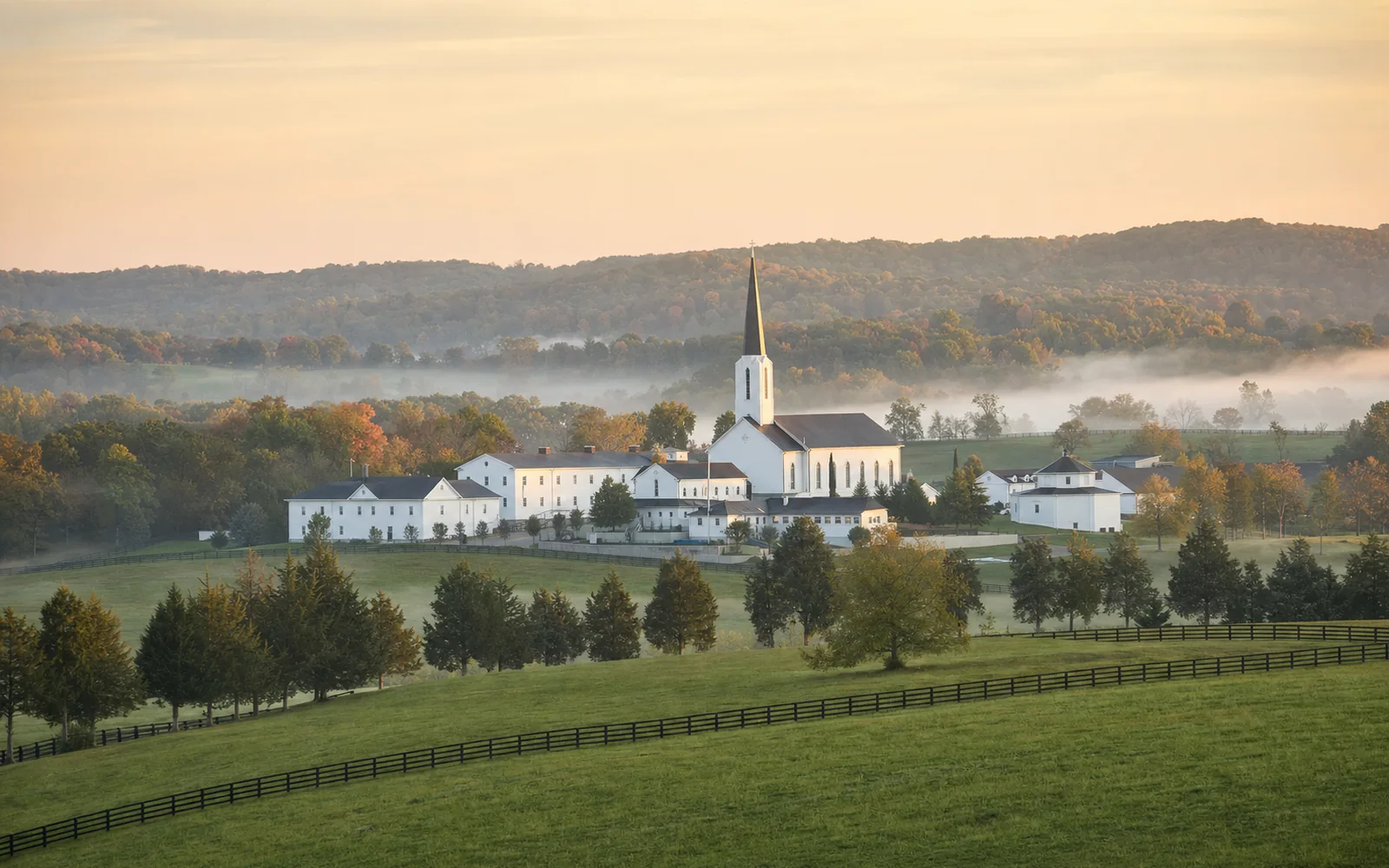
Founded on December 21, 1848, by 43 French monks, Gethsemani is a Trappist monastery of about 40 monks on 2,000 acres in the knobs south of Bardstown, and the longtime home of the writer Thomas Merton. The abbey’s visitor page confirms the church is open to the public for daily prayer. The Abbey of Gethsemani guide covers visiting in detail, including the prayer schedule and the famous fudge.
St. Rose Priory
Near Springfield in Washington County, St. Rose Priory was the first foundation of the Dominican order in the United States and is described as the first Catholic educational institution west of the Alleghenies. The present Tudor Gothic church, designed by William Keely, dates to 1852. It is an active religious site, so treat it as a place of worship and check ahead if you hope to go inside. It sits near Lincoln Homestead State Park, which makes an easy pairing.
A one-day Holy Land route
This route skips backtracking and fits the published hours.
- 9 a.m.: Basilica of St. Joseph, downtown (45 minutes). Check the Mass schedule first.
- 10 a.m.: St. Thomas Church, 10 minutes south (40 minutes).
- 11:15 a.m.: Abbey of Gethsemani (1 hour). Stay for the 12:15 p.m. midday prayer if you like, then buy fudge at the Welcome Center.
- 1 p.m.: lunch near Loretto. Star Hill Provisions at Maker’s Mark serves lunch daily; check its current hours before you go.
- 2:30 p.m.: Loretto Motherhouse Heritage Center (Tuesday to Thursday walk-in; otherwise book).
- Back to Bardstown by 5 p.m., or swing north to Nazareth on a second morning.
A Tuesday, Wednesday or Thursday lines up best: Loretto’s walk-in hours and Nazareth’s Tuesday-to-Saturday hours both fall on those days. Avoid Sunday if you want the Gethsemani Welcome Center, which opens Monday through Saturday.
If you want to turn the Loretto end into a bourbon afternoon instead, the Loretto and Lebanon day trip combines the motherhouse with Maker’s Mark and Limestone Branch. Lebanon’s tourism office promotes the same Holy Land circuit from the Marion County side.
Tips for visiting sacred places
- These are living communities, not museums. Services and prayer come first, and some areas are private.
- Dress as you would for church and silence your phone before you walk in.
- Photography of buildings and grounds is generally fine; do not photograph people at prayer.
- Cell service can be patchy around Gethsemani and Loretto, so load your route before you leave town.
- Leave a donation. None of these sites charges admission, and all of them maintain very old buildings.
For more ways to fill a day outside town, see the full list of day-trip routes from Bardstown.