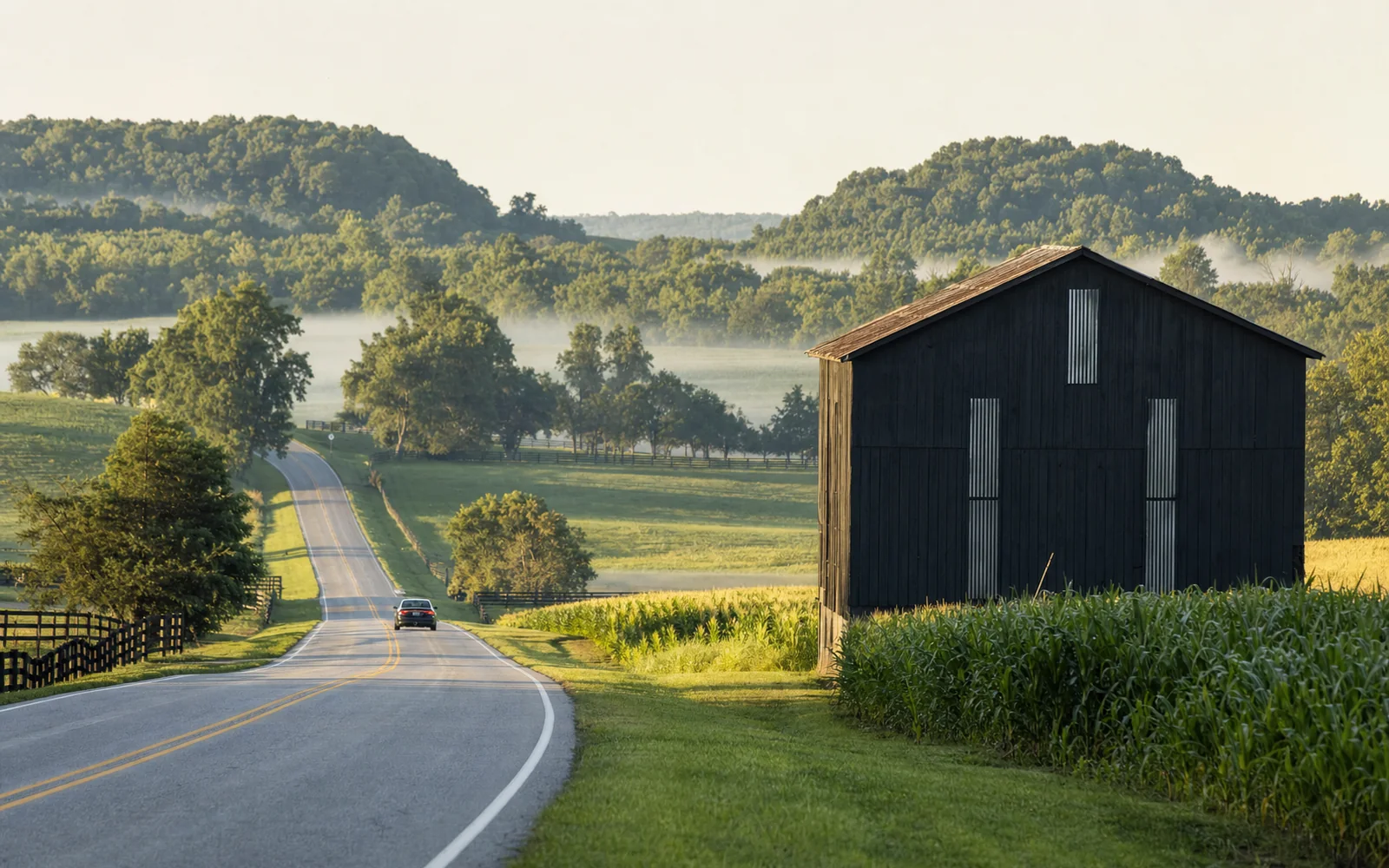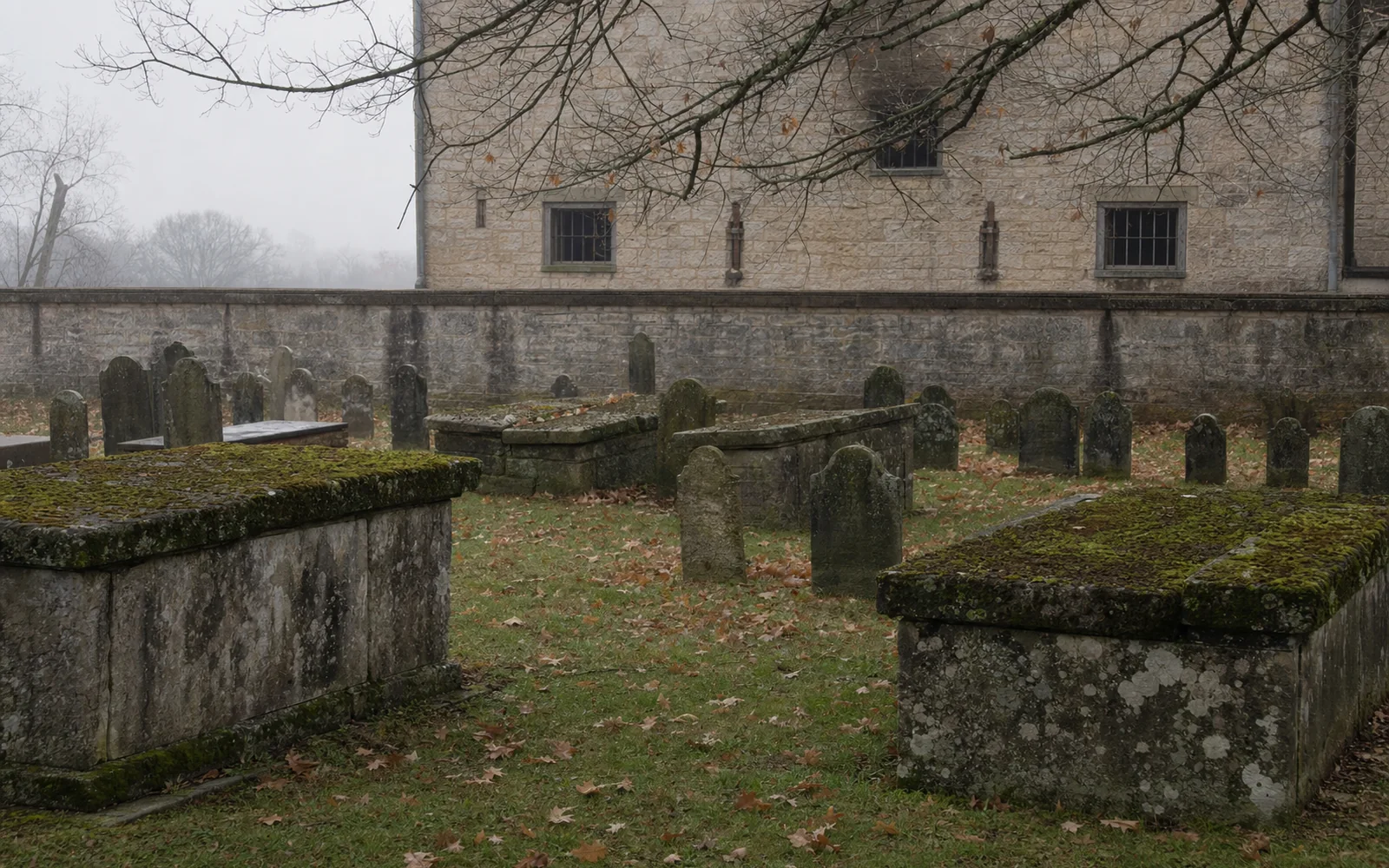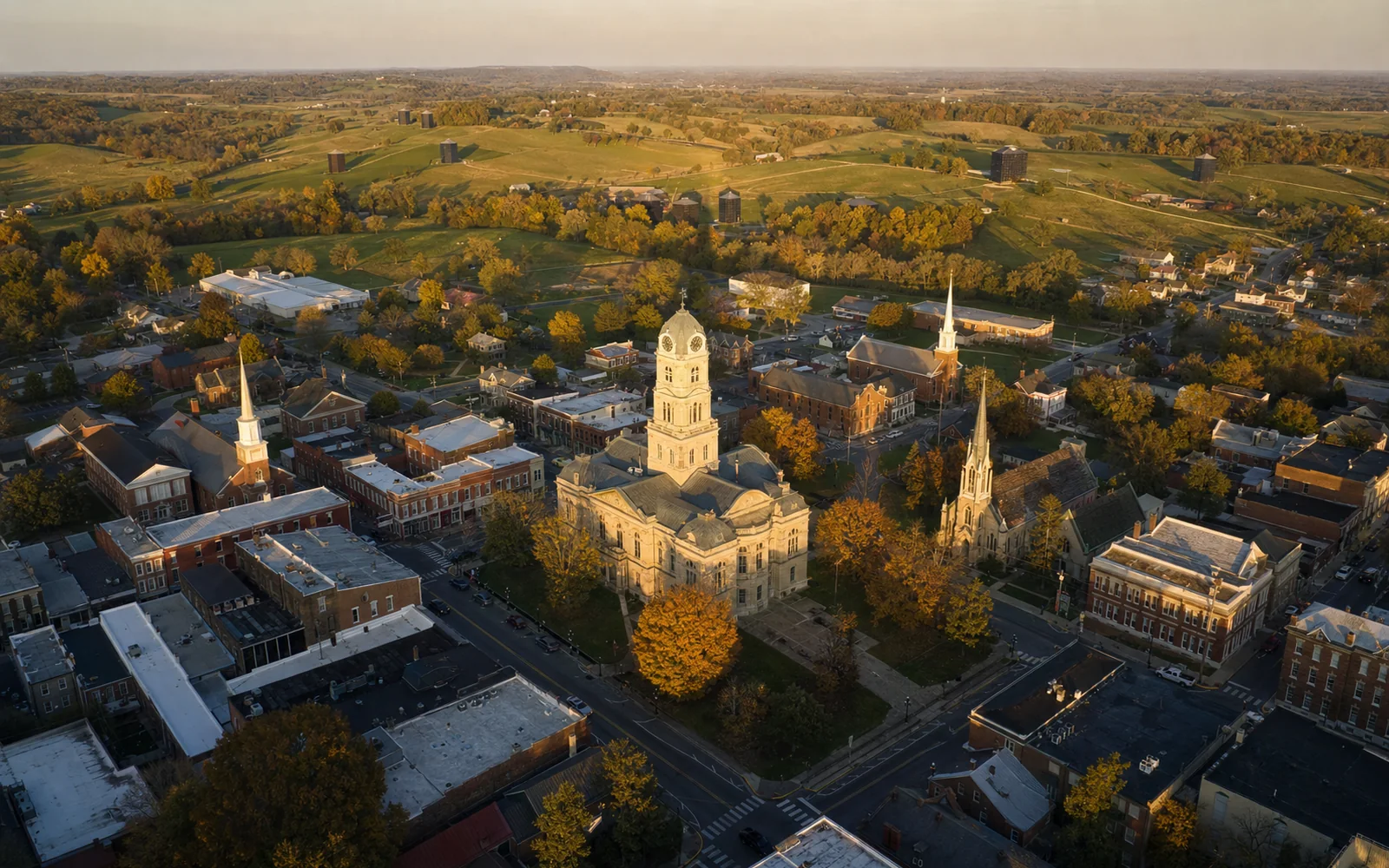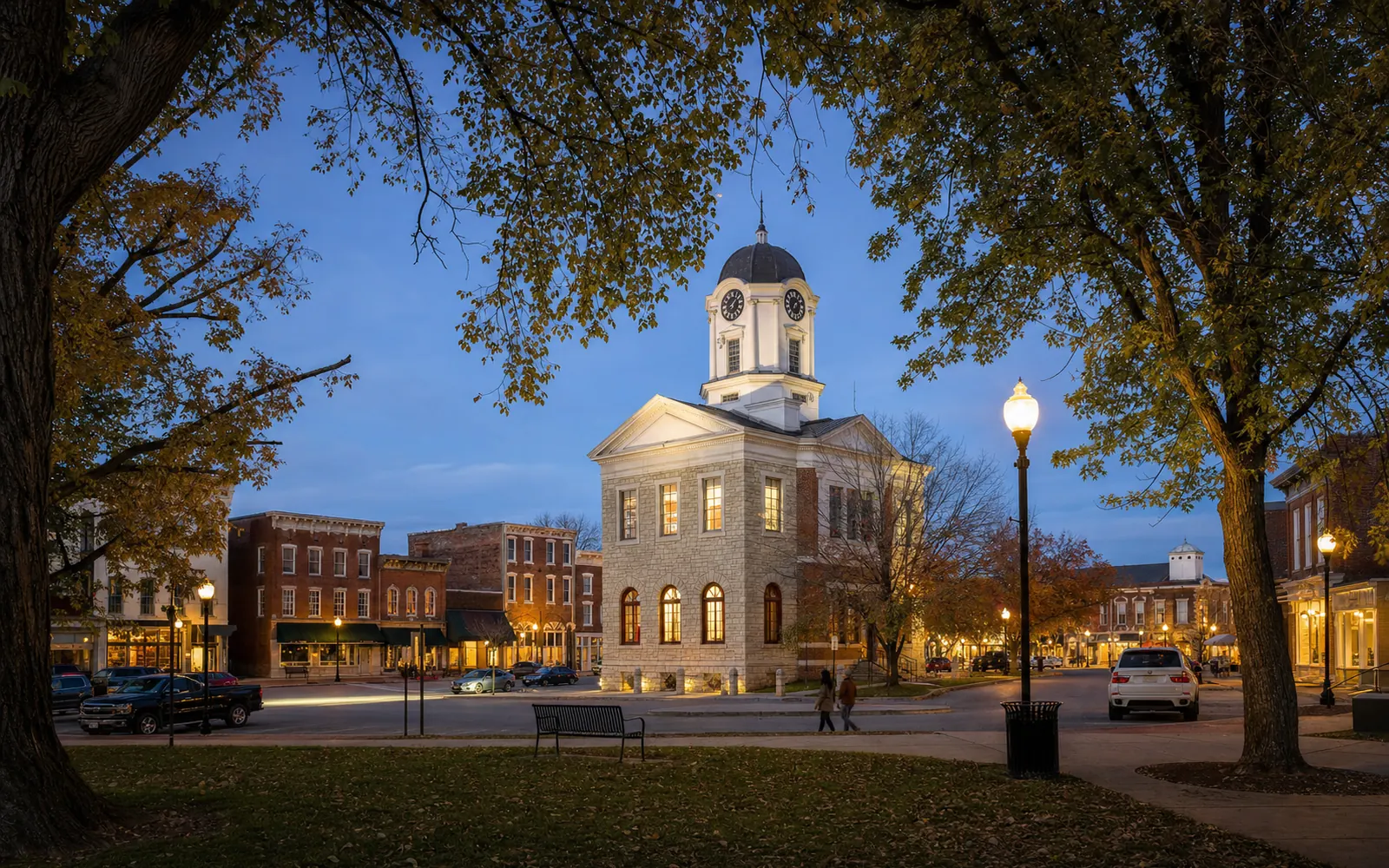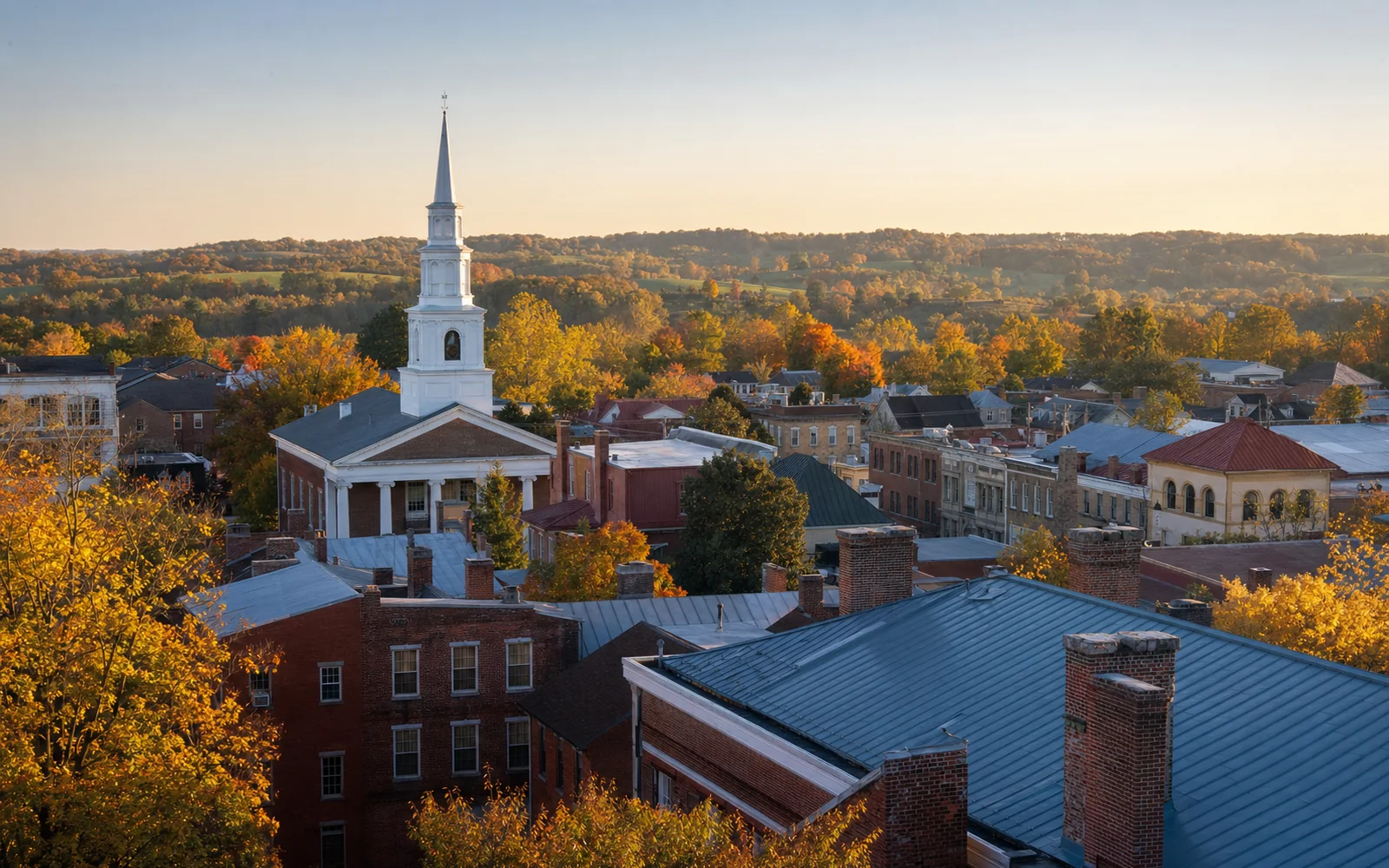
Bardstown is a town of about 13,500 people in central Kentucky, the seat of Nelson County, first settled in 1780 and now best known as the Bourbon Capital of the World. It sits about an hour south of Louisville at 659 feet, where US 31E, US 62 and US 150 meet. In practice that means a compact brick downtown around a courthouse square, a state park built around the house linked to “My Old Kentucky Home,” and working distilleries in nearly every direction. Few American towns this size pack in so much history and so much whiskey.
Bardstown quick facts
| Fact | Detail |
|---|---|
| Population | 13,567 (2020 census); about 13,739 (2022 estimate) |
| Founded | First settled 1780; established 1788; incorporated 1838 |
| Named for | The Bard brothers: David Bard’s 1785 land grant, platted by William Bard |
| County | Seat of Nelson County (formed November 29, 1784; 46,738 people in 2020) |
| Elevation | 659 feet (201 m) |
| Area | 12.19 square miles |
| Coordinates | 37.8175° N, 85.4550° W |
| Time zone | Eastern (EST/EDT) |
| ZIP and area code | 40004; 502 |
| Main roads | US 31E, US 62, US 150; Blue Grass Parkway exits 21 and 25 |
| Nickname | Bourbon Capital of the World |
| Honors | Most Beautiful Small Town in America (Rand McNally/USA Today, 2012); No. 8 on Travel + Leisure’s 2023 list |
Figures come from the Wikipedia entry for Bardstown and the Nelson County entry.
How the town got its name
The name has wandered. Early records call the settlement Salem, then Bard’s Town, and the 1788 charter spells it “Baird’s Town.” Visitors in the 1790s wrote “Beardstown.” All of it traces back to the Bard brothers: David Bard held a 1,000-acre grant from 1785, and William Bard surveyed and laid out the town. When the future French king Louis-Philippe passed through in 1797, he reported that the place had “nearly 150 houses” on a plateau ringed by tall, thick forest. The forest is mostly farmland now, but the street grid he walked is still the one you’ll use.
Locals will tell you Bardstown is Kentucky’s second-oldest city. Treat that as the town’s own proud claim rather than settled record; the neutral version is “one of the oldest cities in Kentucky.” The Bardstown history timeline takes the story from the pioneer stations to the bourbon boom.
What Bardstown is known for
Bourbon, above everything
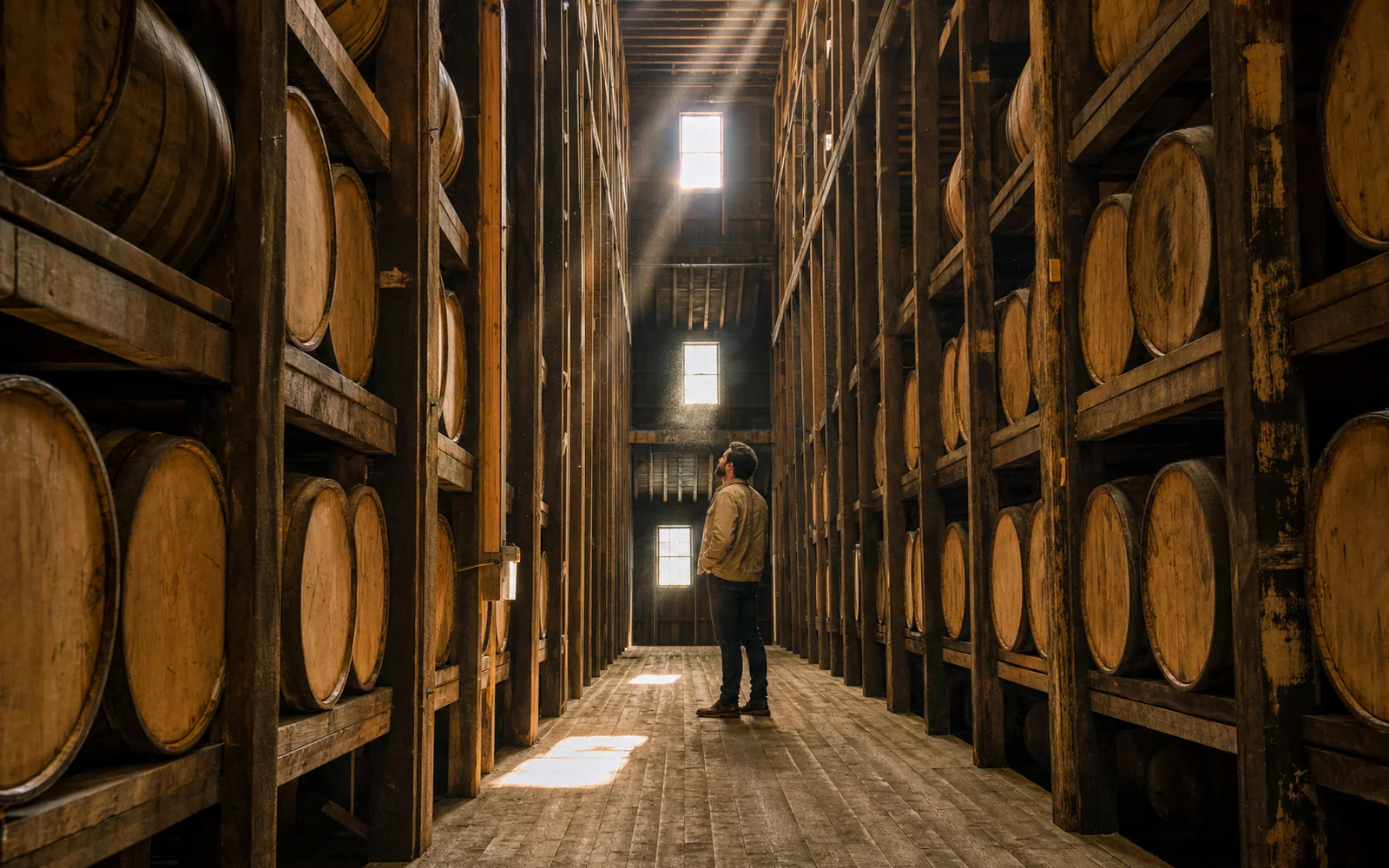
Visit Bardstown counts 11 distillery experiences within 16 miles of Court Square, and four major producers (Heaven Hill, Barton 1792, Willett and Lux Row) operate inside the town itself. The newest arrival is Heaven Hill Springs Distillery, a $200 million plant that held its grand opening in September 2025, nearly 29 years after lightning started the 1996 fire that destroyed Heaven Hill’s original Bardstown distillery. The Kentucky Bourbon Festival has filled the town every September since the early 1990s, and state lawmakers named it Kentucky’s official bourbon festival in 2000. The why Bardstown is the Bourbon Capital page tells the longer story.
My Old Kentucky Home
Federal Hill, the three-story brick mansion of Judge John Rowan, has been a state shrine since 1923. It was built between 1795 and 1818 with enslaved labor, and tradition connects it to Stephen Foster’s 1853 song “My Old Kentucky Home,” though historians have never proved that Foster visited. Today it’s the centerpiece of My Old Kentucky Home State Park, where a costumed guide sings the song on every tour. Every summer since 1959, the Stephen Foster Story musical has played at the park’s outdoor amphitheater.
A frontier Catholic capital
In 1808 Bardstown became the seat of a diocese that stretched from the Appalachians to the Mississippi. The Basilica of St. Joseph Proto-Cathedral, begun in 1816, was the first Catholic cathedral west of the Alleghenies. Within about 20 miles you’ll also find St. Thomas Church, the Sisters of Charity of Nazareth, the Sisters of Loretto and the Trappist Abbey of Gethsemani, a cluster people call the Kentucky Holy Land.
The historic district
Downtown was listed on the National Register as the Bardstown Historic District in 1983: 26 blocks and 279 properties, with Georgian and Federal buildings dating from the 1780s to 1850. The Old Talbott Tavern on Court Square dates to 1779 and still serves dinner. The old county jail, begun in 1819, is now a bed and breakfast. The 1892 courthouse in the middle of the square houses the visitor center.
Black history, told out loud
At least 54 people were enslaved at Federal Hill over Judge Rowan’s lifetime, and the state park now documents their lives on its website. Union Church, built in 1812 and later a Black Baptist congregation, houses the Bardstown-Nelson County African American Heritage Museum, founded in 2017 by Bill Sheckles, who in 2010 became Bardstown’s first African American mayor. Nelson County also produced the journalist Daniel Rudd and Bishop Alexander Walters, an early NAACP leader born, by the tavern’s account, in the Talbott’s kitchen.
Bardstown in 2026: what’s new
The town has changed quickly. The 1970 Holiday Inn reopened in May 2025 as The Trail Hotel, a 95-room bourbon-themed hotel. The old Kurtz Restaurant site is now the Bardstown Motor Lodge and Toogie’s Table. Old SteelHouse opened a tasting room on North Third Street in October 2025. On the other side of the ledger, Barton 1792 ended public tours in 2022, the paper Kentucky Bourbon Trail passport was retired in 2025, and distilling paused in 2026 at Lux Row and at Jim Beam’s main Clermont plant, although their visitor centers stay open. If an older guide sends you somewhere, check it against the current pages here.
Nelson County around it
Bardstown is the county’s only big town. Nelson County, named for Virginia governor and Declaration signer Thomas Nelson Jr., had 46,738 people in 2020 and an estimated 49,036 in 2025. It holds four cities (Bardstown, Bloomfield, Fairfield and New Haven), the small communities of Boston, Chaplin and New Hope, and crossroads like Coxs Creek and Nazareth. Much of what visitors come for sits out there: the Four Roses warehouses at Cox’s Creek, Log Still at Gethsemane, the Kentucky Railway Museum at New Haven and the Abbey of Gethsemani, about 20 minutes south of Court Square. Keep an eye out for the 13.5-foot fiberglass rooster at the Rooster Run general store, a roadside landmark in its own right. The day trips section covers the county and beyond.
What the town feels like
Bardstown is a working county seat first and a tourist town second, which is much of its appeal. Court Square has a real courthouse, a pharmacy with a soda fountain and a bakery that sells out of donuts by late morning. On a fall Saturday the sidewalks fill with bourbon pilgrims; on a January Tuesday you may have the Basilica to yourself. The chain hotels, fast food and big-box stores sit out on the bypass, so the historic core keeps its 19th-century scale.
Where to go next
Work out the drive with getting to Bardstown, then see the best things to do in Bardstown and the distillery tours guide. If you have a list of small questions (Sunday hours, dogs, what to wear in a rickhouse), the Bardstown FAQ answers 28 of them.