Abraham Lincoln’s Kentucky is right next door to Bardstown. His grandmother brought the family to then-Nelson County in the 1780s, his parents courted and married near Springfield, he was born near Hodgenville in 1809, and he spent his early boyhood at Knob Creek on the road between Hodgenville and Bardstown. All three main sites are free and within 45 minutes of Court Square, which makes a Lincoln loop one of the easiest and most rewarding half days you can plan from town.
The Lincolns’ Kentucky story in five places
It helps to have the family timeline in your head before you drive, because the sites are not in chronological order on the map.
- Springfield, 1780s: The president’s grandfather, Captain Abraham Lincoln, was killed in an attack by American Indians in May 1786. His widow, Bathsheba, moved the family to Beech Fork in what was then Nelson County, near today’s Springfield. Her young son Thomas grew up here.
- Springfield, early 1800s: Thomas Lincoln courted Nancy Hanks, who worked as a seamstress in the house of Francis Berry. Tradition says he proposed by the fireplace. They married in Washington County.
- Hodgenville, 1809: Abraham was born on February 12, 1809, on the Sinking Spring farm.
- Knob Creek, 1811 to 1816: The family moved to a farm on Knob Creek when Abraham was 2. Thomas worked as a road surveyor, and by 1814 he ranked 15th in wealth among 98 local property owners.
- Leaving Kentucky, December 1816: The family moved to Indiana. Lincoln later said the move was “partly on account of slavery, but chiefly on account of the difficulty of land titles in Kentucky.”
That last line is worth carrying through the whole trip. Kentucky’s tangled land claims pushed the Lincolns out, and slavery was all around them: in 1830 the Rowan family at Federal Hill in Bardstown, about 20 miles up the road from Knob Creek, held 39 people in bondage. The page on Black history in Bardstown tells that side of the region’s story.
Abraham Lincoln Birthplace National Historical Park
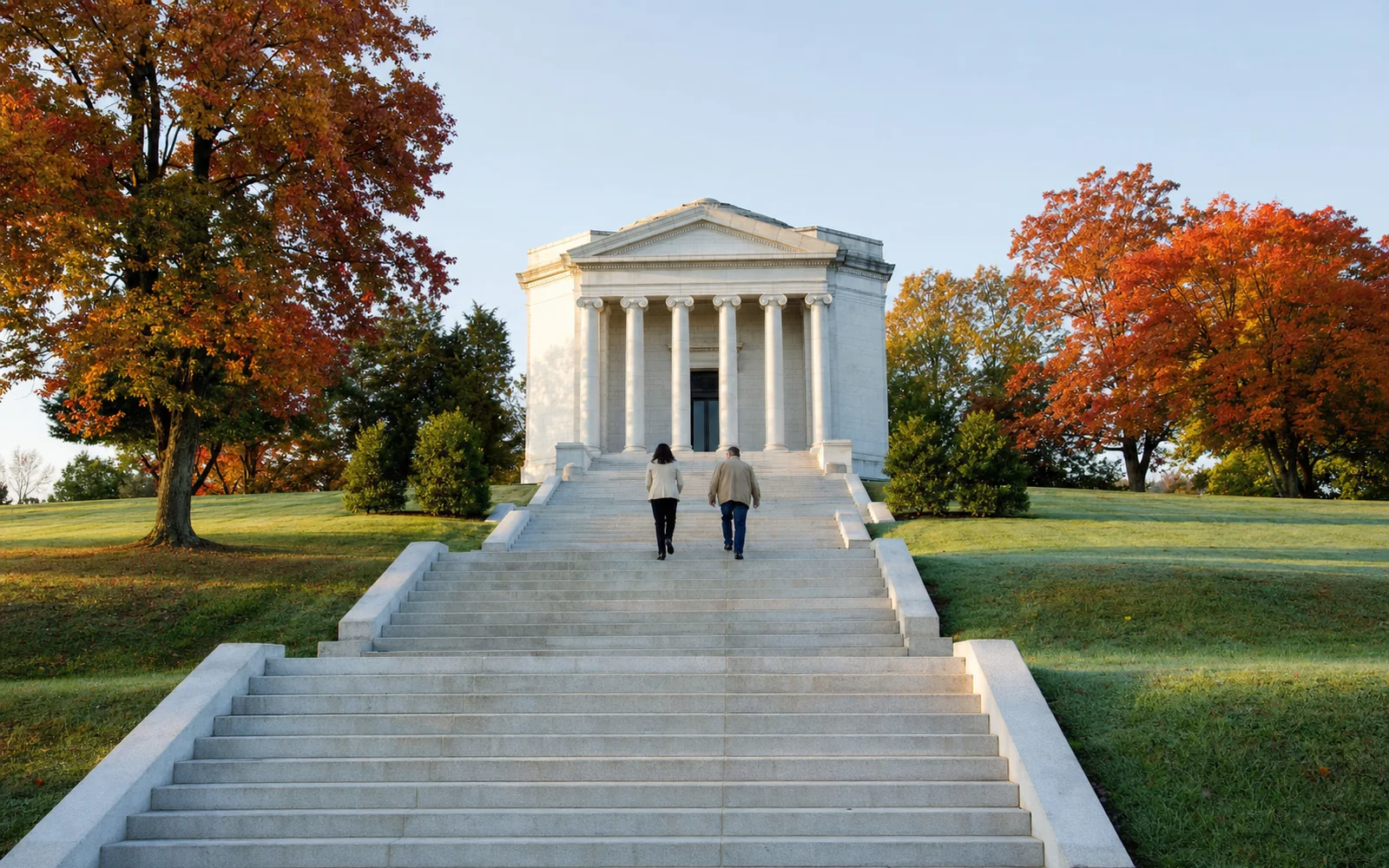
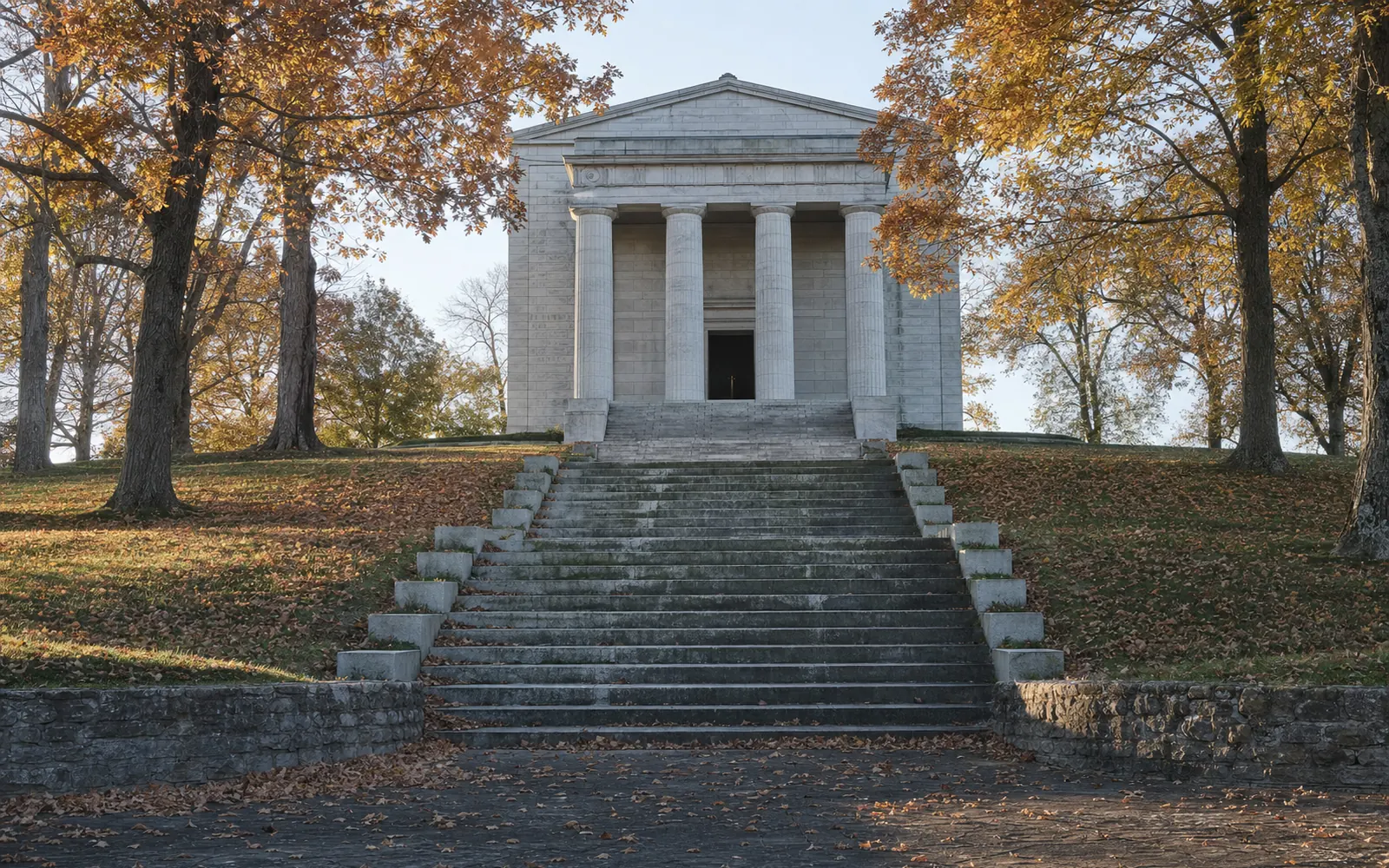
The headline stop. At the Birthplace Unit, a Beaux-Arts memorial designed by John Russell Pope stands on a hillside above the Sinking Spring. Theodore Roosevelt laid the cornerstone on February 12, 1909, the centennial of Lincoln’s birth, and William Howard Taft dedicated it in 1911. The symbolism is literal: 56 steps for Lincoln’s age at his death, and 16 windows and 16 ceiling rosettes for the 16th president.
Inside is a symbolic log cabin. The original was dismantled before 1865, and these logs date mostly to the 1840s, so think of it as a stand-in rather than a relic. Walk down to the spring afterward; it is the reason the farm was settled.
The NPS hours page lists the visitor center and parking at 9 a.m. to 5 p.m. Eastern and the Memorial Building at 9 a.m. to 4:30 p.m. It closes on New Year’s Day, Thanksgiving and Christmas. The fees page is short: “No entrance pass required.” There is no restaurant on site, so plan lunch in Hodgenville.
Knob Creek: the boyhood home
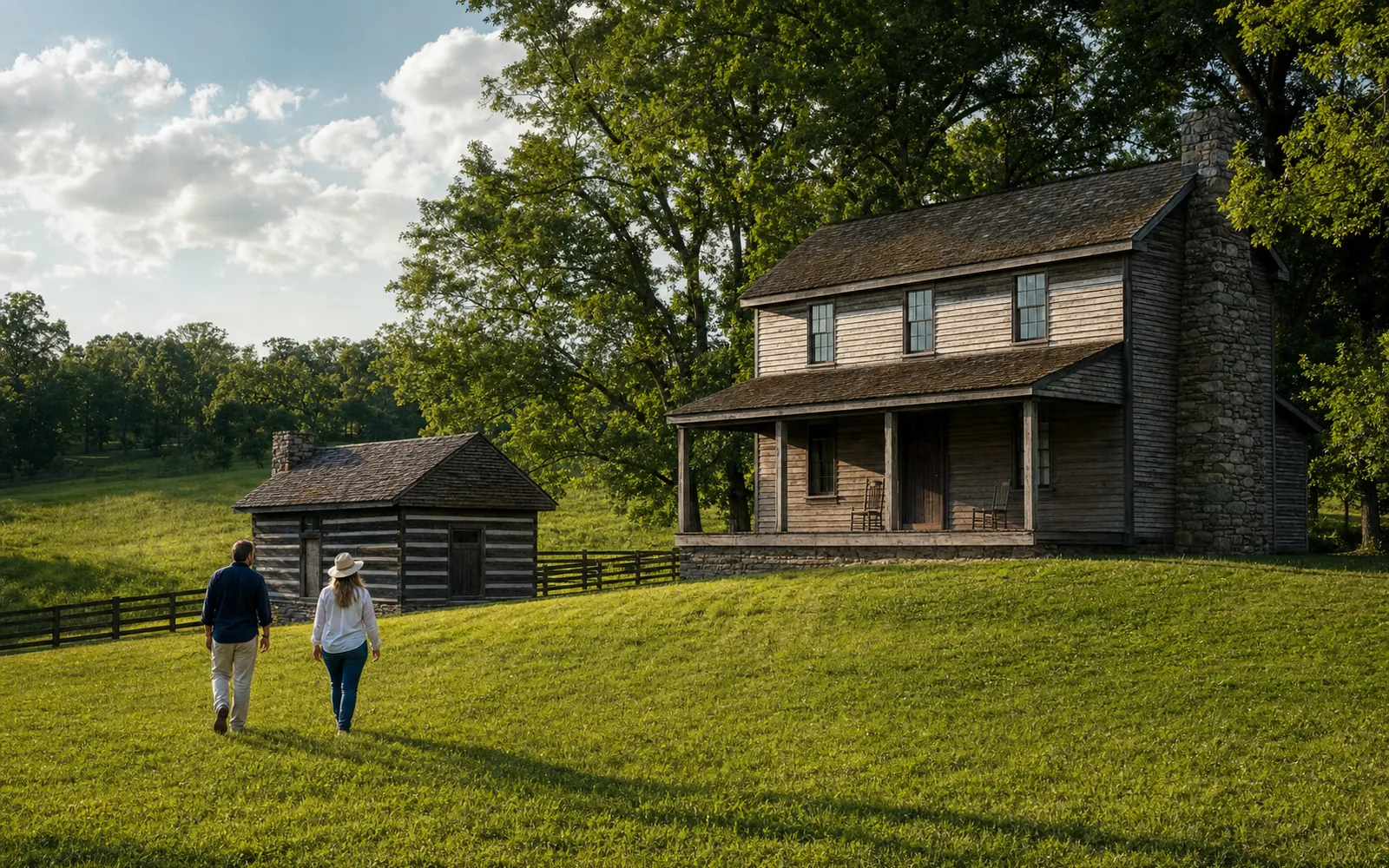
The Boyhood Home at Knob Creek is the more personal site and, for many visitors, the more moving one. It sits right on US 31E (7120 Bardstown Rd.), about 18 miles from Court Square, so you pass it on the way to Hodgenville. Stop here first.
Lincoln lived here from about age 2 to 7. The unit covers 228 acres, of which the Lincolns farmed about 30. The Gollaher Cabin, built around 1800 and moved here, belonged to the family of Austin Gollaher, Lincoln’s boyhood neighbor. The Lincoln Tavern building on the site was built in 1933 as a dance hall and later became a museum. The grounds are open daily from dawn to dusk, and the tavern visitor center opens seasonally, so check the NPS directions page before counting on it.
The Lincoln Museum on Hodgenville’s square
Between the two national park units, the town of Hodgenville has a statue-lined square and the privately run Lincoln Museum at 66 Lincoln Square. Expect life-size dioramas, wax figures, Civil War memorabilia, original Lincoln art and a funeral train exhibit. Admission is $8 for adults, $6 for seniors and $3 for ages 4 to 12; active military get in free. It opens Monday through Saturday at 8:30 a.m. and Sunday at 12:30 p.m., closing at 4:30 p.m. It is a good fit for families and a rainy hour. Find more on the Hodgenville day trip page.
Lincoln Homestead State Park, Springfield
East of Bardstown, just north of Springfield, Lincoln Homestead State Park preserves the parents’ side of the story on 120 acres. The Francis Berry House, where Nancy Hanks worked while Thomas courted her, is the only original building. A reconstructed 16-by-18-foot Lincoln cabin stands on the site of Thomas’s childhood home, along with a replica of the workshop where he learned blacksmithing and carpentry, and the Mordecai Lincoln House, named for Thomas’s older brother, who saved Thomas during the 1786 attack that killed their father. An 18-hole golf course covers land Mordecai farmed.
The park’s listing says the grounds are free and open year-round, dawn to dusk, and the historic buildings open seasonally, traditionally May through September; call (859) 336-7461 to confirm before you go. See Springfield and Lincoln Homestead for lunch and a look at the town’s 1815 courthouse, where local tradition holds the Lincolns’ marriage records.
Lincoln’s traces in Bardstown itself
You do not have to leave town to find him.
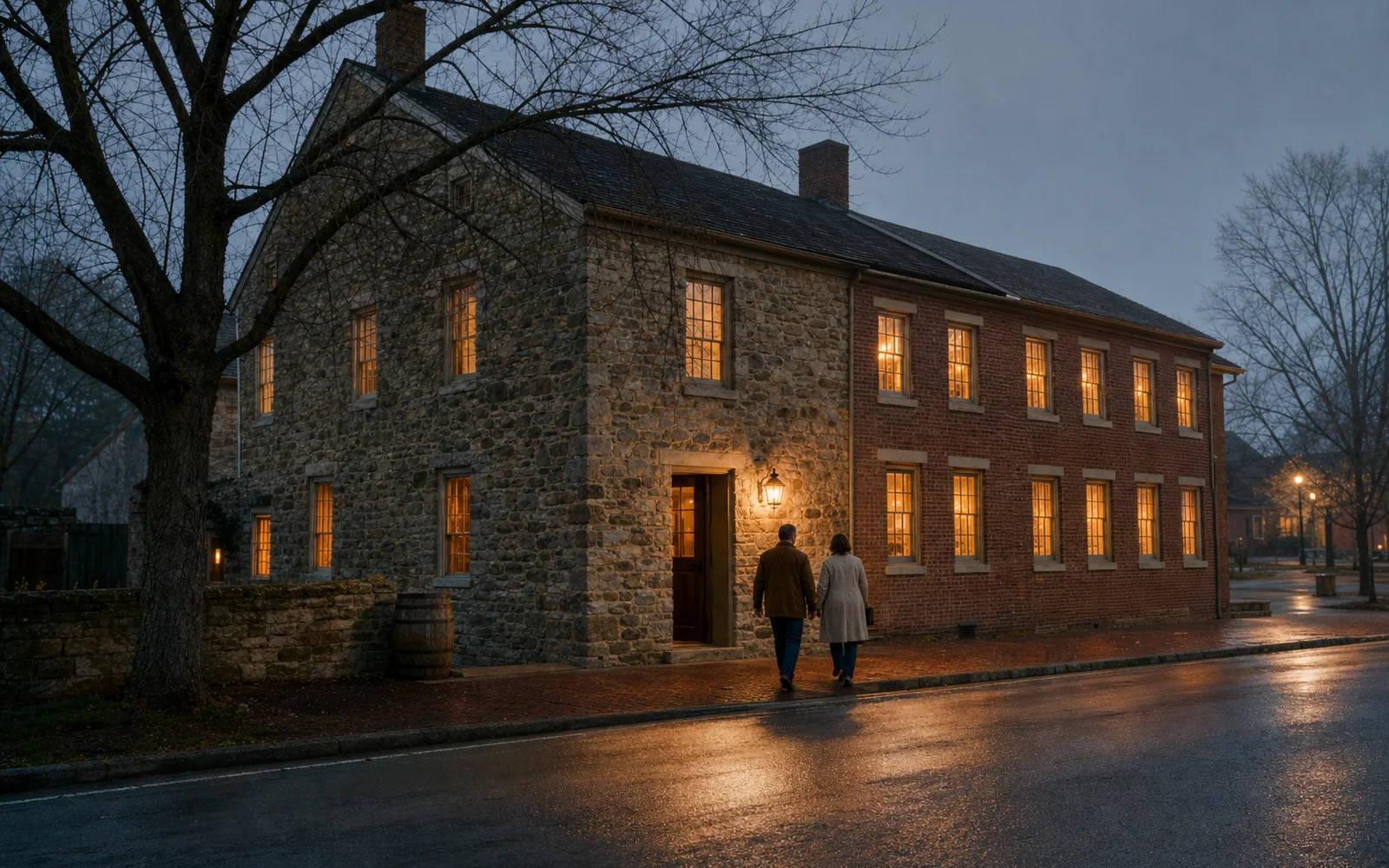
- The Old Talbott Tavern on Court Square lists young Abraham among its guests, staying there with his parents. It is the tavern’s tradition rather than a documented visit, but it is a good excuse for a bowl of burgoo.
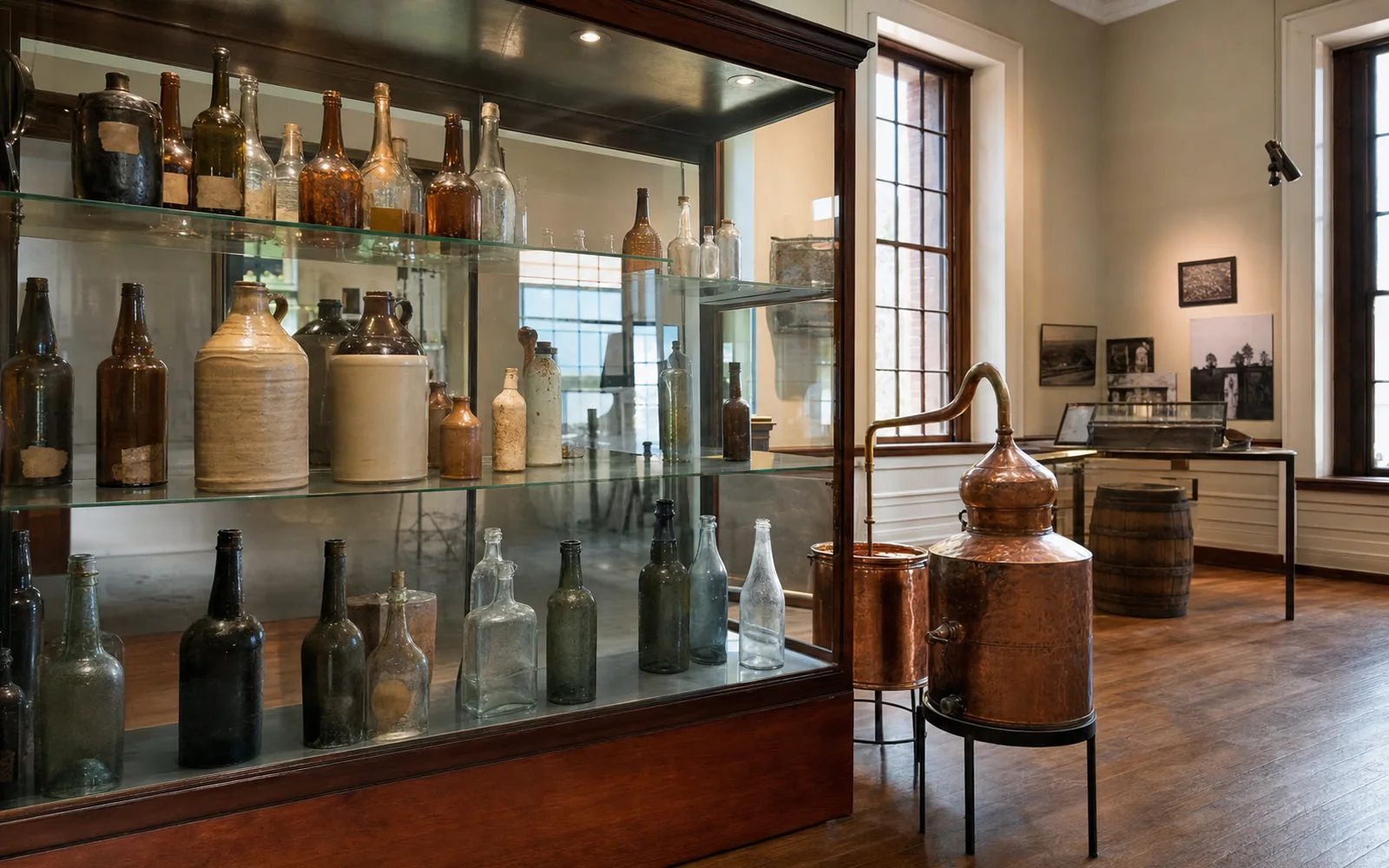
- The free Oscar Getz Museum in Spalding Hall displays Abraham Lincoln’s liquor license among its bourbon-history artifacts.
When to go
The two national park units are open all year except New Year’s Day, Thanksgiving and Christmas, so the Lincoln loop works in any season. Each season changes the trip, though.
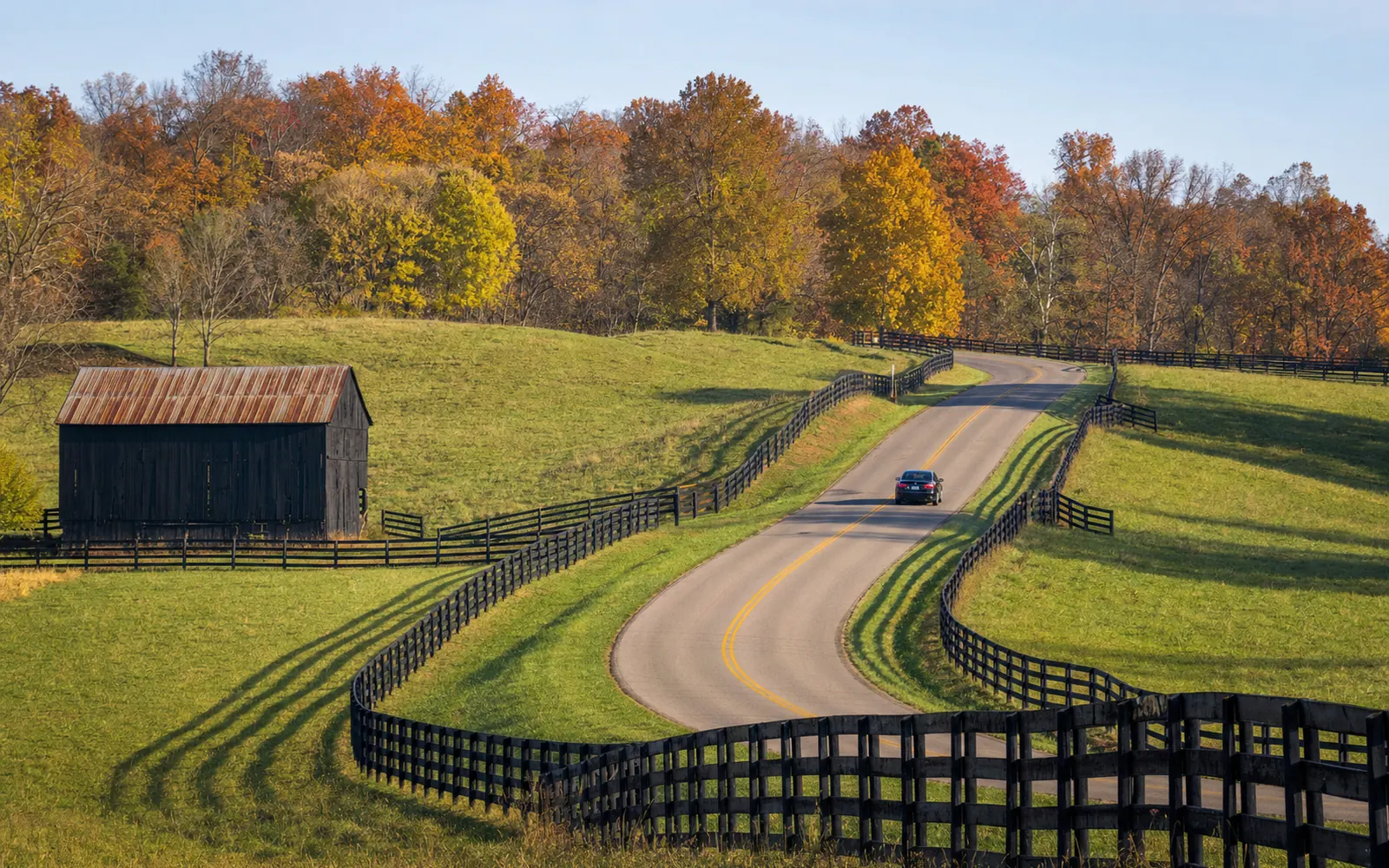
Late spring through September is the only time you can expect the historic buildings at Lincoln Homestead to be open, so go then if the Berry House and the Lincoln cabins matter to you. October brings color to the knobs along US 31E and makes the drive itself a highlight. Winter is quiet and bare, and the Knob Creek tavern visitor center may be closed, but the birthplace memorial and its 56 steps are at their most striking on a cold, clear morning with no crowds.
Weekdays are calmest year-round. February 12, Lincoln’s birthday, is a natural date for fans. Whatever the season, remember that the Memorial Building closes at 4:30 p.m. Eastern and the Lincoln Museum at 4:30 p.m. too, so do the Hodgenville end of the loop first and leave Springfield’s dawn-to-dusk grounds for the afternoon.
Plan a Lincoln loop from Bardstown
| Stop | From Court Square | Time to allow | Hours |
|---|---|---|---|
| Knob Creek Boyhood Home | About 18 miles, 27 minutes | 30 to 45 minutes | Grounds dawn to dusk |
| Birthplace NHP | About 28 miles, 43 minutes | 1 hour | 9 a.m. to 5 p.m.; memorial to 4:30 |
| Lincoln Museum, Hodgenville | Near the birthplace | 45 minutes | Mon to Sat 8:30 to 4:30; Sun from 12:30 |
| Lincoln Homestead, Springfield | About 20 miles, 27 minutes | 1 hour | Grounds dawn to dusk |
Drive times are minimums without traffic; add 10 to 20 percent on the two-lane roads.
A half day covers Knob Creek, the birthplace and the museum: leave at 9 a.m., lunch in Hodgenville, and be back on Court Square by 2 p.m. To make it a full day, come home by way of Springfield and Lincoln Homestead. The same route appears as “The Lincoln Loop” on the day-trip routes page, and US 31E between Bardstown and Hodgenville is one of the prettier scenic drives in the county, all farm fields and knobs.