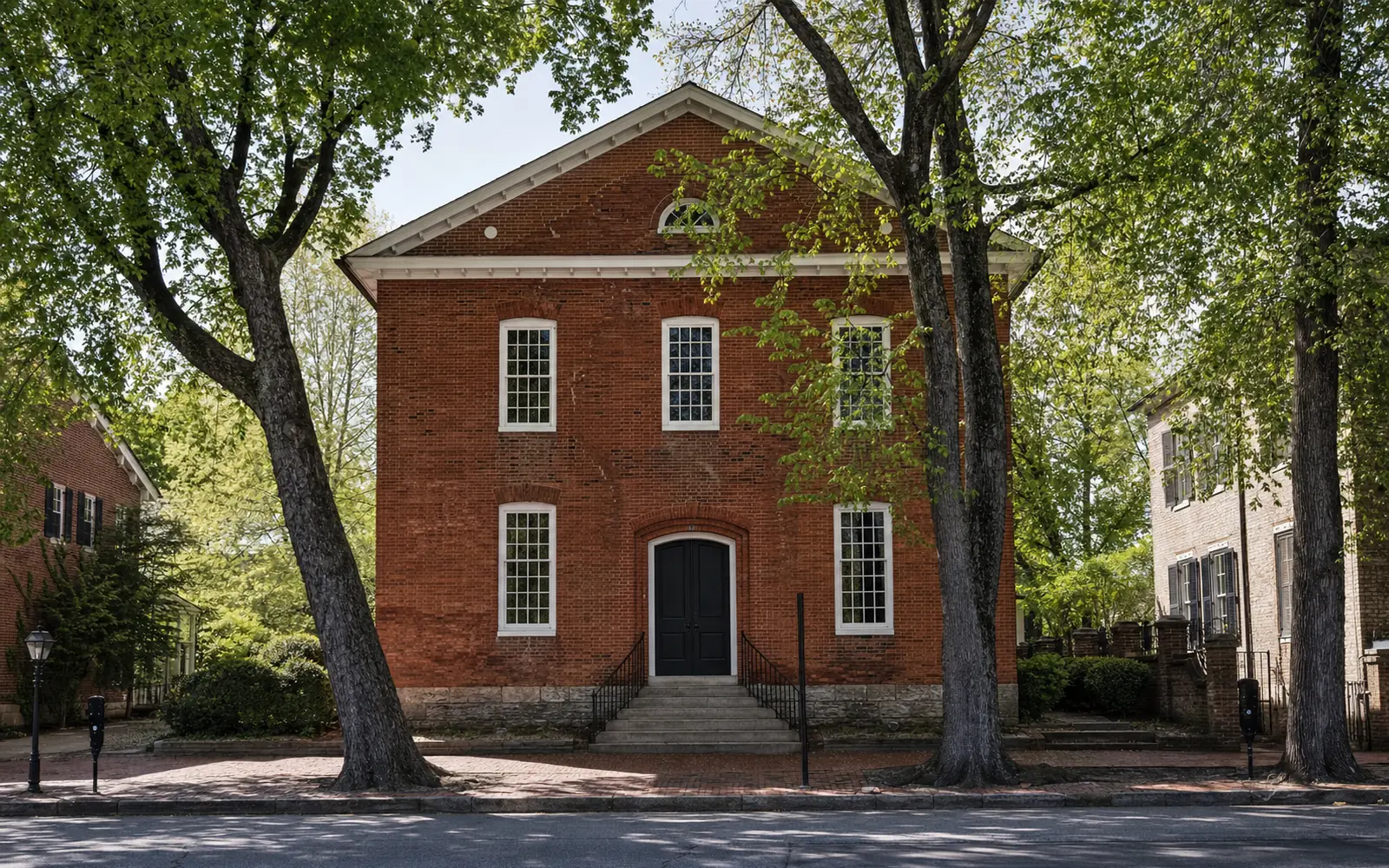
The Bardstown-Nelson County African American Heritage Museum fills a restored 1812 brick church on North Second Street with the town’s Black history: its schools, businesses, politicians, athletes, soldiers and churchgoers. It is open Thursday through Saturday, 10 a.m. to 3 p.m., from April through November, runs on donations, and takes under an hour. If you only have time for one stop that shows Bardstown beyond bourbon and Stephen Foster, make it this one.
Union Church: the building is part of the story
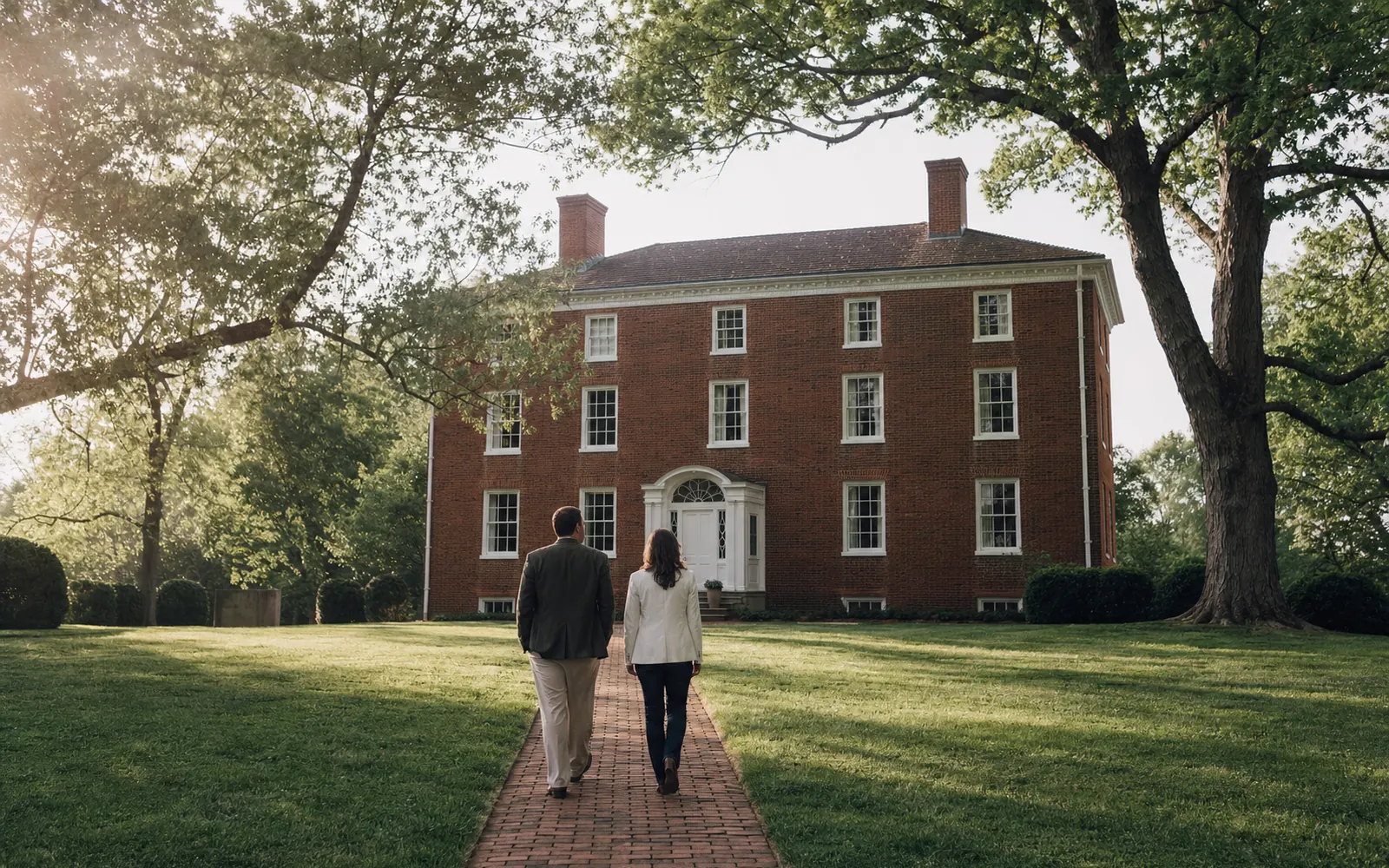
Start outside. Union Church went up in 1812, and the museum describes it as “the first two-story brick church built west of the Appalachian Mountains.” Whatever the exact ranking, it is plainly old: simple, sturdy brick of the same generation as the Basilica and Federal Hill.
The name tells you how it began. White Presbyterian, Methodist and Baptist congregations shared the building until 1863. After the Civil War, newly emancipated Baptist and Methodist congregations worshipped here, and by the end of the 1800s it was solely a Black Baptist church. First Baptist Church moved out in 2002, the building sat empty for years, and it was restored in 2016. A year later it opened as the museum.
So the church itself traces the arc of the exhibits: a building shared under slavery, claimed by free Black worshippers after emancipation, and now used to tell their descendants’ story.
Who founded it: Mayor Bill Sheckles
The museum was founded in 2017 by Bill Sheckles, a nonprofit 501(c)(3) rooted in Bardstown’s Historic East End. Sheckles made history himself: in November 2010 he became the city’s first African American mayor, and in October 2014 the first African American president of the Kentucky League of Cities. The museum’s biography of Sheckles notes that during his term, in 2012, Bardstown was named the Most Beautiful Small Town in America.
That local ownership shapes the visit. This is not a state institution with a big design budget. It is a community museum, run by volunteers from the families and congregations whose history it tells, and that closeness is its strength.
What you’ll see inside
The museum’s website lists these exhibit themes:
- Education
- Black-owned businesses
- Black politics
- Black civic organizations
- Black athletes
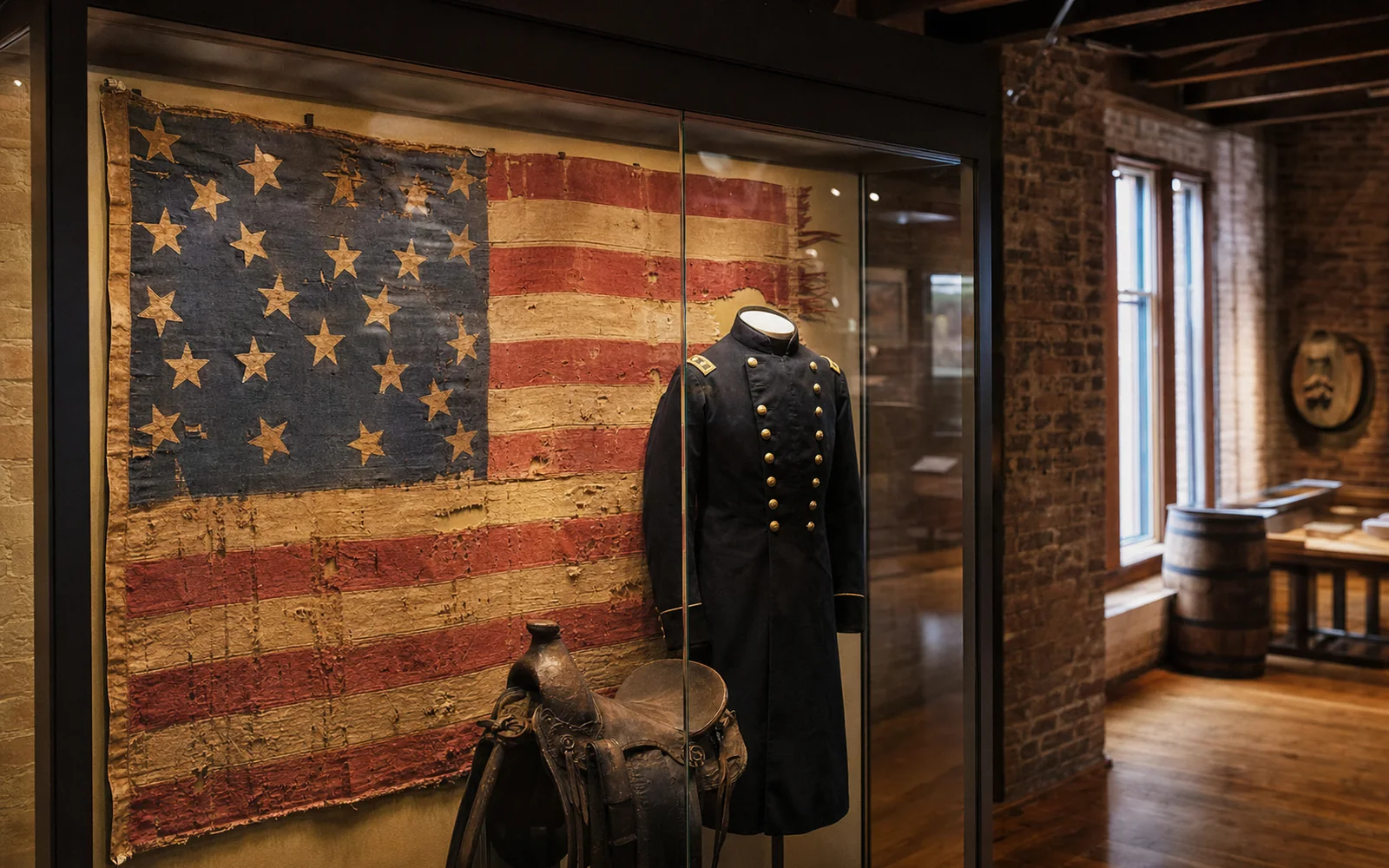
- Military service and law enforcement
A newer exhibit, “Kentucky Black Trailblazers,” features figures like Daniel Rudd, who was born enslaved near Bardstown in 1854, baptized at St. Joseph, and went on to found the American Catholic Tribune and the Colored Catholic Congress. The page on Black history in Bardstown has more on Rudd and the other nationally known figures from here.
The museum also runs a Library Series, with in-person events monthly. Check the events page if you would like to plan your visit around a talk.
Stories to ask about
The best way to use this museum is to ask questions. A few threads worth pulling:
Uncle Lem Reed and Annie Reed
Lem “Uncle Lem” Reed was a self-taught banjo player who greeted visitors at Bardstown’s parks from the mid-1940s until his death in October 1955, and the museum says he “drew thousands of tourists annually.” In other words, for a decade a Black musician was one of the town’s best-known tourist draws, in the era when the town was building its whole identity around “My Old Kentucky Home.” His wife, Annie Mitchell Reed, married him in 1901, raised 13 children and survived the Shepherdsville train wreck of December 20, 1917, which killed 47 people. The museum’s post on the Reeds is worth reading before you go.
The churches of the East End
After emancipation, both Baptist and Methodist congregations of freed people worshipped in this building before it became solely a Black Baptist church. Ask how that happened and where First Baptist went in 2002; it is a history you will not find on a plaque downtown.
Schools and service
The education, athletics and military sections are where local names pile up. If a volunteer is on hand, ask about the families behind them; the answers are often the most memorable part of the visit.
Hours, tours and practical tips
| Detail | What to know |
|---|---|
| Regular hours | Thursday to Saturday, 10 a.m. to 3 p.m. |
| Season | April through November |
| Group tours | Year-round by appointment |
| Group tour contacts | Rev. Jewel Brock, (502) 296-1969; Linda Sheckles, (502) 507-1161 |
| Admission | Not listed; donations accepted |
| Time needed | 45 to 60 minutes |
The museum’s team page has the email contacts for booking groups. Because volunteers run the museum, call ahead if you are driving in specifically for it, especially near holidays or in bad weather. If you arrive Sunday through Wednesday, the building is worth a look from the street even when it is closed.
Accessibility: the museum occupies a two-story 1812 church, so ask about steps and access when you call if anyone in your group uses a wheelchair or has trouble with stairs.
When to go
The museum keeps a short week, so plan around it. Thursday, Friday and Saturday between 10 a.m. and 3 p.m. are the only walk-in days, and only from April through November. A Thursday or Friday visit usually means fewer people and more time with whoever is minding the museum. Saturdays suit weekend visitors, but arrive by early afternoon, since the doors close at 3 p.m., earlier than most downtown attractions.
Spring and fall are the most comfortable seasons for combining the museum with a walk through the Historic East End, when the brick sidewalks are shaded and not yet baking. In summer, come right at 10 a.m. and save the outdoor walking for later. From December through March, the building is closed to drop-in visitors, but a group of friends or a family reunion can still book an appointment. Give the volunteers a week or two of notice if you can.
If you are timing a trip around history programming, check the museum’s monthly Library Series before you choose your dates, and look at what else is on in town: the Federal Hill house tour runs daily from mid-March through the end of the year (Wednesday to Sunday in winter), so you can pair the two on any open Thursday, Friday or Saturday.
How to get there
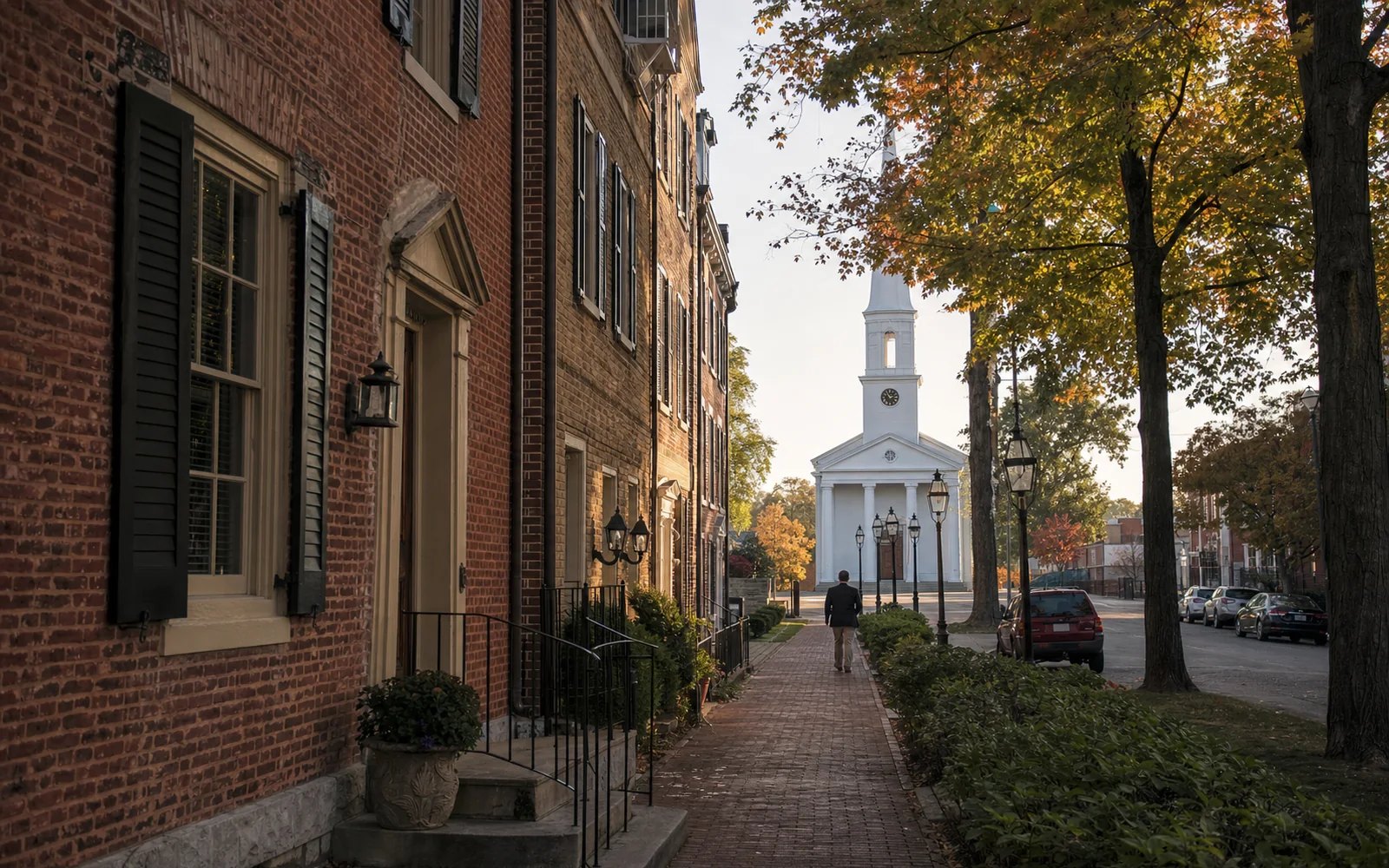
The museum is at 315 N. Second St., a few blocks northeast of Court Square in the Historic East End. It is an easy walk of under 10 minutes from the courthouse: head east on Stephen Foster Avenue, then north. Street parking is usually easy on the residential blocks around it. It fits naturally into a self-guided walking tour of downtown.
Pair it with
The museum sits a couple of blocks from the Civil War Museum complex on East Broadway, and the two make a strong morning together. Visit the Civil War museums first, then walk over as the heritage museum opens its doors, and you will leave with a much fuller picture of what emancipation meant in this town.
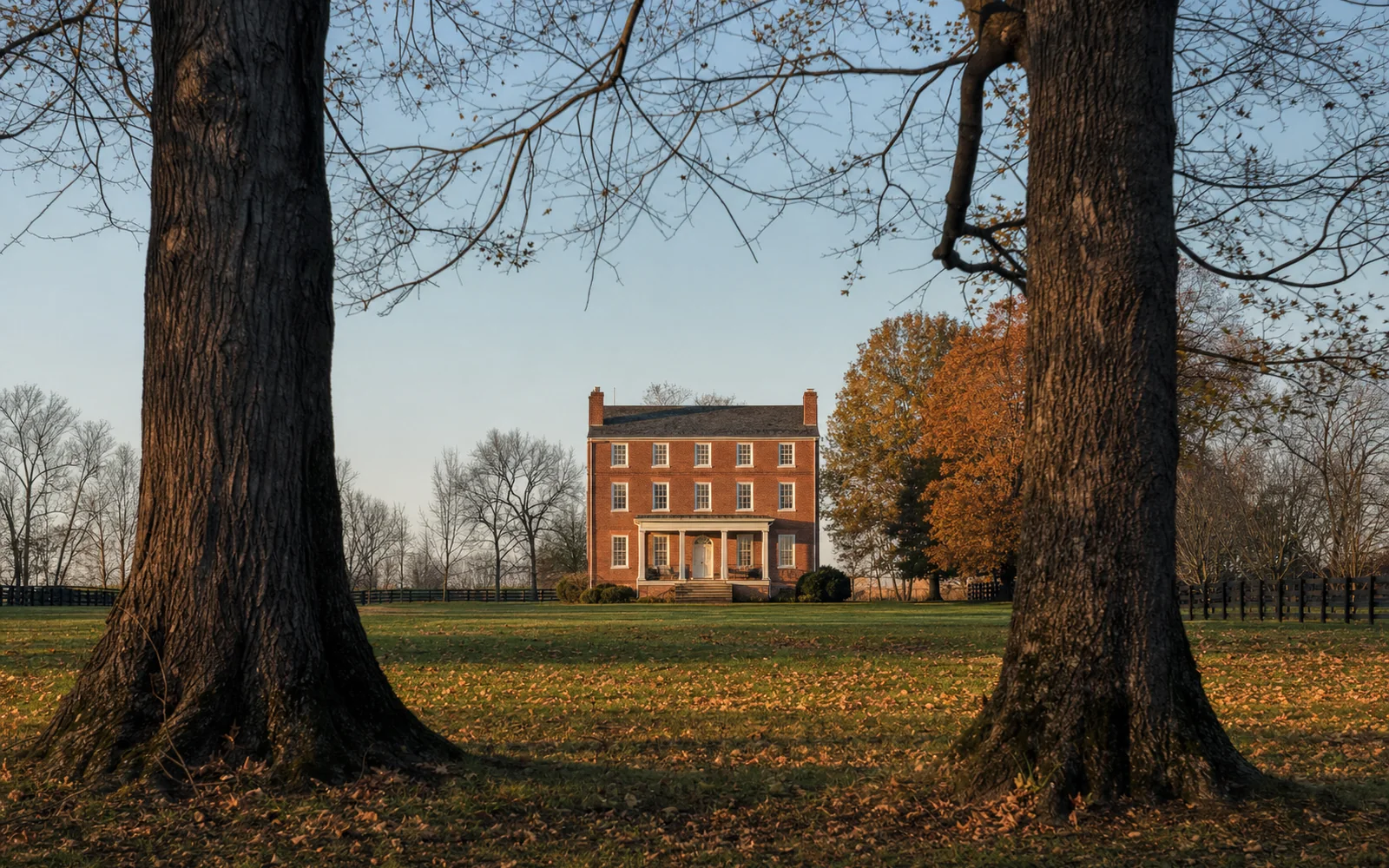
For the earlier part of the story, go on the Federal Hill house tour at My Old Kentucky Home State Park, where guides discuss the people the Rowan family enslaved. The museum’s modest donation box and the park’s free grounds also make this a good stop on a list of free things to do in Bardstown.
Lunch is easy afterward on Court Square, five minutes back the way you came.