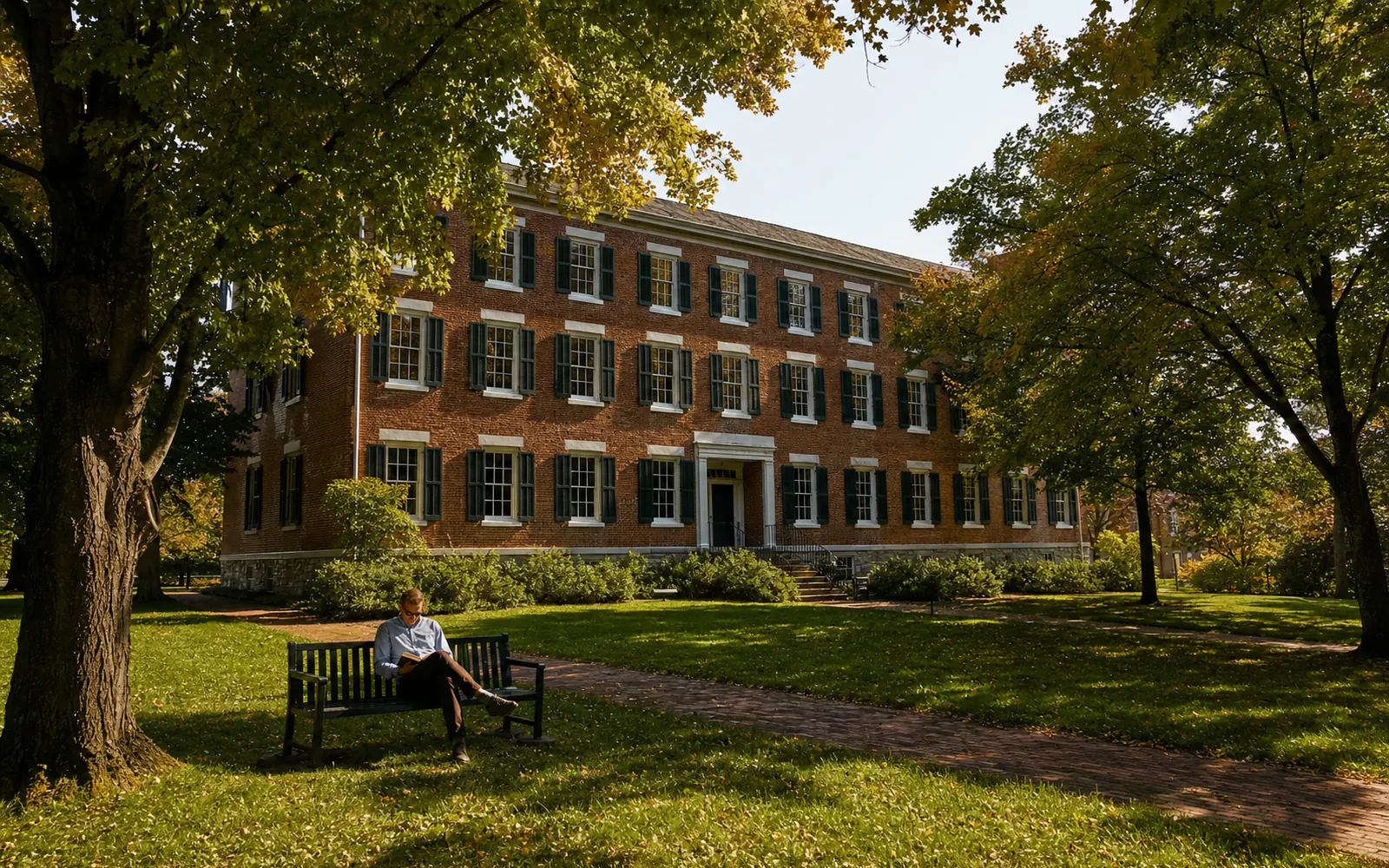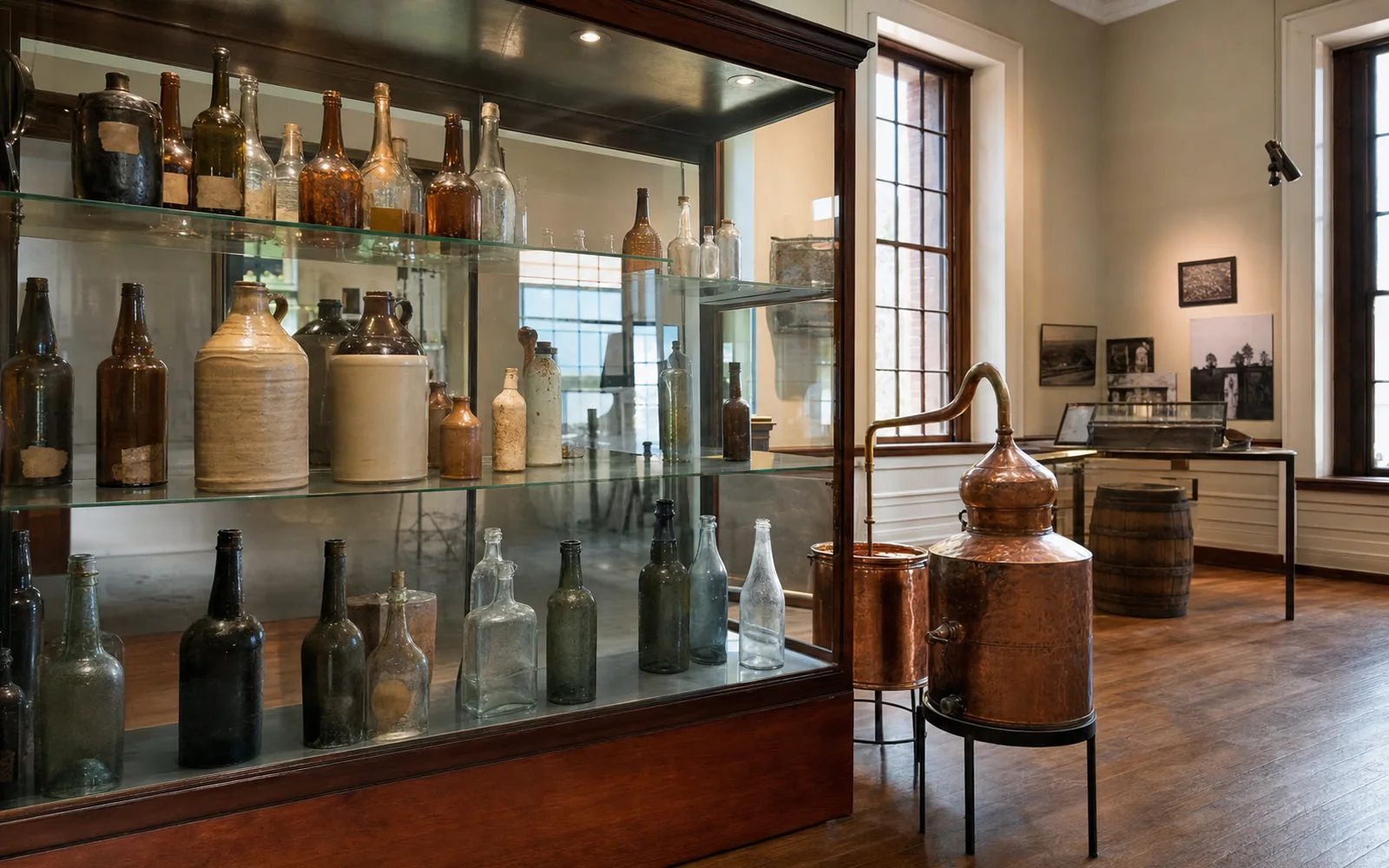
The Oscar Getz Museum of Bourbon History is the best free hour in Bardstown and the smartest first stop on a bourbon trip. It fills the first floor of Spalding Hall, the 1800s brick college building two blocks from Court Square, with more than 5,000 artifacts: moonshine stills, Prohibition prescriptions for “medicinal” whiskey, antique bottles and Abraham Lincoln’s liquor license. Admission is free, it’s open seven days a week, and a self-guided visit takes 45 to 75 minutes.
What you’ll see inside
The collection covers American whiskey from colonial days into the 20th century, and it is refreshingly unpolished: cases of real objects rather than touch screens. According to the museum’s own site and Wikipedia’s summary, the pieces people linger over are:
- Abraham Lincoln’s liquor license, which surprises nearly everyone who sees it.
- A still that the museum says quite possibly belonged to George Washington, plus what it calls Washington’s millstone.
- Several authentic moonshine stills, the kind that used to hide in Kentucky hollows.
- Prohibition-era prescriptions for medicinal whiskey and the bottles they filled.
- Antique bottles and jugs, advertising art and a shelf of wonderfully odd novelty containers.
The named exhibits give the rooms their shape. “Law, Liquor, & Temperance” follows the long fight over drinking in America. “Industrialization and the Bottled-in-Bond Act of 1897” explains the law that pushed back against adulterated whiskey by putting the federal government’s guarantee behind a bottle’s age and proof. The Bottled-in-Bond Act still matters: when you see “bottled in bond” on a label in a Bardstown gift shop, it means one distillery, one distilling season, at least four years in a bonded warehouse and exactly 100 proof. “Bourbons Revival” brings the story closer to the present.
The museum also runs an online collection and a “Knowledge Base & Bourbon Wiki” on its website if you want to read up before you go.
Who was Oscar Getz?
Oscar Getz (1897-1983) was a Chicago spirits executive, not a Kentuckian. In 1944 he bought Bardstown’s Tom Moore Distillery and renamed it Barton, the distillery that now makes 1792 bourbon, according to the Bourbon Legends Tour’s history. For more than 50 years he collected whiskey memorabilia. After his death, the collection found its permanent home in Spalding Hall, and the museum opened there in 1984. It is now a nonprofit.
For decades it was called the Oscar Getz Museum of Whiskey History. It was officially renamed the Oscar Getz Museum of Bourbon History in 2023, per Distillery Trail, and you’ll see both names around town. Barton itself no longer offers public tours, which makes this museum one of the few places you can still connect with that side of Bardstown’s story; see our page on Barton 1792.
The building: Spalding Hall
Half the pleasure is the setting. Spalding Hall was the main building of St. Joseph’s College, which Wikipedia calls “the first Catholic college in Kentucky.” It served as a hospital during the Civil War and later housed St. Joseph’s Preparatory School until about 1968. Tourism sources say it was built in 1826; Wikipedia says the current building dates from 1839, replacing the 1826 structure after a fire. Either way, you are walking tall-windowed halls that were old when bourbon got its legal definition. The building is on the National Register of Historic Places.
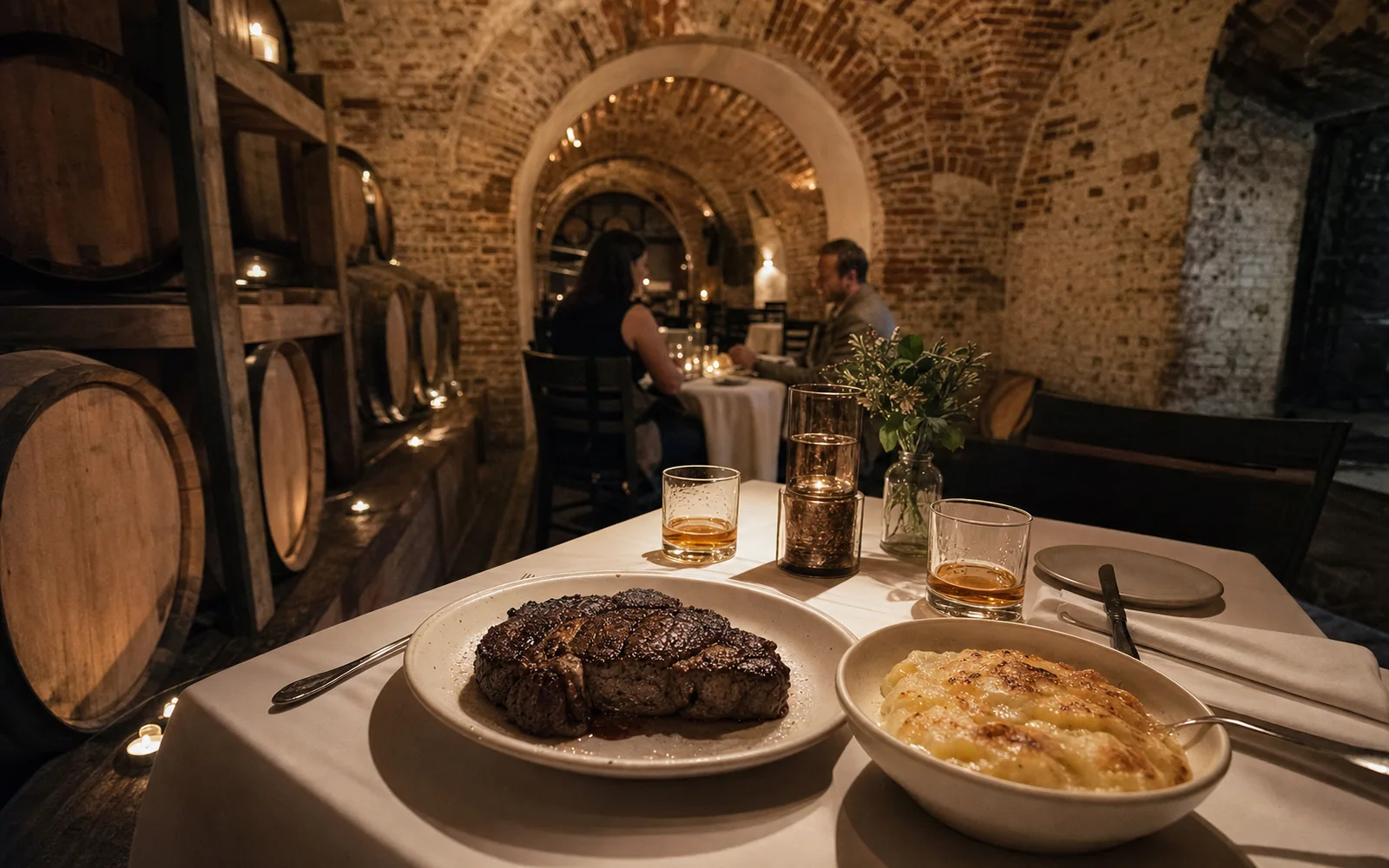
The whole building is a bourbon stack. The museum is on the first floor, the Rickhouse restaurant and bourbon lounge is in the brick-arched basement, and the Bourbon Capital Academy teaches upstairs in the Brindiamo Penthouse. Read more about the building’s past on our Spalding Hall page.
Planning your visit
| Detail | What to know |
|---|---|
| Hours | Mon-Fri 10 a.m.-5 p.m.; Sat 10 a.m.-4 p.m.; Sun noon-4 p.m. |
| Closed | Thanksgiving, Christmas Eve, Christmas Day, New Year’s Day |
| Admission | Free; donations welcome |
| Group tours | $3 per person, 10-50 guests, docent-led, about 1 hour |
| School trips | Free with advance registration |
| Parking | Free lots behind Spalding Hall; motorcoaches on Fifth Street |
| Accessibility | Ramps, wide corridors, ADA elevators and restrooms |
The museum’s visit page says the hours hold year-round. You may see older seasonal hours on third-party sites; go with the museum’s.
Some older listings also mention a Bardstown Historical Museum sharing Spalding Hall, with Civil War artifacts and Stephen Foster memorabilia. If that collection is on your list, call (502) 348-2999 to ask whether it is currently on display.
Getting there
Spalding Hall sits at 114 N. Fifth St., about two blocks northwest of Court Square and the old courthouse. From the Old Talbott Tavern it is an easy few minutes on foot; from the chain hotels on the bypass, it is a short drive. The Basilica of St. Joseph Proto-Cathedral is a block away on West Stephen Foster Avenue.
How to spend an hour inside
The museum is compact enough that you won’t get lost, so pace yourself rather than planning a route. A few priorities for a first visit:
- Find the stills first. Seeing the actual copper makes the frontier story, and every distillery tour afterward, concrete.
- Slow down for “Law, Liquor, & Temperance.” The Prohibition prescriptions and medicinal whiskey bottles are the most human objects in the building.
- Spend real time with the Bottled-in-Bond material. Once you understand it, you’ll read labels differently for the rest of your trip.
- Save the advertising art and novelty containers for last. They’re the fun part, and a good way to end.
Allow 45 minutes if you’re browsing, 75 if you read every card. If you want photos of particular pieces, ask at the desk.
Groups and school visits
Groups of 10 to 50 can book a docent-led tour for $3 per person, about an hour long, with motorcoach parking on Fifth Street. Student and school field trips are free with advance registration. For a larger bourbon-themed group day, pair the museum with a Bourbon Capital Academy class upstairs or an early dinner at the Rickhouse downstairs.
Festival weekend and other timing tips
The lawn in front of Spalding Hall is the site of the Kentucky Bourbon Festival. On festival weekend (September 16-19 in 2027) the grounds are fenced for ticketholders, and the festival’s info page describes gates, clear-bag rules and crowds. Call the museum before visiting that weekend to confirm access and hours.
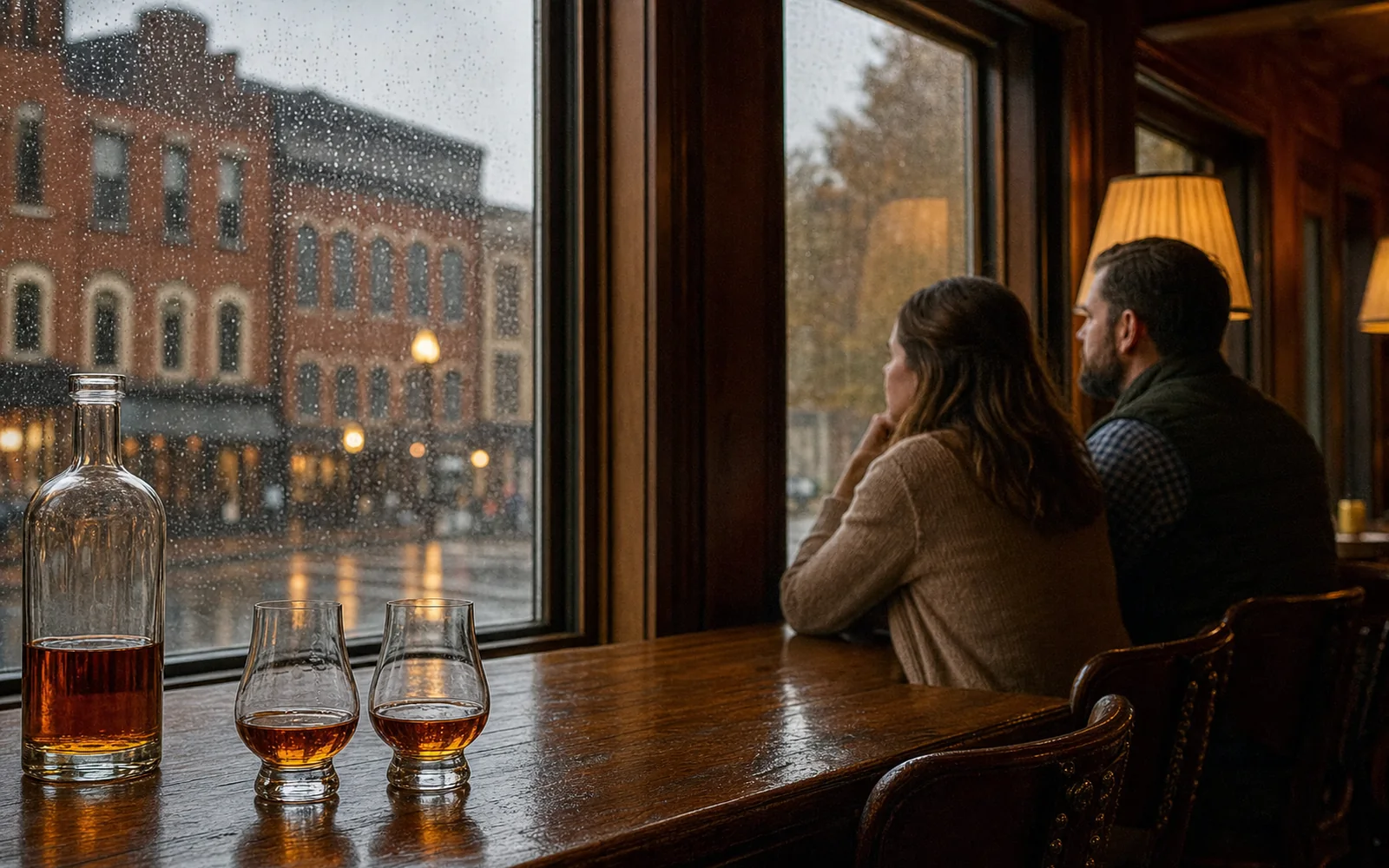
The rest of the year, weekday mornings are quietest. The museum is also a natural rainy-day stop; see rainy day things to do.
Is it worth it?
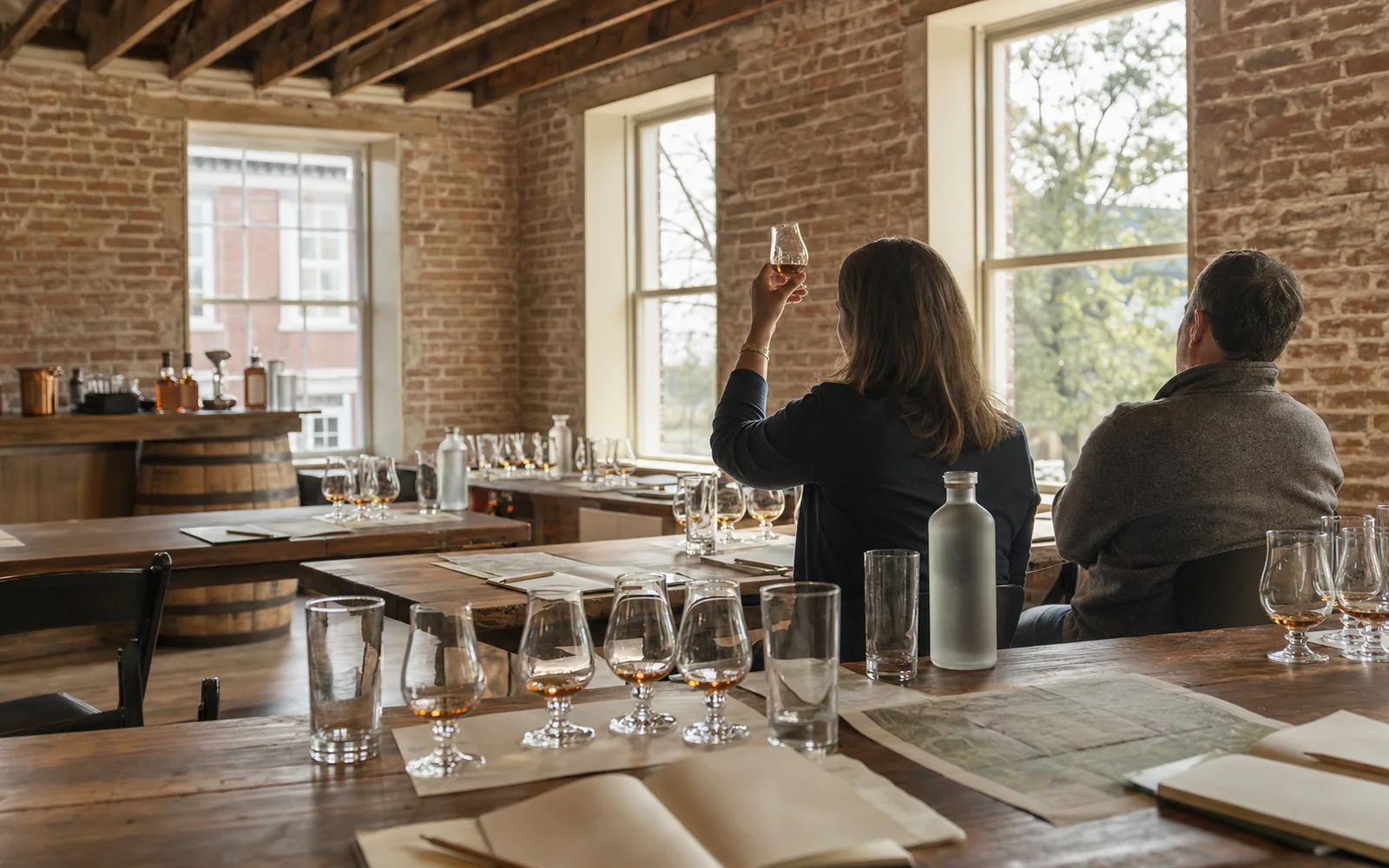
Yes, and not only because it’s free. A tour guide at Willett or Heaven Hill will tell you about Prohibition and bonded warehouses; here you see the prescriptions and the stills themselves. Visit early in your trip and every distillery afterward makes more sense. Serious enthusiasts can go further with the Bourbon Capital Academy, whose two-hour introductory class begins with a guided tour of this museum. For the long view, our history of bourbon in Nelson County connects the objects to the families and distilleries around town.
Pair it with
- Dinner downstairs at the Rickhouse, a candlelit bourbon room under brick arches with about 150 bourbons. It is closed Sunday and Monday, so plan around that.
- Lunch and a pour at the Old Talbott Tavern on Court Square.
- A quiet look inside the Basilica of St. Joseph Proto-Cathedral, a block away.
- A walk to Circa 1856 for a Chicken Cock tasting flight.